With years of research, development, and rigorous testing quietly unfolding beneath the surface of the world’s oceans, the global marine energy industry is standing on the precipice of making a significant, tangible contribution to the broader renewable energy transition. While mainstream renewable sectors like wind and solar frequently dominate headlines and policy debates, marine energy—encompassing technologies that harvest the kinetic power of tides, ocean currents, and waves—is quietly gaining momentum across multiple continents.
This burgeoning sector is receiving attention from various political and industrial quarters. In the United States, climate advocates are closely watching national energy politics as the 2026 campaign trail heats up. President Donald Trump has made clear his animosity toward wind and solar developments, a hostility that dates back to a high-profile legal battle in the early 2000s when he fought an offshore wind farm that he argued spoiled the scenic view from one of his golf courses in Scotland.
Yet, curiously, marine energy has managed to evade this specific form of political backlash. Because marine energy devices operate almost entirely beneath the surface of the water, they are barely visible to beachgoers or coastal property owners, effectively neutralizing the view-spoiling arguments that have long plagued traditional offshore wind proposals. Consequently, the US Department of Energy continues to channel taxpayer dollars into marine energy research and development, even as federal policies elsewhere target wind energy installations.
Despite receiving favorable treatment under broad energy policies—including its inclusion in the administration’s "American Energy Dominance" framework alongside hydropower, geothermal, biomass, nuclear, and energy storage—marine energy remains a newly hatched global industry. It currently lacks the extensive supply chains and massive specialized workforce required for immediate, rapid scaling. At this stage, much of the global activity continues to center around testing, demonstration, and early pilot projects rather than massive commercial deployment.
The Invisible Renewable Energy Resource
Marine energy holds immense theoretical potential for decarbonizing electrical grids around the world. The US Department of Energy calculates that wave energy alone represents a massive, largely untapped resource capable of introducing approximately 1,170 terawatt-hours per year onto the national grid. While siting opportunities for harnessing tides and ocean currents are less expansive geographically, these technologies can still deliver substantial localized and regional decarbonization benefits. Federal estimates indicate that tidal energy could contribute roughly 220 terawatt-hours per year to the grid.
The United States has actively positioned itself as a global leader in marine energy development since 2010. That year marked a milestone when the US Navy and Marine Corps partnered with the Energy Department to launch the nation’s first grid-connected wave energy test facility in Hawaii. Over the subsequent decade and a half, that facility underwent multiple upgrades, while the Energy Department expanded its support framework by establishing the TEAMER program, which opens a comprehensive network of US marine energy laboratories to international innovators.
The crown jewel of this testing network is PacWave South, an advanced open ocean test facility situated off the coast of Oregon that officially celebrated its operational launch during the summer. While wave energy test sites like PacWave draw significant attention, activity surrounding tidal energy has followed a more targeted path. Development has largely focused on specific geographic locations where conventional on-site renewable energy resources are either inadequate or entirely impractical.
Prominent examples include the "RITE" demonstration turbines deployed in the East River in New York City—a dynamic tidal waterway rather than a traditional river—along with Cobscook Bay and the Western Passage in Maine, and the turbulent waters of Cook Inlet in Alaska.
An Underwater Dragon Harvests Renewable Energy From The Ocean
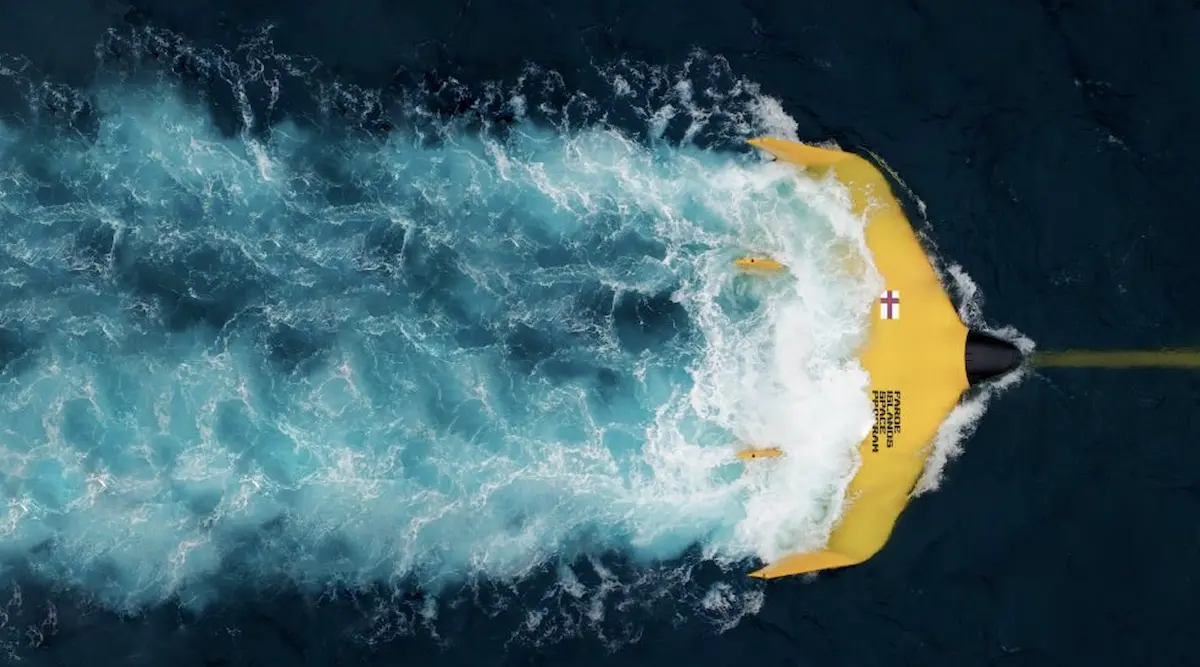
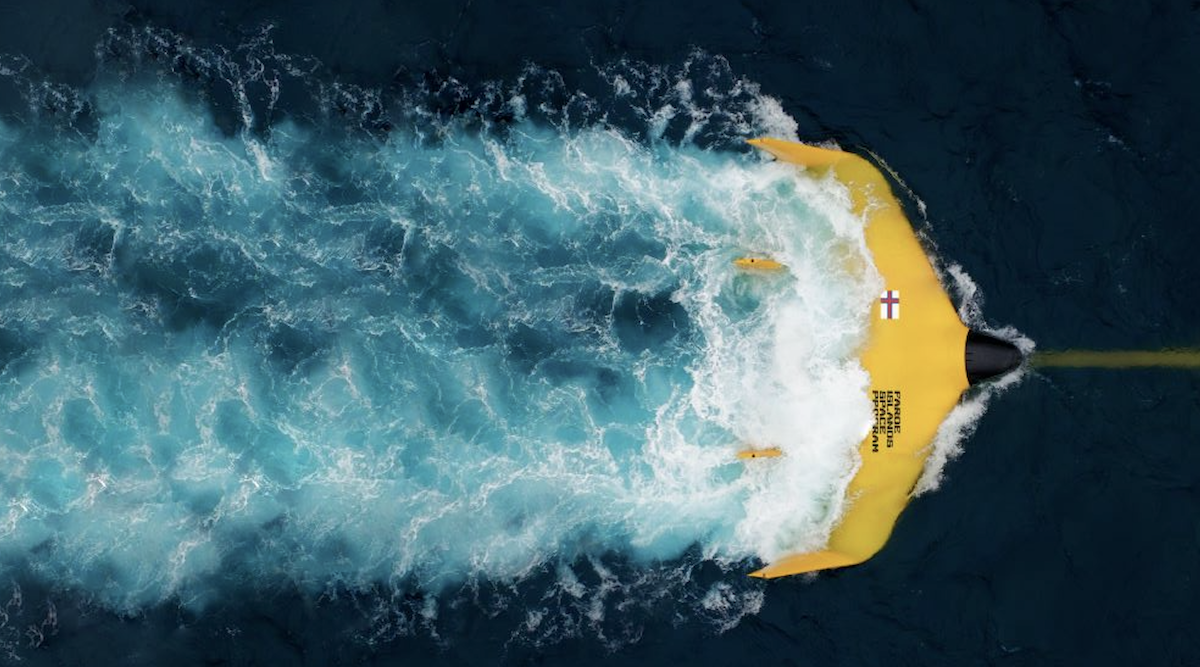
While US projects navigate testing and pilot phases, international developers have established a strong early lead in commercializing tidal energy solutions. Among the standout innovators is Sweden-based Minesto, which has spent years developing its proprietary "Dragon Class" series of tidal energy devices. These systems resemble high-tech underwater kites and are specifically engineered to optimize energy capture from low-flow tidal streams and ocean currents that traditional turbines struggle to utilize efficiently.
Minesto has strategically focused its commercial efforts on tourist-heavy destinations and remote island communities where the urgent demand for clean energy collides directly with strict aesthetic and environmental regulations. To date, the company has established active projects in places such as the Faroe Islands, Wales, and Taiwan.

In the latest development for the company, Minesto announced a new Memorandum of Understanding with UK-based investment firm Morteza Capital. The partnership is designed to spearhead clean power solutions for the Republic of Maldives. Financial and developmental backing for this initiative has also been bolstered by the "Nopef" economic development fund, an institution supported by Denmark, Finland, Iceland, Norway, Sweden, the Faroe Islands, Greenland, and the Åland Islands of Finland.
The Maldives presents an ideal use case for advanced tidal energy technology. Comprising hundreds of low-lying islands, the nation is acutely vulnerable to rising sea levels and intensifying extreme weather events driven by climate change. As a nation frequently cited as a poster child for the climate crisis, the government of the Maldives has made it a priority to break its heavy reliance on imported diesel fuel for electricity generation. However, because the national economy depends heavily on tourism, large-scale onshore wind and solar developments are often constrained by land availability and aesthetic preservation policies.
Minesto highlighted these unique challenges in a statement regarding the partnership. The Maldives faces severe hurdles in its green transition due to its geographically dispersed islands relying heavily on imported diesel, which drives up energy costs and carbon emissions. Because tourism serves as the cornerstone of the economy, developing renewable energy solutions that preserve the pristine natural environment and scenic landscapes is of paramount importance.
Next Steps For Renewable Energy In The US
Looking ahead, industry observers wonder if innovative technologies like Minesto’s undersea Dragon kites will eventually find a market in the United States, following the well-established path of other imported or domestically manufactured clean energy hardware. At the same time, analysts continue to examine the curious political paradox of why marine energy enjoys official favor under the current federal energy framework while wind and solar face persistent headwinds.
Despite regulatory hurdles and political friction, solar power has cemented its status as the most economical, accessible, and rapid method for delivering electricity to an energy-hungry public. Furthermore, the broader domestic wind industry is proving remarkably resilient. Fresh data from a recent Wood Management report indicates that the uptake of wind turbines actually hit a three-year high under the current administration during the second quarter of the year. Projections show that US onshore wind energy capacity is on track to expand by an additional 39 gigawatts by 2030, demonstrating that the underlying market demand for renewable power continues to drive growth regardless of shifting political landscapes.