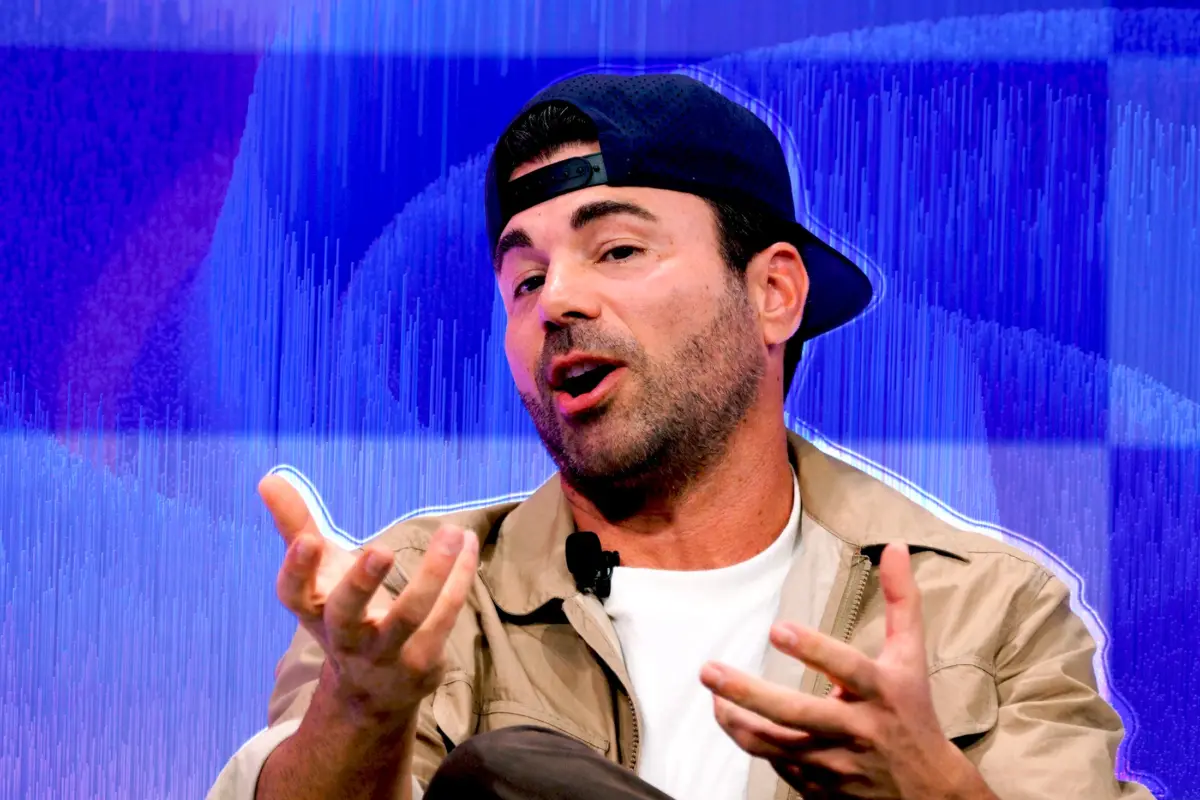
In the rapidly evolving landscape of digital media, the rise of artificial intelligence has introduced a fundamental shift in how content is produced, consumed, and valued. As AI-generated videos, voiceovers, and synthetic imagery flood social media platforms, individual creators are grappling with an existential question: how does one remain relevant when machines can generate hours of content in seconds? For Mark Rober, the former NASA engineer turned YouTube sensation, the answer is not to lean into automation, but to retreat into the physical world to perform feats that no algorithm can replicate.
Rober, whose channel boasts a staggering 85.7 million subscribers, has built his career on the foundation of high-stakes, real-world experimentation. His videos—ranging from the viral "How to Survive a Grenade Blast," which has garnered 100 million views, to the whimsical and complex "Can you swim in Jello?", which reached 224 million viewers—serve as a masterclass in curiosity-driven engineering. In a recent interview, Rober argued that as the internet becomes saturated with what he terms "AI slop"—a derogatory shorthand for low-quality, automated, or uninspired AI-generated content—the value of tangible, human-centric achievement will only increase.
The crux of Rober’s argument lies in the difference between a simulation and reality. During his discussion with Business Insider, he posed a rhetorical question that highlights the changing expectations of the digital audience: "Do you want to see a simulation of someone dunking a basketball with a sick trick, or do you want to see someone actually do it?" For Rober, the inherent risk, the effort, and the undeniable reality of a physical experiment are the "moat" that protects his brand. "The fact that you know it’s real is what makes it crazy," he noted.
This perspective is particularly relevant as the barrier to entry for content creation continues to collapse. When anyone can generate a polished, coherent video using text-to-video tools, technical production quality—once the hallmark of a professional YouTuber—becomes a commodity. Rober believes that for creators to survive this transition, they must pivot toward experiences that are inherently "noteworthy" and difficult to fake. By focusing on projects that require genuine engineering, physical presence, and the messy, unpredictable nature of real-world physics, Rober ensures that his content remains inimitable.
However, the financial realities of this approach are significant. Rober revealed that his YouTube channel generated approximately $17 million in revenue last year, a figure that mirrors the substantial costs required to produce his elaborate experiments. Unlike creators who rely on low-cost AI tools to maximize margins, Rober’s business model is built on high-cost, high-value production. This capital-intensive strategy is supported by his company, CrunchLabs, which focuses on educational products, such as maker kits designed to introduce children to the principles of science and engineering.
CrunchLabs, which now employs over 200 people, serves as a testament to the longevity of the "creator-as-educator" model. Rober’s mission, both on his channel and within his company, centers on the idea that in an age of automation, human curiosity is the most valuable asset one can possess. "Curiosity is so important in this new age of AI," Rober said. "It means you just have a lifetime of learning." By fostering this curiosity in the next generation, Rober is not only building a business but also attempting to cultivate a future workforce that views AI as a tool for discovery rather than a replacement for human intellect.
The Dual Nature of AI in Content Creation
The rise of AI has created a complex, often paradoxical, environment for content creators. On one hand, the tools provide unprecedented opportunities for efficiency and expansion. For instance, translation startups like Linguana have leveraged AI to allow creators to reach global audiences by automatically dubbing videos and translating metadata into multiple languages. This technology has enabled YouTubers to monetize existing content in new markets without the logistical burden of manual translation. As of April 2025, Linguana reported generating 10,000 video translations per month for hundreds of creators, operating on a revenue-sharing model that highlights the growing ecosystem surrounding AI-enabled expansion.
Conversely, this ease of production has created a "competitive challenge" that threatens to bury original, human-driven content. As AI makes it possible to generate content faster and more cheaply, the market risks becoming flooded with homogeneous, derivative works. Rober points out that for channels that rely heavily on anonymous narration, stock footage, or basic animation, the future may be bleak. When the technical execution of a video is no longer a differentiator, creators who lack a distinct, recognizable human personality or a unique real-world project will find it increasingly difficult to compete against AI agents that can operate 24/7.
This shift forces a re-evaluation of what constitutes "quality" in the digital age. For years, YouTube’s algorithm rewarded consistency, watch time, and click-through rates—metrics that were easily manipulated by those who could produce high volumes of content. If AI-generated content can satisfy these metrics at scale, the platform’s landscape may favor quantity over depth. However, Rober’s success suggests that there is a persistent, if not growing, audience hunger for authenticity. While AI can simulate many things, it cannot replicate the genuine tension of a test pilot failing to launch a drone or the human joy of a successful experiment that took months of trial and error.
Furthermore, the integration of AI in content creation is not a monolith; it is a spectrum. Some creators use AI to enhance their workflows, while others, like Rober, use it as a point of comparison to sharpen their own focus on what makes their work unique. The challenge for the broader creator economy will be to balance the efficiency offered by new technologies with the human element that keeps viewers engaged.
As the industry moves forward, the "moat" that Rober describes—the unique combination of his engineering background, his recognizable persona, and his dedication to complex, physical builds—serves as a blueprint for sustainability. It suggests that while the tools of the trade are changing, the fundamental principles of storytelling remain the same: audiences are drawn to stories that feel real, experiments that carry genuine stakes, and personalities that possess a unique, intellectual perspective on the world.
The tension between AI-driven efficiency and human-driven authenticity is likely to define the next era of online media. While some creators will undoubtedly choose to embrace the ease of automation, others will follow Rober’s lead, doubling down on projects that demand a physical presence. In this emerging landscape, the creators who thrive will likely be those who understand that while AI can help produce a video, it cannot replace the curiosity, the drive, and the tangible, messy reality of being a human in the world. As Rober continues to expand his influence through both his channel and his educational endeavors, his emphasis on curiosity as a "lifetime of learning" offers a compelling framework for how to navigate a future where the line between the synthetic and the real is increasingly blurred.