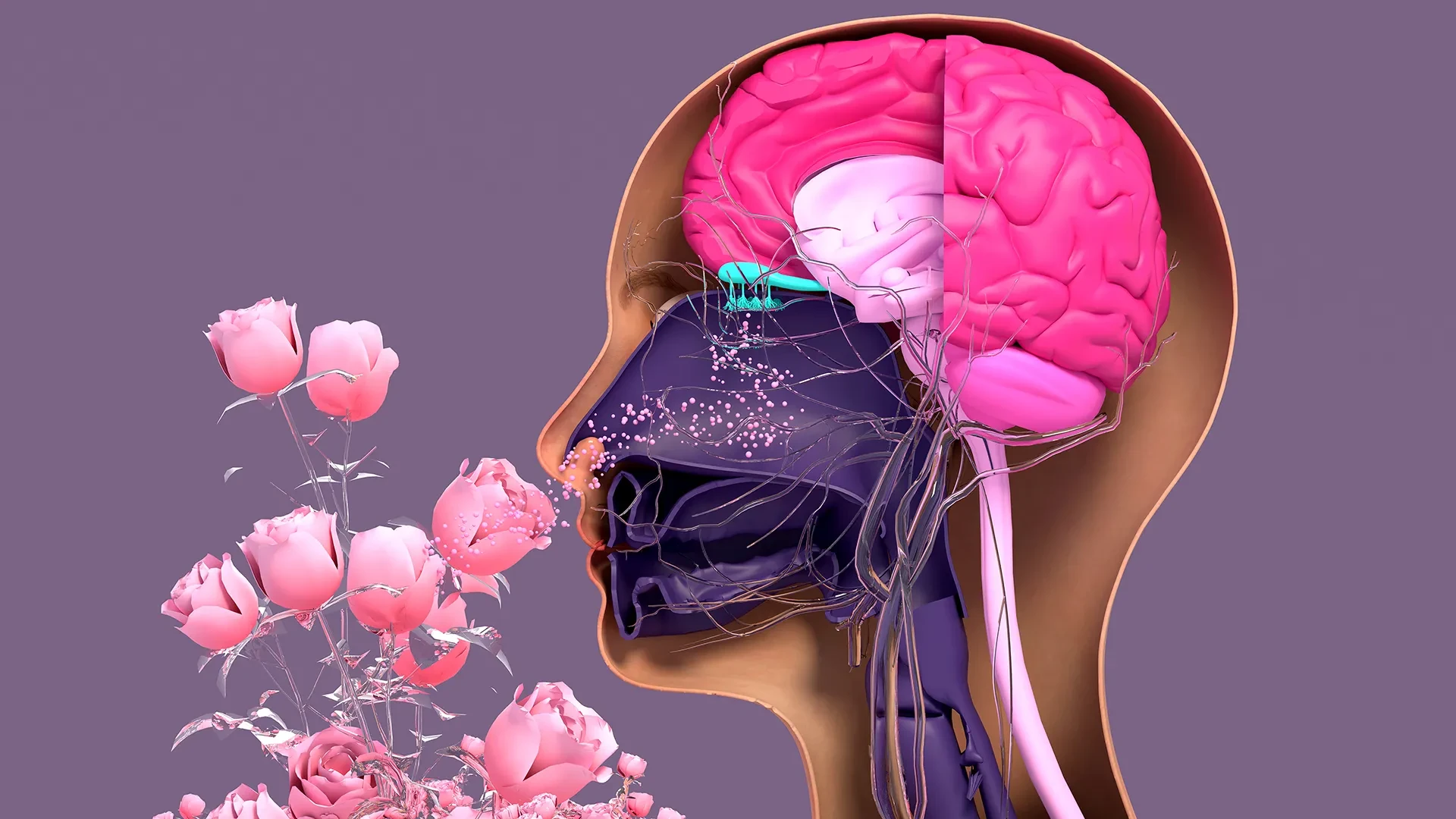
Researchers at Tufts University School of Medicine and the Graduate School of Biomedical Sciences (GSBS) have unlocked a significant mystery regarding how the nose regenerates nerve tissue. By developing a sophisticated, three-dimensional model to study the olfactory system, the team has discovered that a specific type of stem cell, long believed to be dormant, actually plays a pivotal, active role in preserving the human sense of smell. This breakthrough offers new insights into why our olfactory abilities might decline due to illness, environmental exposure, or the natural process of aging.
Unlike the central nervous system, where nerve damage is often permanent and catastrophic, the sensory neurons within the nasal cavity possess a remarkable, lifelong capacity for regeneration. This ability allows humans to recover their sense of smell even after significant injury or exposure to environmental hazards. However, this regenerative process is not infallible. Viral infections—most notably those caused by COVID-19—as well as chronic exposure to toxins and the inevitable progression of aging, can impair the function of these neurons or diminish the stem cells’ ability to replicate. When these mechanisms fail, the result is a partial or total loss of smell, a condition that can have profound impacts on a person’s quality of life, nutritional intake, and safety.
To better understand the biological underpinnings of this phenomenon, the research team at Tufts created an innovative, easy-to-construct three-dimensional olfactory tissue mouse model, known as an organoid. This tool allows scientists to observe in real-time how neurons are continuously generated within the nasal passage and provides a controlled environment to investigate the specific points at which this regenerative process breaks down. The findings of this study, recently published in the journal Cell Reports Methods, highlight a complex, interdependent relationship between two distinct types of stem cells found in the nose: horizontal basal cells (HBCs) and globose basal cells (GBCs).
For years, the scientific community operated under the assumption that HBCs were largely inactive, serving perhaps as a reserve pool that only mobilized under extreme circumstances. However, the new organoid model has challenged this consensus. "Our research suggests that these two stem cells may be interdependent," explains Brian Lin, a research assistant professor in the Department of Developmental, Molecular and Chemical Biology and the senior author of the study. "One type that we thought was largely dormant—HBCs—may actually play a crucial role in supporting the production of new neurons and the repair of damaged tissue."
Through their investigation, the team identified a specific subpopulation of HBCs, characterized by their expression of the protein KRT5, which actively facilitates the generation of new olfactory neurons. When the researchers selectively depleted these KRT5-expressing cells from the organoid cultures, they observed a significant impairment in the creation of new nerve tissue. This evidence suggests that these cells are not merely bystanders or dormant reserves; rather, they are essential orchestrators of the regenerative process. Without the supportive influence of these specific HBCs, the GBCs—which are the primary progenitors for new neurons—struggle to maintain the necessary pace of tissue renewal.
The implications of this discovery extend to the aging process as well. By analyzing cells harvested from mice of different ages and cultivating them within the organoid model, the researchers identified a clear decline in regenerative capacity in older tissue. "We found a decline in the ability of the older mice cells to generate new neurons," Lin notes. "We think this is due to a decrease in the GBC population as we age, but we need to do more work to test this hypothesis and, if so, develop ways to rejuvenate them." This potential link between age-related sensory loss and the depletion of specific stem cell populations opens a new frontier for regenerative medicine, suggesting that future therapies might focus on "recharging" these stem cell pools to restore function in elderly patients.
An Accessible Approach to Complex Research
The development of this model was not merely a technical success but a deliberate effort to democratize olfactory research. The project was led by Juliana Gutschow Gameiro, a former Ph.D. student visiting GSBS from the State University of Londrina in Brazil. Under the mentorship of Lin, Gameiro worked to ensure that the organoid protocol was accessible, inexpensive, and efficient, specifically designed for laboratories that might not have access to high-end, specialized equipment or unlimited funding.
The timing of this research is particularly critical. In the wake of the global COVID-19 pandemic, where the sudden loss of smell became a signature symptom for millions, interest in olfactory science has surged across many disciplines. Researchers in fields ranging from neurology to infectious disease are now turning their attention to the nasal epithelium. "Because loss of smell is associated with COVID-19, as well as with Parkinson’s disease and other conditions, a much larger number of researchers from a variety of different fields have begun researching olfactory epithelial cells in the last few years," Lin says. "We wanted to develop an easy-to-use model so that non-stem cell biologists and those working in labs with limited resources could use it to better understand how olfactory neurons regenerate and what happens that causes that process to diminish or fail completely."
By lowering the barrier to entry for studying these complex cell interactions, the Tufts team hopes to accelerate the pace of discovery across the global scientific community. The organoid model provides a platform that is more ethically and financially sustainable than whole-animal studies, while offering a more realistic biological environment than traditional, two-dimensional cell cultures.
Future Horizons: The Quest for a Human Organoid
While the current mouse-tissue model represents a major leap forward, the ultimate ambition of the Tufts team is to translate these findings into a human organoid system. Such a tool would be invaluable for clinical applications, particularly for drug screening. By testing pharmaceutical compounds on human-derived olfactory organoids, researchers could potentially identify treatments that stimulate nerve regeneration, offering hope to those suffering from persistent anosmia or hyposmia—the partial or total loss of smell.
The challenge, however, remains significant. Organoids have already been successfully engineered for other organs, such as the lungs and kidneys, but human olfactory tissue presents unique obstacles. Obtaining pure, uncontaminated samples is difficult; current methods involve the use of a brush-like device—similar to the ones used for COVID-19 testing—to swab the nasal cavity. Unfortunately, the samples collected in this manner are a complex mixture of both respiratory and olfactory stem cells. Distinguishing between the two, and then successfully coaxing the olfactory stem cells to grow and thrive in a laboratory environment, is a task that has proven elusive until now.
As the team moves forward, their next challenge is to develop a simple and inexpensive technique to isolate human olfactory stem cells from these mixed samples. Success in this area would represent the next milestone in a broader effort to move beyond simply observing the degradation of our senses and toward actively repairing the biological pathways that sustain them. By bridging the gap between basic stem cell biology and clinical application, the research conducted at Tufts provides a clear pathway for future therapies, turning the mystery of the regenerating nose into a manageable, and perhaps even treatable, scientific target. For the millions of individuals currently living with a diminished sense of smell, this progress offers the most promising evidence yet that the ability to smell, once lost, might eventually be restored.