Welcome to this week’s curation of the best essays, interviews, and deep dives circulating across the literary internet. Each week, we bring together the most thought-provoking conversations, historical retrospectives, and critical analyses from around the web, offering readers a comprehensive look at the ideas shaping contemporary literature and culture.
HISTORICAL PERSPECTIVES: THE FIRST INTERNATIONAL CONGRESS OF BLACK WRITERS AND ARTISTS
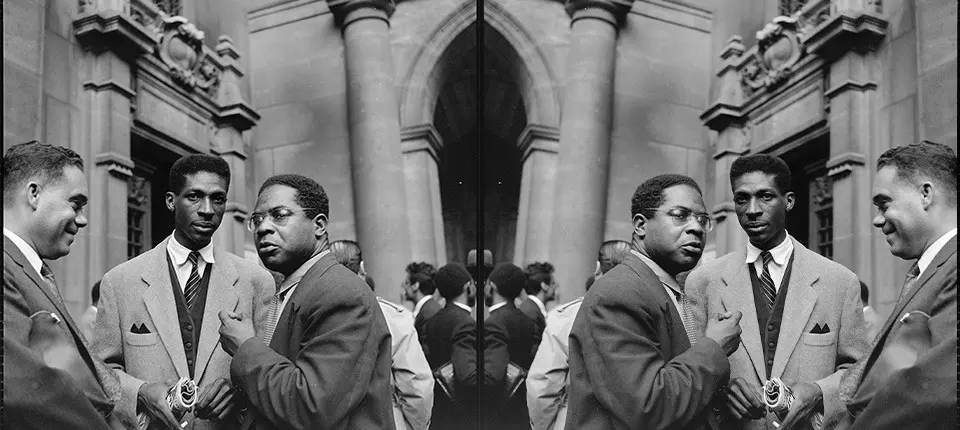
This week marks a major historical milestone in global literature and postcolonial thought. Back in 1956, the First International Congress of Black Writers and Artists officially convened at the Sorbonne in Paris. Organized by the pioneering publishing house Présence africaine, the landmark gathering brought together some of the most formidable intellectual and literary minds of the twentieth century to debate identity, culture, political liberation, and the global impact of colonialism.
The Congress featured a slate of legendary speakers whose works continue to define anti-colonial theory and world literature, including Richard Wright, Léopold Sédar Senghor, Aimé Césaire, and Frantz Fanon. Their discussions at the Sorbonne helped forge an unprecedented transnational dialogue among writers of African descent from the Caribbean, Africa, and the United States, laying foundational groundwork for decades of cultural and political resistance.
FROM COMMUNITY BOOKSTORES TO PRISON LITERATURE: ESSAYS AND DISCUSSIONS ON LITERARY HORIZONS
As always, the literary community is engaged in vital conversations about the physical spaces of reading and the urgent realities of writing under systemic constraints. For those pondering the viability of independent retail, recent commentary explores the personal and creative impetus behind opening an independent bookstore, examining how launching a local shop can inspire new fiction and fundamentally reshape a neighborhood’s connection to literature.
In another striking exploration of the written word’s reach, writers are examining the complex ethics and realities of documenting real and imagined lives both inside and outside of prison walls. This includes an essential look at the structural distribution of white supremacist literature within correctional facilities, contrasted with powerful testimonies on how authentic creative expressions—such as an Egyptian prison poem—can provide the architectural backbone for a deeply personal memoir.
Amid ongoing global tumult, writers continue to grapple with the role of levity and survival. Acclaimed novelist Rabih Alameddine recently reflected on the necessity and mechanics of writing humor during times of profound tragedy and political strain, offering insight into how comic relief and irony function as protective and revelatory tools in literature.
HISTORICAL ECHOES, GENRE FICTION, AND MODERN CULTURE
Literary history offers constant reminders of how art responds to the changing seasons and political climates. This week marks the historical moment when John Keats sat down to compose his enduring masterpiece, "To Autumn," capturing the fleeting beauty and melancholy of the natural world. Meanwhile, genre fiction enthusiasts have plenty to anticipate, with critics rounding up the most exciting and anticipated mysteries, thrillers, and crime novels scheduled to hit shelves this fall.
Television and streaming platforms are similarly leaning into literary adaptations, with a fresh slate of book-to-screen projects arriving for the new season. Analysts are also examining the cultural underpinnings of contemporary media, including a critical look at the orientalism and imperial gaze present in Western horror films like Lee Cronin’s The Mummy, as well as an exploration of what modern UFO fanaticism reveals about the persistent psychology of conspiratorial thinking in America.
Technological advancements and modern conveniences remain a central anxiety for contemporary authors. Contributors have been evaluating the detrimental nature of modern conveniences—clarifying distinctions in books written about inconvenience versus those aided by artificial intelligence—while revisiting Vikram Chandra’s classic ode to the art of human coding in an era increasingly dominated by automated systems.
CRAFT, CONVERSATION, AND CRITICAL REFLECTION
For those dedicated to the craft of writing, ongoing discussions examine the true beneficiaries of traditional MFA workshops, while prominent authors share insights into their creative processes. Emily St. John Mandel recently sat down with Jane Ciabattari to discuss the intricacies of writing a novel centered on dystopian counterlives. Similarly, acclaimed author Isabel Allende detailed the surprising genesis of her latest work, explaining how an intimate letter written to her grandfather was ultimately transformed into a full-scale novel.
In translation and publishing circles, translators like Antonella Lettieri are opening up about the delicate art of bringing foreign works to English-speaking audiences, sharing insights into translating Roberta Recchia’s debut novel, All That Is Left of Life.
Biographical and historical reflections continue to honor cultural icons whose legacies resonate today. Readers can explore tributes to Robert Redford, celebrating his dual legacy as an iconic movie star and a pioneering conservationist through the founding of Sundance, alongside a remembrance of Anna May Wong, widely recognized as Hollywood’s first Asian-American star.
From deep dives into the mechanics of poetry collections addressing breakups and awakenings, to explorations of how romance novels frequently fill the crucial gaps left by inadequate sex education, the literary internet remains a vibrant ecosystem of critique, comfort, and cultural documentation. Whether readers are seeking out new book reviews, examining the power of the word "no" as discussed by Anna Holmes, or discovering how writers are tackling America’s devastating opioid crisis through nonfiction, this week’s literary landscape underscores the enduring power of narrative to make sense of an increasingly complex world.