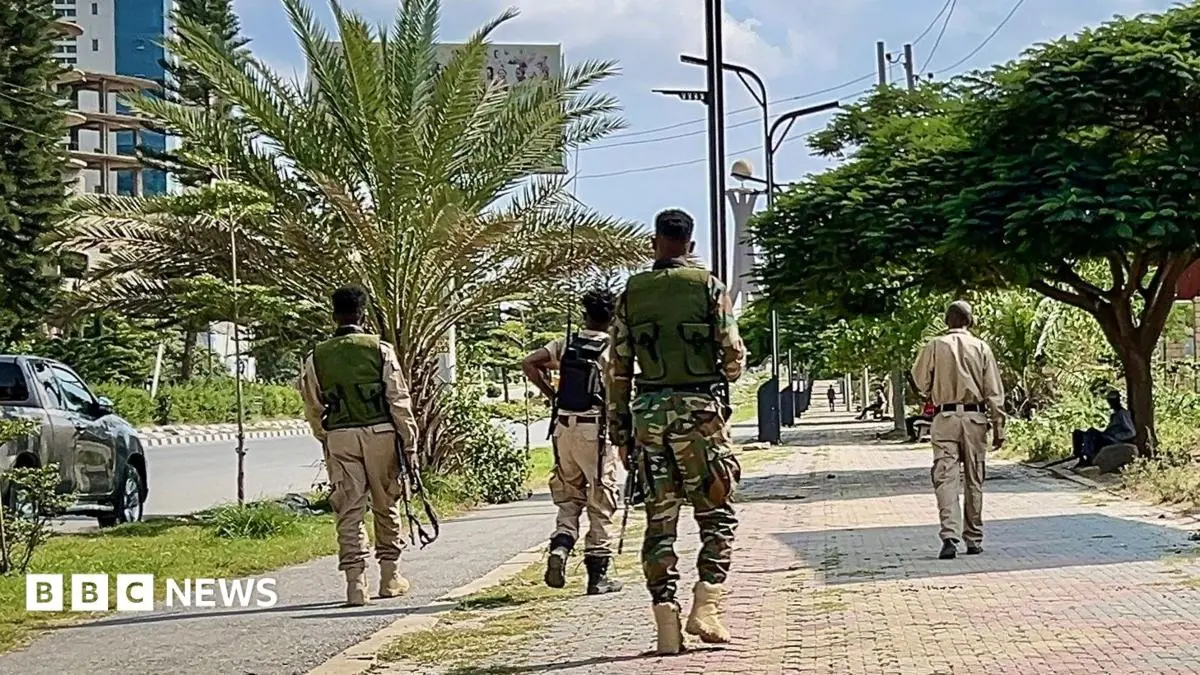
The fragile peace that has held Ethiopia’s northern Tigray region in a precarious state of uneasy calm since late 2022 appears to be shattering. The Ethiopian federal government and the Tigray People’s Liberation Front (TPLF)—the political party currently in control of the region—have traded accusations of launching fresh offensives, sparking urgent international concern that the Horn of Africa’s most significant power is sliding back into a full-scale, devastating civil war.
The escalation began in earnest early Wednesday, as reports emerged that Tigrayan forces had moved to seize control of federally administered airports within the region. Getachew Reda, a cabinet minister and adviser to Prime Minister Abiy Ahmed, confirmed the development, characterizing the maneuvers as an act of aggression. In a statement shared across social media platforms, Getachew—who once served as the head of Tigray’s interim administration before a high-profile political falling out with the TPLF in 2025—expressed his deep frustration. "It is rather heartbreaking to learn that, despite efforts by many, including the international community, to avoid yet another round of war in Tigray, the TPLF leadership early this morning launched an all-out offensive against government positions in Afar and Amhara," he stated.
Residents of Mekelle, the regional capital of Tigray, reported that local forces had effectively ousted national police units from the city’s airport early Wednesday morning. The reaction from the central government was immediate; Ethiopian Airlines, the national carrier, announced the cancellation of all flights to the region, effectively cutting off one of the few remaining lifelines between Tigray and the outside world.
A Fragile Peace Collapses
The current hostilities represent a volatile reversal of the Pretoria Agreement, the African Union-brokered deal signed in November 2022 that formally ended two years of intense fighting. That conflict, widely regarded as one of the deadliest of the 21st century, left a staggering human toll. Estimates provided by AU mediators suggest that upwards of 600,000 people lost their lives, while millions more were pushed to the precipice of famine as agricultural cycles were disrupted and aid corridors were choked by the frontlines.
For months, the implementation of the Pretoria Agreement has been marred by mutual accusations of bad faith. Tigrayan authorities have argued that they were forced into a "defensive war" following a series of provocative drone strikes carried out against regional targets. These strikes, which have intensified in recent days, have left the civilian population in a state of terror. On Tuesday, a particularly harrowing strike in the southern town of Alamata resulted in at least 14 civilian deaths and 22 injuries.
Mogos Shiferaw, the mayor of Alamata, provided a grim account of the incident to the BBC. He alleged that a coordinated assault involving more than five drones and a fighter jet saw over 21 strikes commence around 03:30 local time. "This caused a lot of psychological trauma in our city and our people were in a state of panic," Mogos said. He maintained that the casualties were entirely civilian and accused federal forces of deliberately targeting two local secondary schools. While the federal government has not officially commented on the specific allegations regarding Alamata, local officials like Mogos contend that the schools were targeted under the suspicion that they were being used as military installations, despite them being unoccupied during the school break.
Political Polarization and Regional Alliances
The resurgence of violence is deeply rooted in a shifting political landscape. Tensions have been simmering since the May general election, which was notably not held in Tigray due to the ongoing security instability. In a bold challenge to the federal government, the TPLF opted to restore its pre-war administrative structure, effectively disbanding the interim administration that Prime Minister Abiy Ahmed had previously installed.
The situation was further complicated on Sunday when the TPLF announced it had formed a formal alliance with six other armed groups across Ethiopia. This coalition has declared its intent to remove the government in Addis Ababa, signaling a transition from regional grievances to a broader existential threat to the federal state.
At the United Nations General Assembly, Ethiopian President Taye Astike Selassie sought to defend the government’s position, asserting that Ethiopia had shown "immense restraint" in the face of what he termed "interference in our internal affairs by adversarial elements." While he stopped short of naming specific countries or groups, his rhetoric was unambiguous. "Our message to forces of destruction and mayhem is loud and clear," the President declared. "We urge them to respect the sacred right of the people of the Horn of Africa to live in peace and prosperity."
International Alarm and Humanitarian Concerns
The international community has reacted with profound alarm. Mahmoud Ali Youssouf, the chairperson of the African Union Commission, has issued an urgent plea for an immediate de-escalation of hostilities, calling upon both the federal government and the TPLF leadership to return to the negotiating table.
The United States has also weighed in, with the US ambassador to Ethiopia offering a sharp rebuke of the TPLF. The ambassador condemned the decision to launch a large-scale offensive, describing it as an "unwinnable fight" that will only exacerbate the suffering of the Ethiopian people. Furthermore, the US State Department’s Bureau of African Affairs expressed particular concern over a recent drone strike that targeted a convoy of Catholic vehicles carrying food aid. Calling for a thorough investigation, the Bureau urged all parties to uphold humanitarian and human rights laws and to prevent the recurrence of such incidents.
The humanitarian situation, already fragile, is worsening by the hour. Tigrayan authorities have accused the central government of launching an "open invasion" and have urged the local population to maintain unity and support regional forces. They claim that the federal government’s actions have led to the systematic disruption of public services and critical infrastructure. These reports of disrupted services are compounded by concerns over recent reports that the TPLF has been engaged in the forced recruitment of young men into its ranks—a development that mirrors the dark tactics employed during the height of the civil war.
A Path Toward Uncertainty
The discord regarding the Pretoria Agreement remains the core of the impasse. Prime Minister Abiy Ahmed has repeatedly accused the TPLF of weaponizing the peace period to reorganize its military capabilities and prepare for renewed conflict, a charge he articulated in a parliamentary address as recently as July. Conversely, the TPLF leaders argue that the federal government has failed to address the return of disputed territories and the restoration of essential services, rendering the peace agreement a hollow document.
As the fog of war descends once more over northern Ethiopia, the prospect of a peaceful resolution appears increasingly distant. With flights grounded, aid convoys under threat, and armed alliances solidifying against the state, the country faces a critical juncture. The echoes of the 2022 conflict—a period of starvation, mass displacement, and immense loss—weigh heavily on the populace. Whether the current skirmishes can be contained or if they will ignite a firestorm that consumes the region once again remains the defining question for Ethiopia’s future. For now, both sides appear entrenched, with the language of diplomacy being rapidly replaced by the language of the battlefield.