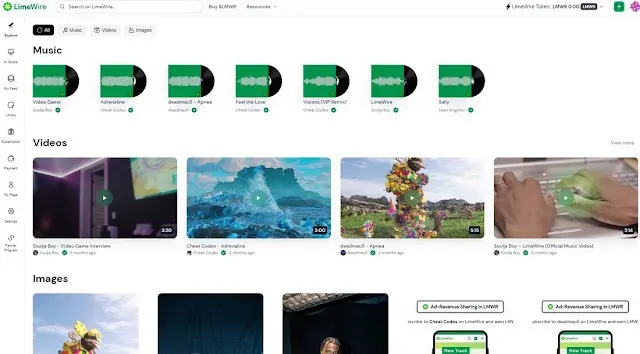
In the rapidly shifting landscape of generative artificial intelligence, few brand transformations are as striking as that of LimeWire. Once synonymous with the peer-to-peer file-sharing culture of the early 2000s, the brand has undergone a complete metamorphosis. Today, LimeWire has re-emerged not as a relic of the past, but as a forward-looking, cutting-edge AI content publishing platform designed to meet the demands of the modern creator economy. By blending sophisticated generative AI tools with blockchain-based monetization, the platform aims to empower a new generation of artists, musicians, and digital creators to craft, distribute, and profit from their work in an increasingly automated world.
This contemporary iteration of LimeWire serves as more than just a software suite; it is a holistic ecosystem. While the digital landscape is currently saturated with a multitude of disparate AI tools, LimeWire distinguishes itself by integrating creation with community and commerce. It provides a unique bridge between the act of artistic creation and the practical realities of digital ownership and revenue generation. Whether a user is an experienced digital designer or an enthusiast looking to explore the capabilities of generative art, the platform offers a gateway to harness the power of artificial intelligence through a service that remains accessible and intuitive.
A New Chapter for a Familiar Name
The shift from its original identity to its current purpose represents a strategic pivot toward the future of digital content. The new LimeWire Studio serves as the central hub where users are encouraged to register, experiment, and unleash their creative potential. By providing a space where AI-generated content can be showcased to a global audience, the platform has already attracted a diverse roster of talent. Notable figures in the music and entertainment industry—including Deadmau5, Soulja Boy, and Sean Kingston—have utilized the infrastructure to publish content in the form of NFT-backed music, videos, and images, signaling a significant level of institutional and industry interest in the platform’s potential.
The core philosophy driving this evolution is the empowerment of the creator. LimeWire moves beyond the typical "prompt-and-forget" model of many AI generators by allowing users to transform every piece of generated content into a unique, ownable, and tradable asset. By leveraging the security and transparency of blockchain technology, specifically the Polygon and Algorand networks, the platform ensures that digital creations are not merely transient images but authenticated collectibles. This infrastructure provides a foundation for a new type of fan-creator relationship, where supporters can subscribe to their favorite artists, immerse themselves in the creative journey, and own digital assets that hold tangible value within the community.
The Power of LimeWire AI Studio
At the heart of the platform lies the LimeWire AI Studio, an evolving toolkit that currently focuses on high-fidelity image generation. The engine driving this studio is built upon some of the most advanced models available in the industry, including Stable Diffusion 2.1, Stable Diffusion XL, and DALL-E 2. This technical foundation provides users with the versatility needed to navigate various creative complexities. From simple, word-based prompts to intricate, multi-layered instructions, the platform is designed to accommodate both the novice looking for a quick result and the professional searching for granular control over their output.
One of the standout features of the LimeWire experience is its seamless integration of distinct AI models and visual styles. The platform allows creators to experiment with a wide array of aesthetics—such as cinematic, digital art, pixel art, anime, and analog film—with the simple click of a button. By switching between models and applying various samplers, users can fine-tune the quality and detail levels of their artwork, ensuring that the final output aligns with their unique vision.
Looking ahead, the platform’s development roadmap suggests a commitment to continuous innovation. LimeWire is currently in the process of developing its own proprietary AI model, which aims to further differentiate its output and provide even greater creative flexibility. Furthermore, the platform has ambitious plans to expand its scope beyond static images, with upcoming tools specifically designed for AI-driven music and video generation. These additions are expected to broaden the platform’s utility, positioning LimeWire as a central, multi-modal hub for digital content creation.
Monetization and the Creator Economy
Perhaps the most significant aspect of the modern LimeWire is its integrated approach to monetization. Recognizing that the creator economy relies on sustainable revenue models, the platform introduces several avenues for users to generate income. Perhaps most notably, the system automatically mints content as NFTs upon publication. This process not only provides a sense of digital permanence but also opens the door for trade. Each time an asset is traded within the community, the original creator earns a 2.5% royalty, ensuring they are continuously rewarded for their intellectual property.
Beyond NFT sales, LimeWire provides a direct revenue-sharing model based on user engagement. When creators publish their work, they become eligible to receive 70% of the ad revenue generated by their images, music, and videos on the platform. This creates a recurring income stream that incentivizes high-quality content production. The platform’s internal currency, the LMWR token, facilitates this ecosystem. Earnings are paid out monthly in LMWR, which can then be traded on major global cryptocurrency exchanges such as Kraken, ByBit, and UniSwap. For those deeply embedded in the ecosystem, these tokens also serve as a utility, allowing users to pay for additional prompts and credits to fuel further generation.
The platform also provides flexibility in how content is distributed. Creators can opt for a public release, which maximizes visibility and facilitates secondary market trading, or they can choose a premium subscription model. The latter allows creators to gate their content, offering exclusive access to dedicated fans. This tiered approach empowers creators to curate their own business models, whether they prefer the broad reach of public content or the intimacy of a subscription-based fan club.
Accessibility and Tiered Engagement
LimeWire maintains an inclusive entry point by offering free access to its AI tools. New users receive a set of initial credits, allowing them to generate up to 20 images per day, which serves as a low-risk introduction to the platform’s capabilities. However, for power users, designers, and professional creators, the platform offers a series of tiered subscription plans that scale according to need.
The pricing structure is designed to reward consistent users. The $9.99 monthly tier provides 1,000 credits—enough for up to 2,000 image generations—along with early access to new AI models and a 50% ad revenue share. As users scale up to the $29, $49, and $99 monthly tiers, the benefits increase significantly. Higher tiers provide up to 22,500 credits per month, a larger share of ad revenue (up to 70%), and a Pro profile badge. All premium subscribers benefit from faster image generation, a comprehensive history of their creative work, and an ad-free experience, ensuring that the interface remains clean and focused on the creative process.
As LimeWire continues to iterate on its technology and expand its features, it represents a notable case study in how established digital brands can adapt to the AI era. By democratizing access to complex creative tools and providing a transparent, blockchain-verified path to monetization, the platform is carving out a distinct niche. For creators, the future of the platform lies in its upcoming transition toward music and video, promising a horizon where the barriers between imagination and professional-grade digital production continue to dissolve. As the platform matures, it remains a space to watch for those interested in the intersection of generative technology, decentralized finance, and the evolving nature of digital artistry.