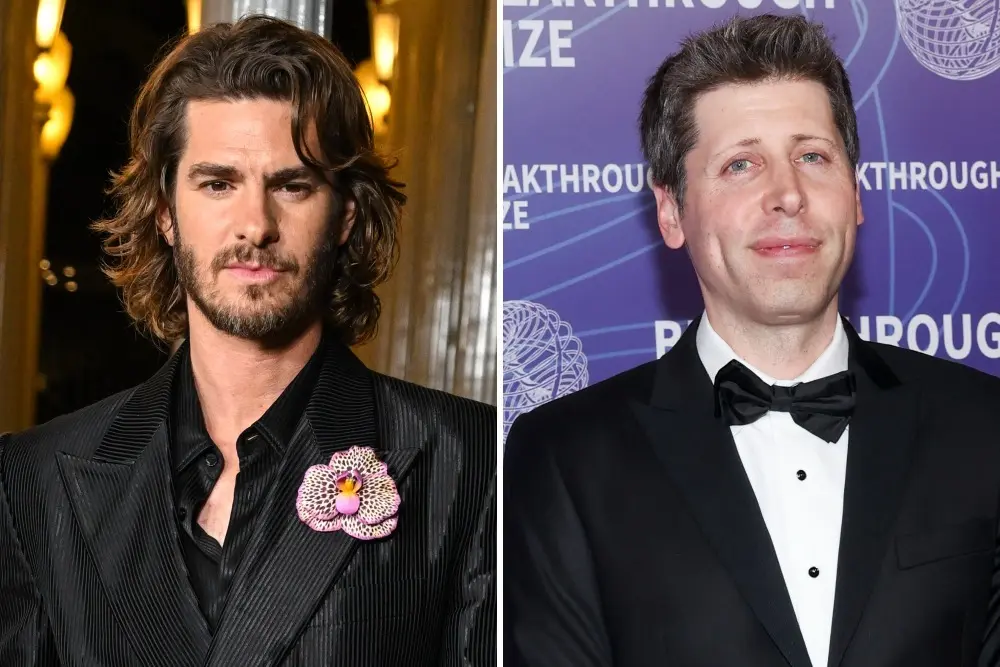
Andrew Garfield’s recent performance as OpenAI co-founder and CEO Sam Altman in the Luca Guadagnino-directed film Artificial has sparked significant conversation regarding the tech industry’s most polarizing figure. While the film’s depiction of Altman is widely regarded as nuanced and, at times, less than flattering, Garfield recently revealed a surprising personal evolution in his own perspective. For the Academy Award-nominated actor, the journey toward inhabiting the role was marked by a shift from genuine, deep-seated admiration to a more cautious, observant skepticism.
The actor offered these candid reflections during a Q&A session held Monday night at the Academy Museum in Los Angeles, following a special AMPAS screening of Artificial. The film itself serves as a cinematic chronicle of the chaotic rise of OpenAI, tracking its transition from a mission-driven nonprofit to the high-stakes corporate landscape defined by the meteoric launch of ChatGPT. The narrative also leans heavily into the internal volatility that has defined the company’s recent history, including the dramatic firing and subsequent rapid rehiring of Altman, a period that left many in the tech sector reeling.
Garfield shared that his initial fascination with Altman was rooted in the CEO’s public persona, particularly his early legislative appearances. "The first time I saw Sam, he was testifying in front of Congress and he was saying incredibly righteous stuff," Garfield told the audience. He recalled being struck by the authority and apparent moral clarity with which Altman navigated those high-pressure environments. "He was talking about transparency; he was talking about the risks. He was very, very casually saying, ‘No, I don’t have any equity in OpenAI. I’m just doing this because I love the technology and I’m passionate and I actually care about human beings.’"
At the time, those messages resonated deeply with Garfield, who saw in Altman a potential archetype for the kind of conscientious leader needed to navigate the dangerous intersection of rapid technological advancement and societal safety. The actor admitted that he found the broader context of Altman’s public life equally compelling. "I thought it was also just incredibly courageous for an out gay tech genius to be sat in front of Republican congressmen who probably don’t believe in his right to exist," Garfield noted.
The image of Altman as a principled, meditative figure—bolstered by stories of the CEO seeking counsel from renowned Buddhist teacher Jack Kornfield—further cemented Garfield’s positive impression. "All of these things were adding up for me, and I was in such deep admiration of him," Garfield said. "I was like, ‘Oh, we need more of these.’ I was like, ‘He’s genuinely great and he seems to really have his values and priorities in the right place.’ I thought, ‘This guy might be like my future best friend.’"
However, as the reality of the tech landscape and the internal dynamics at OpenAI have become more public, Garfield’s tone has shifted. When pressed on his current feelings toward the executive during the Q&A, Garfield stopped short of delivering a direct critique, opting instead to let the public narrative speak for itself. "He convinced me that he was nothing but purely altruistic, which, I mean, it’s all playing out. I’m not gonna comment on those things," he said. "We all are seeing what’s happening and we can all have our own feelings and opinions of that."

This transition from hero-worship to an analytical distance seems to inform the complexity of his performance in Artificial. For Garfield, the role is less about impersonation and more about grappling with the broader, more "terrifying" implications of artificial intelligence. He expressed a deep concern about the future of human agency, emphasizing that the burden of control should not rest solely with those driving the technology. "It’s terrifying," he admitted. "I feel like if enough artists and if enough people who have power can regulate, can be a part of a conversation of making sure that we aren’t just giving our future away, lose all of our autonomy, I think we’ll be maybe OK? I don’t know. I think that is about as hopeful as I can be."
The distance between the actor and his subject was further highlighted by a recent point of contention regarding a supposed interaction between the two. In a recent interview with GQ, Altman recounted an anecdote in which he and Garfield allegedly waved at one another while the film crew was shooting on location in front of Altman’s San Francisco home. Garfield, however, was quick to set the record straight, categorically denying that any such interaction occurred.
"No, I saw that interview and I replayed it a few times to try and discern what he was actually saying, because I was very confused by that," Garfield said. "I never had any interaction with him. I’ve never seen him in real life."
The actor provided a detailed account of the day in question, describing the atmosphere on set as notably strange. "We were shooting outside of his house. It was an eerie day, for sure. We were told that he wasn’t home and his security people were there. I think I saw one security guard. But, no, I never saw Sam, so he maybe mistook someone else for me. I have no idea, but I’ve never waved at Sam. I’ve never seen him. I was curious about that."
Despite the lack of a real-life meeting, Garfield’s interest in the man behind the headlines remains intact. Although he did not reach out to Altman for research purposes while preparing for the film—a choice often made by actors to preserve the integrity of their interpretation—he has previously expressed an openness to a direct conversation. In a July interview, Garfield noted that while he lacks the logistical means to contact the CEO, he remains intrigued by the prospect. "I wouldn’t know how to. I don’t have his number. I don’t have his email," Garfield said. "But I’m sure that he’d be able to reach me if he wants to. I’d be very excited and curious to talk with him if he would ever want to do that."
For now, the relationship between the actor and the executive remains defined by the space between them—a space filled with public testimony, cinematic interpretation, and the ongoing, unresolved debate over the ethics of artificial intelligence. As Artificial continues to circulate, Garfield’s performance serves as a mirror for the public’s own evolving relationship with tech leaders: a mix of initial, hope-filled admiration followed by a sobering, necessary skepticism.