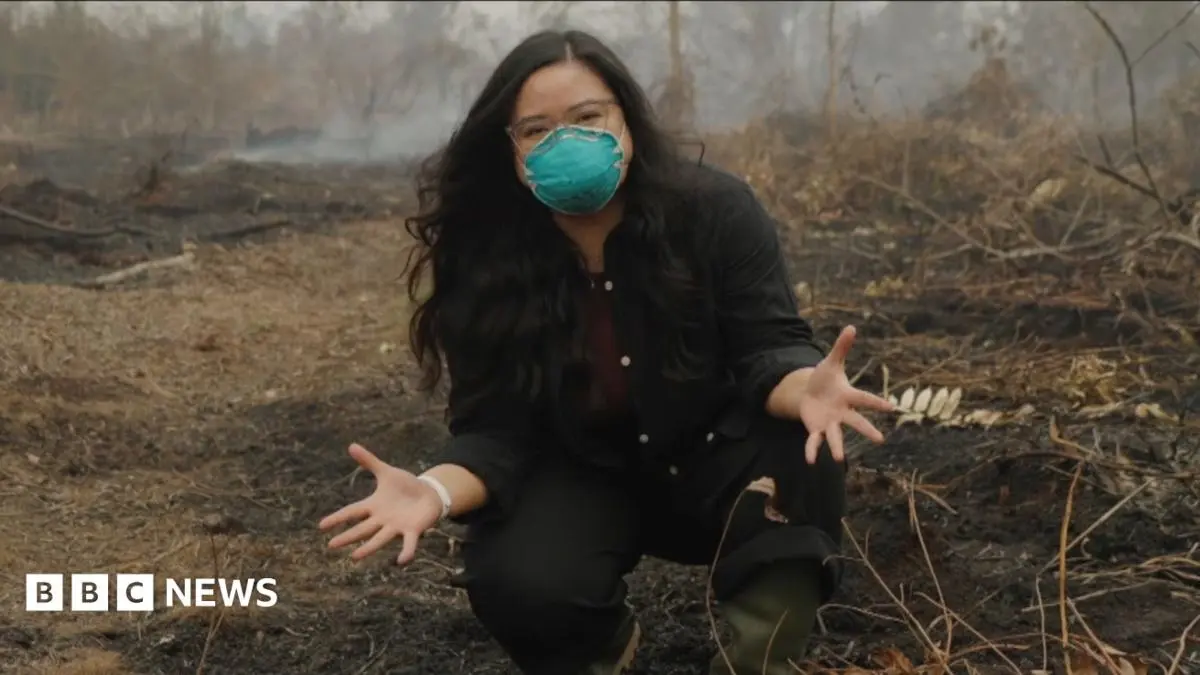
CENTRAL KALIMANTAN — The horizon in Central Kalimantan has vanished behind a thick, suffocating veil of grey. For residents across this Indonesian province, the sun has been reduced to a pale, sickly disc, struggling to pierce through a relentless blanket of smoke that has persisted for weeks. Reporting from the heart of the crisis, the BBC’s Liza Tambunan describes an atmosphere that has become increasingly hostile to human life, as Indonesia grapples with its most severe wildfire season in over ten years.
The scale of the disaster is difficult to overstate. What began as localized hotspots has spiraled into a regional environmental emergency. Millions of people living in the immediate vicinity are currently breathing air quality levels that health officials categorize as hazardous. The haze, fueled by a combination of dry weather and human-driven land clearing, has not remained contained within Indonesia’s borders. Driven by prevailing winds, the toxic plume has drifted across the sea, blanketing neighboring Singapore and Malaysia. In these nations, schools have been forced to close, air quality indices have plummeted to record lows, and citizens have been advised to limit outdoor activity as the fine particulate matter poses an immediate threat to respiratory health.
The environmental catastrophe has once again thrust the spotlight onto the delicate and combustible nature of Indonesia’s landscape. Central Kalimantan, like much of the region, sits atop vast expanses of peatland. These ecosystems, characterized by layers of partially decayed organic matter that have accumulated over thousands of years, are among the most effective carbon sinks on the planet. However, when these lands are drained for agricultural expansion—often to make way for palm oil or pulpwood plantations—they become highly susceptible to fire.
The current crisis highlights the catastrophic vulnerability of these dried-out peatlands. Unlike standard forest fires that consume timber and brush on the surface, fires in peatlands are notoriously difficult to detect and even harder to extinguish. Tambunan explains that the problem lies in the subterranean nature of these blazes. Because peat is essentially compressed organic material, the fire can smolder deep underground, moving horizontally through the soil, far beneath the reach of traditional firefighting efforts.
The heat generated by these underground fires can persist for weeks, even months, creating a persistent source of smoke that resists rainfall. Even when the surface appears to be clear or dampened by a light shower, the fire continues to burn beneath the topsoil, waiting for a dry spell to erupt once more. This cycle of smoldering, combined with the extreme drought conditions currently plaguing the region, has created a "perfect storm" that has pushed the fire-fighting capabilities of local and national authorities to their absolute limit.
The human impact of this haze is profound. For the residents of Central Kalimantan, daily life has been significantly disrupted. The air carries a sharp, acrid odor that sticks to clothing and invades homes, leaving millions to rely on face masks just to navigate their own neighborhoods. Local clinics have reported a sharp uptick in patients suffering from acute respiratory infections, asthma exacerbations, and eye irritations. For the most vulnerable members of the population—the elderly, the very young, and those with pre-existing health conditions—the current air quality is nothing short of a public health crisis.
The international dimension of the haze has further complicated the situation. The diplomatic tension between Indonesia and its neighbors, particularly Singapore and Malaysia, has intensified as the smoke clouds have triggered public outcry and political pressure. Officials in these countries have expressed frustration over the inability to stem the tide of pollution, which threatens both the health of their citizens and their local economies. The recurring nature of this problem, which has periodically plagued the region for decades, has led to intense scrutiny of Indonesia’s land management policies.
The difficulty in containing these fires stems from a complex intersection of geography, economics, and climate. Peatland, in its natural, waterlogged state, is fire-resistant. However, the drainage canals constructed to prepare the land for industrial use remove this essential moisture, turning what was once a swampy, carbon-rich barrier into a tinderbox. Once the peat ignites, it releases massive quantities of carbon dioxide and other pollutants into the atmosphere, contributing significantly to global greenhouse gas emissions.
Efforts to combat the fires are being carried out by a combination of local emergency response teams, military personnel, and volunteers. They are employing a variety of strategies, including water bombing from aircraft and the construction of "blocking dams" to try and re-wet the scorched peat. Yet, as Tambunan notes, these efforts are often reactive. The vast, remote nature of the peatlands makes it nearly impossible to monitor every hectare, and by the time a fire is identified from the air, it has often already burrowed deep into the earth.
The reliance on fire as a cheap method for land clearing remains a significant hurdle. Despite government regulations and public awareness campaigns aimed at curbing the practice, the economic pressures driving the agricultural industry continue to incentivize the use of fire to clear plots of land for cultivation. This practice, when combined with an unusually dry season that exacerbates the inflammability of the landscape, creates an environment where containment becomes an uphill battle.
As the smoke continues to hang heavy over the region, the focus remains on the immediate health risks and the ongoing efforts to bring the fires under control. However, the situation in Central Kalimantan serves as a grim reminder of the long-term environmental consequences of disrupting peatland ecosystems. The resilience of these landscapes has been tested to its breaking point, and the resulting haze is a visible, tactile symptom of a deeper, systemic issue.
For the millions currently breathing the acrid air, the immediate priority is survival. For the authorities, it is the logistical nightmare of extinguishing an enemy that burns beneath their feet. The situation remains fluid, with weather patterns dictating the movement of the smoke and the potential for any respite. As Indonesia navigates the remainder of this wildfire season, the eyes of the region remain fixed on the smoldering peatlands, waiting for the rain or the intervention that might finally put an end to the suffocating haze. The persistence of these fires, and the sheer scale of the environmental and public health toll, ensures that this season will be remembered as one of the most challenging in recent history, raising urgent questions about how such catastrophes can be prevented in the years to come.