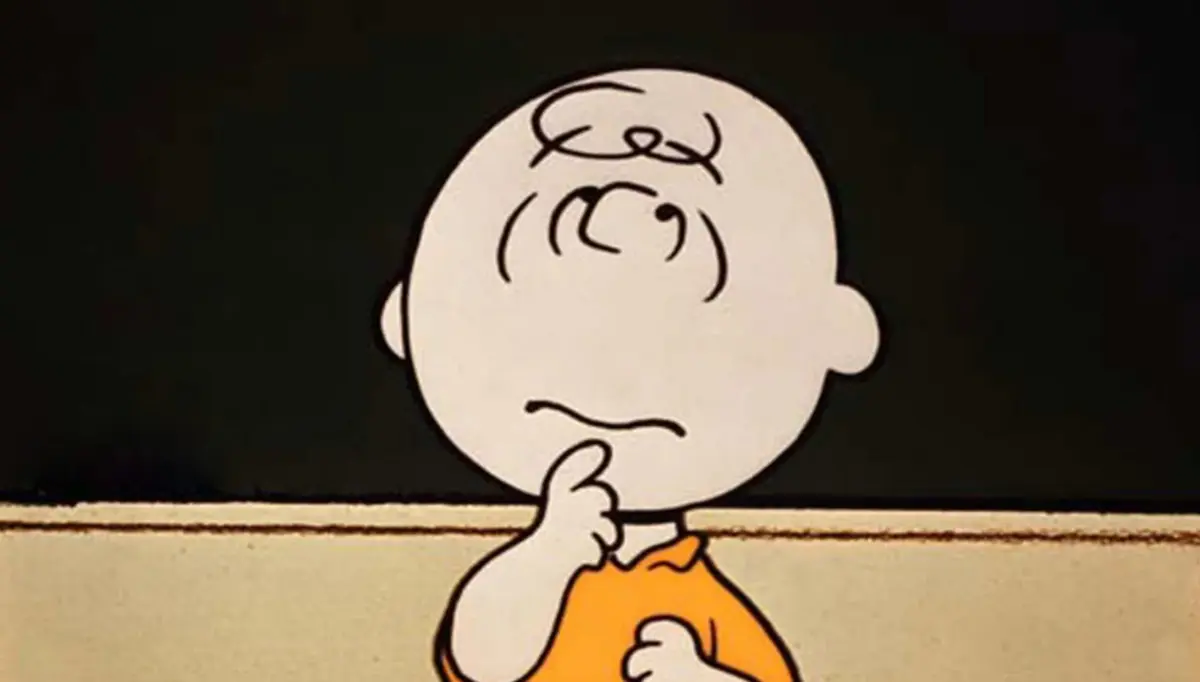
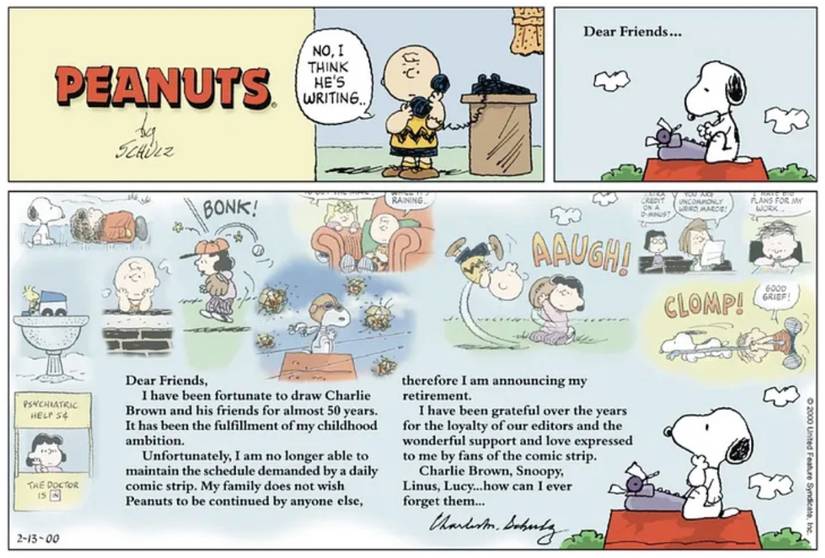
American cartoonist Charles Schulz passed away on February 12, 2000, at the age of 77, leaving behind a profound legacy that had shaped popular culture for half a century. Just one day later, on February 13, the final Peanuts comic strip appeared in newspapers across the globe, officially bringing to a close the 50-year run of Charlie Brown, Snoopy, and the rest of the beloved neighborhood gang. At a glance, the timing might seem deliberately poetic—a master creator penning his own artistic obituary. However, that poignant synchronicity was entirely coincidental.
Daily and Sunday comic strips, particularly widely syndicated features like Peanuts, were created, inked, and submitted weeks in advance to meet rigorous printing and distribution schedules. Schulz had announced his retirement two months prior, in December 1999, following a series of strokes and a battle with advancing colorectal cancer. He drew his final strip shortly after making that public announcement. While Schulz certainly knew he was gravely ill and nearing the end of his life, he could not have anticipated the exact day of his passing, making the convergence of his death and the final strip’s publication a striking twist of fate.
The timing was auspicious and deeply fitting for a man whose work left an indelible mark on American and international culture. Over the course of a legendary 50-year career, Schulz produced nearly 18,000 individual Peanuts strips. While many relied on gentle humor, recurring gags, and sweet childhood observations, others ventured into unexpected philosophical territory. Among those countless panels is a sequence from February 3, 1966, which arguably contains Schulz’s finest and most profound quote—a remarkably high bar for a creator of such extraordinary and enduring output.

Charlie Brown and the spelling bee
The unforgettable line in question emerged as part of an extended storyline centered around Charlie Brown participating in a school spelling bee. The narrative arc began on February 2, 1966, and stretched across sixteen consecutive weekday strips, concluding on February 20. Because Sunday strips required an exceptionally long lead time and often catered to a broader casual readership, they were typically self-contained and excluded from the tight continuity of the weekday storylines.
Within the plot of the spelling bee arc, an enthusiastic Charlie Brown volunteers to represent his class. True to his classic, perpetual underdog persona, he immediately falters when it matters most, misspelling his very first assigned word—"maze"—as "m-a-y-s." Crushed by the public blunder, a deeply stressed Charlie Brown retreats to his desk and buries his head in his arms. When his teacher gently instructs him to lift his head, a defensive Charlie Brown snaps at her in frustration, earning himself a prompt trip to the principal’s office. After serving his brief punishment, he returns to the classroom to offer a remorseful apology to his teacher.
The true emotional and philosophical peak of the storyline, however, arrived early in the sequence during the second strip, right after Charlie Brown first announced his intention to join the spelling bee. The strip opens with a characteristically incredulous Lucy, who cannot fathom why Charlie Brown would willingly subject himself to potential public humiliation. Confronted by her biting skepticism, an exasperated Charlie Brown shouts back in defense of his decision, asking what could possibly be wrong with simply trying.

It is right at that moment that Charlie Brown delivers an observation of staggering clarity:
"What’s the good of living if you don’t try a few things?"
It is a brilliantly simple yet deeply moving statement, offering a fundamental truth about the human condition that resonates just as strongly with adults as it does with children. Yet, true to the dynamics of the strip, the profundity of the remark completely escapes both participants. Lucy remains unimpressed and cynical, while Charlie Brown is simply reacting out of youthful frustration. Neither character realizes they have just articulated a profound philosophy of existence. This lack of self-awareness was a hallmark of Peanuts, where moments of profound wisdom frequently emerged from the mouths of ordinary, bumbling children. However, historical evidence suggests that even Charles Schulz himself failed to fully recognize the extraordinary weight of the words he had written.
Charlie Brown on the big screen
The extensive 20-part spelling bee storyline eventually served as the direct narrative foundation for the very first feature-length Peanuts film, A Boy Named Charlie Brown, which premiered in theaters on December 4, 1969. Written entirely by Schulz himself, the movie stands as a significant yet occasionally overlooked milestone in animation history, adapting the familiar spelling bee plot and expanding it to fill an 85-minute runtime with original musical numbers and subplots.
Despite Schulz’s direct involvement in translating his comic continuity to the silver screen, notable elements from the original print run were left behind in the adaptation—including that unforgettable declaration about the value of trying. Whether the line was omitted because it did not fit the pacing of the cinematic narrative or because Schulz simply did not view it as uniquely special remains unclear.
Regardless of its omission from the film, the sentiment endures. That single line of dialogue carries as much weight and wisdom as the formal reflections of philosophers, statesmen, and thinkers throughout history. It touches on the very core of human motivation: asking what the point of existence truly is if one refuses to take risks, face vulnerability, and experience the world. Charles Schulz spent a lifetime trying, pushing the boundaries of his medium day after day, and the result was a body of work that continues to speak to generations of readers.