
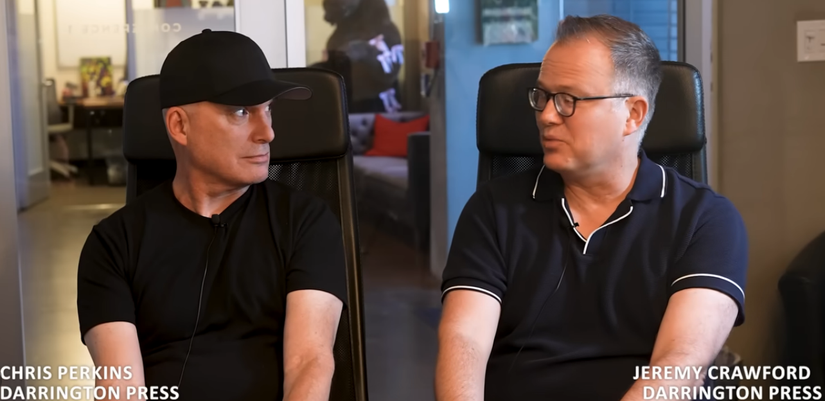
For over a decade, Chris Perkins and Jeremy Crawford defined the modern era of Dungeons & Dragons. As two of the lead designers for the game’s 5th edition, they worked alongside Mike Mearls and numerous other creators to establish the look, feel, and ruleset that governed millions of tables worldwide. Their foundational work on the core rulebooks for both 5e and its iterative follow-up, often referred to as 5.5e, laid the structural bedrock for contemporary tabletop roleplaying games. Beyond the mechanics, they also authored some of the most celebrated and commercially successful adventures in the history of the hobby, including Curse of Strahd, which remains the best-selling Dungeons & Dragons adventure of all time.
Given their deeply entrenched histories with Wizards of the Coast, it marked a seismic shift in the tabletop industry when both designers announced they were leaving D&D to join Critical Role’s publishing arm, Darrington Press. Their destination was Daggerheart, a brand-new fantasy roleplaying game whose core mechanics were already established by a different design team. Stepping into an ongoing system to helm future products meant learning to build within a framework they hadn’t originally written, presenting a unique professional transition for two of the industry’s most veteran creators.
Chris Perkins and Jeremy Crawford Discuss Leaving D&D for Daggerheart

Despite the monumental nature of the career move, both designers have expressed profound enthusiasm for the creative freedom and structural flexibility they found at Darrington Press. Speaking in a video interview, Perkins noted that the transition felt remarkably natural because game design rarely happens in a vacuum. Even while working on successive editions of Dungeons & Dragons, they were continually building upon decades of existing history, mechanics, and the collective labor of previous creators.
Crawford echoed those sentiments, describing his time working on the system as an absolute delight. According to Crawford, Daggerheart offers a distinct advantage through its balance of modular flexibility and fresh design space. The ruleset provides enough robust components to let creators easily build new content, while still remaining open enough to explore uncharted territories in upcoming expansions and sourcebooks.
Much like how every iteration of Dungeons & Dragons absorbs influences from the wider gaming ecosystem, Daggerheart reflects the evolution of the tabletop hobby as a whole. Many of the mechanics baked into the game’s core resemble popular homebrew rules that organically developed at home tables over many years. For instance, the Syndicate Rogue class feature known as "Well-Connected" directly mirrors the widely popular "I know a guy" house rule that many Dungeon Masters incorporated into their D&D sessions for decades.
Crawford emphasizes that this continuity extends far beyond just two competing franchises. The broader roleplaying community is constantly experimenting with novel ways to tell stories and structure worlds, regardless of the specific system on the table. He credits the original Daggerheart design team with successfully capturing lightning in a bottle by synthesizing these community-driven innovations into a cohesive, official ruleset.

Collaborative Storytelling Is in Daggerheart’s DNA
Collaborative storytelling is a phrase frequently used to describe the ideal experience of playing tabletop roleplaying games. It refers to the dynamic where the Game Master and the players dynamically build a narrative together as events unfold around the table. While a Dungeon Master typically arrives with a pre-planned outline or campaign frame, the best sessions rely on player choices to genuinely alter the direction of the plot.
In traditional games like Dungeons & Dragons, this collaborative ethos is rarely enforced by the core rules themselves; rather, it exists as a best practice implemented by skilled DMs who know how to share narrative agency with their group. Daggerheart, however, bakes this collaborative philosophy directly into its foundational mechanics and product design.
Crawford points out that this design choice is central to the entire identity of the game, taking concepts that individual gaming groups pioneered over years of play and cementing them as core features. This philosophy extends beyond basic mechanics and deeply influences how supplemental material, campaign frames, and adventures are written.
Perkins explains that when designing adventures and campaign frameworks for Daggerheart, creators actively write moments into the text where the material speaks directly to the players, or instructs the Game Master to turn to the group and ask them to contribute directly to the world-building. For a veteran adventure designer who has spent a lifetime crafting traditional linear modules, this shift represents a fundamental transformation in how published campaigns are structured. Rather than leading players down a predetermined path, the system intentionally puts the players in a position to steer the ship.
While independent publishers and smaller indie systems have experimented with player-driven world-building elements for years, Daggerheart brings this level of collaborative design to a major commercial scale. The implementation could fundamentally alter how major publishers approach adventure design moving forward.
Daggerheart Is Set to Revolutionize the TTRPG Industry
As Perkins tackles the monumental task of developing a massive anthology comprising over 100 Daggerheart adventures, he finds himself drawing parallels to the late 1970s. Back then, Gary Gygax and his colleagues were drafting the classic modules that would go on to define the fantasy roleplaying genre for generations. Working with a fresh system provides a rare opportunity to throw out old assumptions and experiment with new formats.
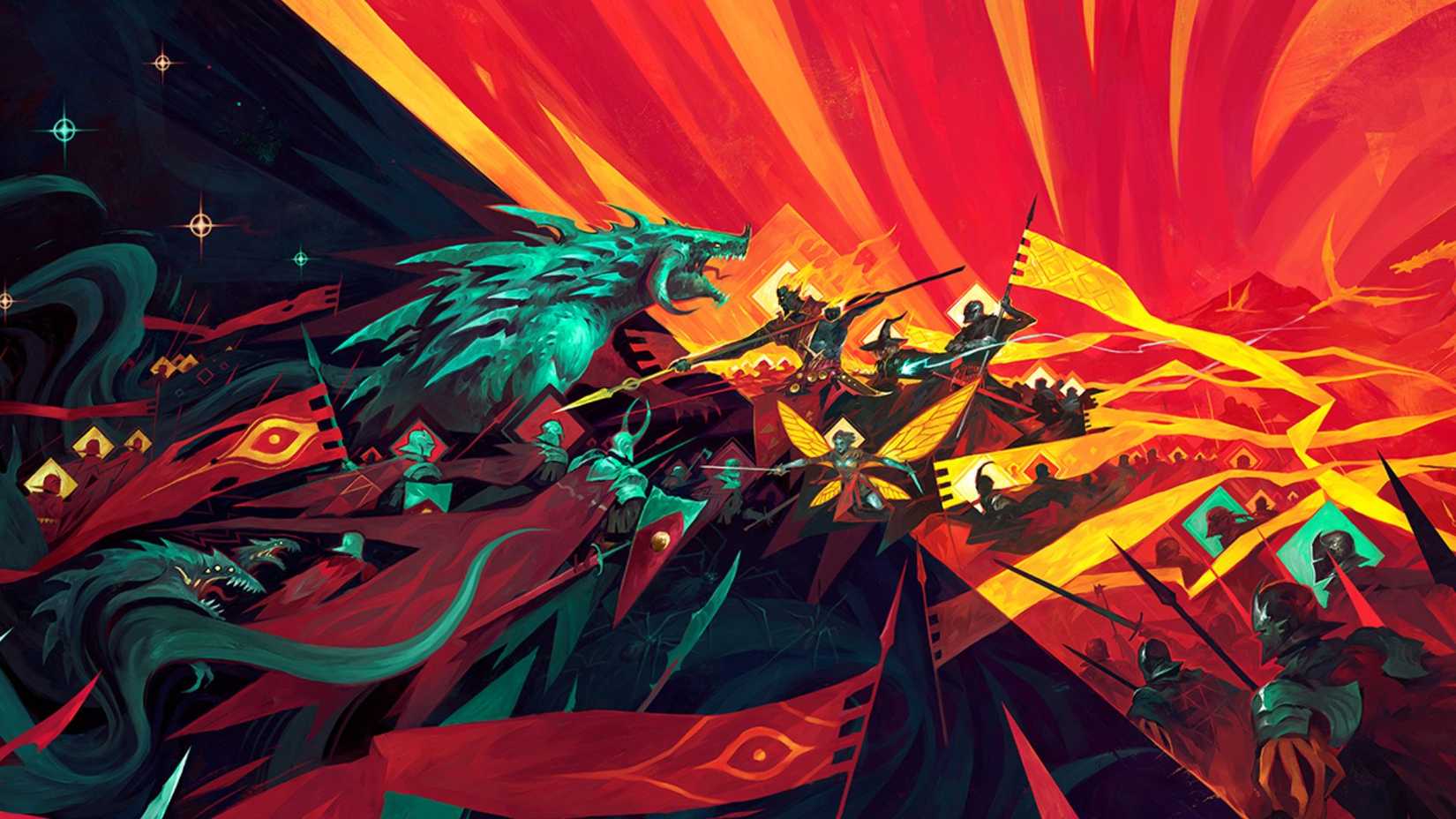
Perkins notes the excitement of exploring what a Daggerheart adventure can truly be, given that the game currently has only a handful of published modules in circulation. Unlike Dungeons & Dragons, where the structure of an official adventure has been heavily codified over decades of publishing history, the team working on Darrington Press projects has a blank slate. They are embracing the chance to take creative risks, experiment with unconventional structures, and discover what resonates best with players.
Meanwhile, Crawford is turning his attention toward the development of a dark, atmospheric campaign setting. While major details remain tightly under wraps, he hints that the project will offer a realm of dark fantasy capable of appealing even to players who do not typically gravitate toward horror themes. The setting has already been tied to previously announced additions like the Blood Hunter and Summoner classes, as well as atmospheric elements teased during the Age of Umbra: Sallowlands actual-play series run by Matt Mercer.
Although the first year following the release of Daggerheart maintained a relatively measured pace, upcoming publishing schedules indicate that the landscape is poised for a significant shift. With Darrington Press targeting a steady cadence of major tentpole releases each year, the system is solidifying its position as a substantial presence in the modern tabletop market.
For the creators behind the scenes, however, the growth of the game is about more than corporate rivalry or fandom debates. Crawford views the expansion of the hobby as a collective effort to advance a shared artistic medium. Emphasizing the value of roleplaying games as a unique vehicle for human connection and entertainment, he expresses enthusiasm whenever the art form moves forward, regardless of the specific system or publisher leading the charge.