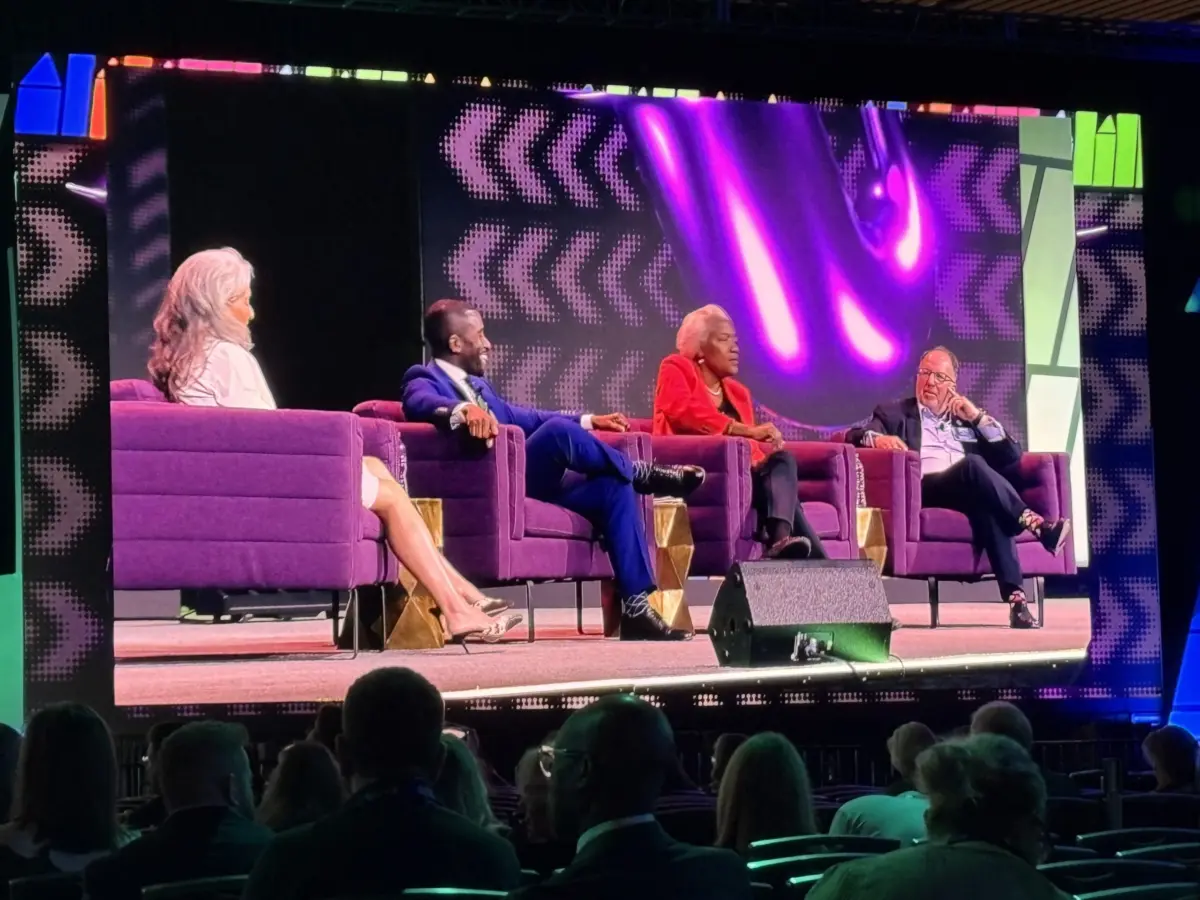
Democrats’ historic midterm sweep will hand them control of Congress, but keeping it could depend entirely on whether they can successfully make housing more affordable, according to leading political strategists from both sides of the aisle.
"The American dream has an address," veteran Democratic strategist Donna Brazile told a room of real estate professionals gathered in New Orleans.
Speaking alongside conservative political strategist Shermichael Singleton at the National Association of Realtors’ NAR NXT conference, Brazile cautioned that the recent Democratic electoral victories should not be interpreted as an unconditional endorsement of party policies. Instead, she described the outcome as a direct demand from weary voters for relief from the crushing cost of living.
Singleton quickly agreed with that assessment, arguing that Republicans had already learned that painful political lesson the hard way during previous election cycles.
"Our voters felt we fundamentally failed," Singleton said, pointing to persistently high fuel and food costs, alongside younger Americans’ growing inability to afford homes, as prime examples of unfulfilled economic promises.
Brazile warned that Democrats could easily face the exact same political reckoning in the upcoming 2028 elections if they fail to take swift and meaningful action.
"If you’re not going to help build more houses and take care of the affairs of the American people, they will kick our [expletive] in two years," she said bluntly to the audience.
Housing Affordability Becomes an Electoral Reckoning
The broader affordability crisis that ultimately propelled Democrats to victory has been a volatile political liability for whichever party holds power. Brazile noted that this dynamic serves as a stark warning to both major political parties heading toward the 2028 presidential and congressional elections.
"Affordability has been on the minds of American people now for two consecutive years," Brazile said, acknowledging that the previous administration of Joe Biden and Kamala Harris had largely failed to recognize the sheer depth of voter frustration ahead of the 2024 election cycle.
Today, the housing market offers perhaps the clearest and most painful illustration of why that economic frustration has persisted across the country.
Mortgage rates climbed dramatically from roughly 3% in 2021 to nearly 8% by late 2023. This rapid spike compounded a severe, pandemic-era surge in home prices, Lawrence Yun, chief economist at the National Association of Realtors, explained during a separate presentation at the conference.
And while borrowing costs have eased somewhat since their peak, home prices continue to march upward. Prices rose in approximately 78% of U.S. metropolitan markets during the third quarter of the year, according to the latest quarterly market report from the National Association of Realtors.
Existing homeowners have heavily benefited from that widespread property appreciation. Yun estimated that the typical property owner has gained nearly $200,000 in housing wealth since before the pandemic began. Prospective buyers, however, face a dramatically higher cost of entry into the housing market.
The socioeconomic consequences of this divide are particularly stark for younger generations of Americans. First-time homebuyers now account for just 22% of all home purchases, while their median age has reached 40 years old, matching a record high established the previous year, according to the newly released profile data from the National Association of Realtors.
"Maybe the election result was partly reflecting that fact," Yun said, pointing directly to the millions of younger Americans who continue to struggle just to secure a foothold in the housing market.
For Singleton, who is 36 years old, the economic frustration is deeply personal rather than merely theoretical.
"You do everything right. You get the college degree. You get the graduate degree. You start the family. You can’t afford anything," he said.
Singleton noted that while he was fortunate enough to purchase his first home at the age of 28, many of his friends—who are now approaching or already entering their 40s—still cannot afford to buy a property of their own.
With millennials and Generation Z now accounting for a substantial and increasingly influential share of the American electorate, Singleton argued that housing access could easily become the most decisive factor in how younger generations cast their ballots in future elections.
A Bipartisan Opening—But Can Washington Deliver?
Amid deep and persistent political divisions in Washington, the striking agreement between Brazile and Singleton on the urgent nature of the housing crisis highlighted a rare moment of consensus. Furthermore, there is already a powerful legislative precedent for bipartisan cooperation on the issue.
The 21st Century ROAD to Housing Act, enacted earlier in the year, received overwhelming support from both parties, easily passing the Senate by an 85-5 margin and clearing the House of Representatives with a 358-32 vote. The core legislation aims to boost housing inventory by actively reducing regulatory barriers, expanding financing opportunities, and supporting innovative approaches to residential construction.
However, legislative passage was merely the first step in a long process. Many key provisions still require proper implementation and dedicated funding, meaning their tangible effects on the broader housing market could take years to fully materialize.
Singleton sees clear opportunities to build upon that legislative foundation by addressing roadblocks much closer to home. These include local permitting delays, escalating construction costs, and lingering economic pressures such as tariffs on Canadian lumber.
"One of the things that I hear about often from them is that the length of time it takes to get something approved is very costly," he said, referencing ongoing conversations he has had with residential homebuilders.
He also proposed heavily investing in training younger Americans to enter vital professions as electricians, plumbers, and other skilled tradespeople to help construct the millions of housing units the nation desperately needs.
That perspective was echoed by Scott Norman, CEO of the Texas Association of Builders, who identified workforce development as a critical bipartisan priority in an interview following Democrats’ recent sweep of elected offices in Texas.
"The more folks we can get in the business, that’ll drive down those labor costs," Norman said.
Brazile emphasized that the broader Democratic affordability agenda must place housing directly alongside groceries, energy costs, and everyday family expenses, with a heavy emphasis on cutting government red tape and aggressively expanding supply.
"Affordability, affordability, affordability. It’s not a slogan that Democrats can use again unless they do something about it," she warned.
Successfully delivering on those ambitious promises, however, will ultimately require a level of political compromise that neither major party has consistently demonstrated in recent years.
"We have the money, but we need the will," Brazile said.
Recalling past crises, Brazile shared an emotional moment from the one-hour conference session as she reflected on working alongside Republican President George W. Bush to secure vital federal assistance after Hurricane Katrina devastated New Orleans in 2005.
Despite their significant political differences at the time, Brazile noted that she worked cooperatively with the Bush administration to secure essential funding for housing recovery, local infrastructure, and a new veterans’ medical center.
"That’s bipartisanship. That’s compromise. That’s what it looks like," she told the audience.
Her closing message to the real estate professionals in attendance was to bring that exact same commitment to the newly elected lawmakers who will shape national housing policy in the upcoming congressional term.
"You know the stories because you live it every day," she told them, urging agents to actively share the real-world experiences of families struggling to find and afford homes in their communities.
With a new Congress preparing to take office, Brazile argued that such firsthand knowledge could prove invaluable in transforming empty campaign promises of affordability into concrete policies that actually deliver results for the American people.