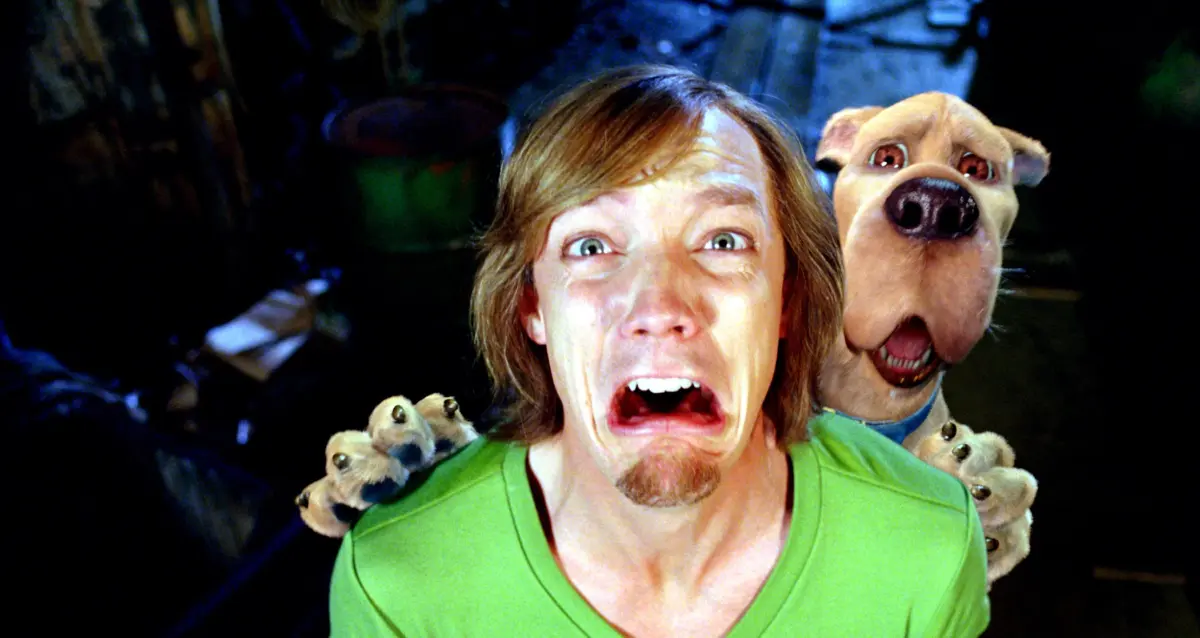
For many actors, landing a role in a massive, live-action franchise is the ultimate career milestone—a gateway to A-list status and a decade of high-profile leading roles. For Matthew Lillard, however, the 2002 live-action Scooby-Doo film represented something far more complicated. While the movie was a commercial juggernaut, grossing $275 million worldwide and cementing Lillard’s performance as the definitive live-action Shaggy, the experience ultimately led to a period of professional crisis and deep personal reflection. In a recent appearance on Variety’s "Know Their Lines" video series, Lillard opened up about the "love-hate" dynamic he has maintained with the franchise, detailing the crushing pressure of the early 2000s and the humbling reality check that followed the franchise’s abrupt conclusion.
The 2002 Scooby-Doo film was a cultural phenomenon, bringing the beloved animated mystery-solvers into the real world with a star-studded cast that included Freddie Prinze Jr. as Fred, Sarah Michelle Gellar as Daphne, and Linda Cardellini as Velma. For Lillard, the role was meant to be the launchpad for his career as a blockbuster leading man. However, the momentum built by the first film stalled significantly following the 2004 sequel, Scooby-Doo 2: Monsters Unleashed. When the sequel failed to achieve the same critical and commercial traction, the franchise was effectively shelved, and Lillard found his trajectory as a Hollywood star suddenly and unexpectedly cut short.
Reflecting on those years, Lillard was remarkably candid about the psychological toll the transition took on him. "I felt a ton of pressure to not suck," Lillard told Variety’s Nick Stango. "It was the first big movie that I was in and it was a big opportunity for me. And then I felt that Scooby-Doo is this big movie, I’m now going to go off and be a big movie star."
That expectation, however, collided with the harsh reality of the industry. "It was right about this time, after the second movie, that my career took a real nosedive for a long time," Lillard admitted. "Like, I may be one of those guys from the ’90s that never comes back. This movie is a love-hate relationship for me because I was like, ‘It’s Scooby-Doo’s fault. That’s why I’m not working.’"
This period of stagnation was not just a professional disappointment; it was a financial and personal challenge that forced Lillard to reevaluate his life and his identity as an actor. Despite his resentment toward the franchise during those lean years, Lillard acknowledges that the Scooby-Doo films, particularly the lucrative sequel, were the very things that kept his family afloat when his career prospects dwindled.
"I resented Scooby-Doo for a long time, but I never regretted doing it because the reality is that if I didn’t have the money I made in the second film, I wouldn’t have made it through," Lillard explained. The financial reality of the situation forced significant, life-altering changes for his family. They were required to downsize their lifestyle to cope with the sudden lack of work, selling their cars and their home to maintain financial stability.
"My wife and I would have had to sell everything. We eventually [did sell a lot]. We sold our cars, we sold our house. We basically downsized our lives so that we could live in a very affordable way. And my wife went back to work, and that was a real pivotal moment for me as well."
For an actor who had been riding the wave of early 2000s success, this period served as a profound lesson in humility. Lillard had spent years believing his own hype, operating under the assumption that he was a leading man of the highest caliber. The post-Scooby-Doo period stripped away that veneer, forcing him to confront the reality that he was, at his core, a character actor—a realization he now views as a blessing rather than a failure.
"Like I felt like before this movie, ‘I’m doing all these movies and I’m a big guy.’ The reality was I’m not. I was always a character actor, and I thought I was more than that," he said. "There was like a real humbling of Matthew Lillard that happens right after this movie that now I’m so grateful for."
Lillard’s financial windfall from the Scooby-Doo sequel remains the largest payday of his career, but the irony of that success is not lost on him. In a previous interview with Business Insider last year, Lillard detailed the same narrative arc: he had expected the sequel to propel him into a decade of being the number one name on the call sheet, only to find himself unable to secure work as a leading man shortly thereafter. The transition from being a blockbuster star to being largely overlooked by casting directors was a jarring shift that defined his mid-career years.
Looking back, Lillard identifies his own obsession with status as a primary hurdle during that time. "I was caught up in this drive to be quote-unquote famous," he admitted during his Variety interview. He noted that it was only when he finally let go of the desperate, singular focus on fame that he was able to pivot and effectively rebuild his career on his own terms.
By shifting his focus away from the "star" persona and leaning into his strengths as a character actor, Lillard experienced a professional renaissance that was both steady and critically rewarding. While he maintained a consistent presence in the franchise by continuing to voice Shaggy in various animated Scooby-Doo projects, he also began securing roles that showcased his range as a supporting performer. These projects included acclaimed films such as the Academy Award-winning The Descendants and Clint Eastwood’s Trouble With the Curve.
These roles were a far cry from the high-stakes, blockbuster expectations of the early 2000s, but they allowed Lillard to craft a sustainable and respected career in Hollywood—one defined by craft rather than public profile. The journey from the dizzying heights of Scooby-Doo to the quieter, more fulfilling work of his later years has been a transformative experience for the actor.
Today, Lillard’s perspective on the franchise is one of nuance. The resentment that once defined his view of the mystery-solving gang has been replaced by a grounded appreciation for the role’s place in his life. The films provided the stability his family needed during a critical transition and, ultimately, acted as the catalyst for the self-reflection that allowed him to evolve as an artist. By shedding the expectation of being a "big movie star," Lillard found a way to remain relevant and working, proving that the longevity of an acting career is often found in the ability to adapt to the realities of the industry rather than the pursuit of fleeting, high-profile fame.