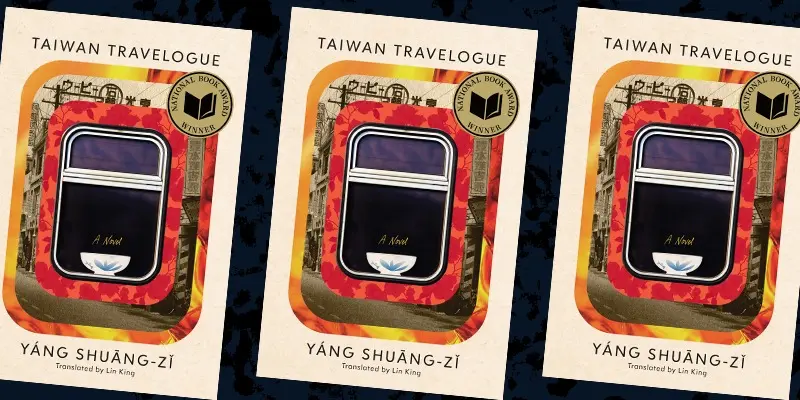
The controversy centers around what is known in the publishing industry as "relay translation," a practice where a book is translated into a third language not from its original source text, but from a pre-existing translation. In this instance, King discovered that a European publishing house was actively preparing to release a foreign-language edition of Taiwan Travelogue translated directly from her English text without her consent, license, or knowledge.
Upon uncovering the plans, King took immediate action, issuing repeated warnings to the European publisher to halt the project, pointing out that utilizing her text for a third-language translation without authorization is a direct violation of international copyright laws. When those warnings were ignored, King made the decision to escalate the matter through official legal channels. As the sole copyright owner of the English-language iteration of Taiwan Travelogue, King maintains that her intellectual property rights have been explicitly breached.
While the legal battle addresses a specific violation, King’s public statement goes far beyond the immediate dispute, offering a profound and moving philosophical defense of literary translation as an independent art form. Rather than viewing translation as a mechanical, word-for-word substitution, King articulates the deep creative labor required to bridge two distinct linguistic and cultural universes. To illustrate her point, she draws powerful analogies from other creative disciplines, comparing translation to adaptation and performance.
In her statement, King writes that translation is akin to a filmmaker reinterpreting a book for the screen, or to a musical artist covering a beloved song, comparing it to Whitney Houston’s legendary rendition of Dolly Parton’s "I Will Always Love You." While debates often arise over whether an original work or its adaptation is "better," King emphasizes that the distinct difference between the two is indisputable. Furthermore, she describes translation as a performance: if the original author is a scriptwriter, the translator is the actor; if the author is a composer, the translator is the musician; and if the author is a choreographer, the translator is the dancer. Every single artistic choice made by the performer inevitably shapes the delivery, tone, and ultimate reception of the original work.
Addressing a common personal query, King rejects the notion of a false binary between being a writer and being a translator. While noting that not all writers possess the skills to translate, she asserts definitively that all translators are writers. In the case of Taiwan Travelogue, King chose every single word from the vast, chaotic expanses of the English lexicon, crafting a text that the original author, Yáng Shuāng-Zǐ, cannot personally read. Looking ahead to her own forthcoming novel, King notes that she will similarly be unable to read most of its future foreign-language translations, because those books will ultimately be written by their respective translators, not the original author.
The broader implications of King’s legal action have drawn strong support from the publishing community, including Yuka Igarashi, the Executive Editor at Graywolf Press, the publishing house responsible for releasing Taiwan Travelogue in the United States. Igarashi strongly endorsed King’s perspective, stating that her inspired translation brilliantly demonstrates the fundamental truth that translators are writers in their own right, and their copyrights must be rigorously respected. Igarashi highlighted that translators function as vital artists, cultural mediators, and advocates who are indispensable to the global dissemination of literature, expressing Graywolf Press’s full support for King’s efforts to shed light on work that is far too often overlooked and unacknowledged.
King herself emphasizes that her primary motivation in bringing the lawsuit is not financial gain, but rather a desire to expose and reform unfair business practices that have unfortunately become normalized and accepted within the publishing industry. Acknowledging the notoriously difficult financial realities of literary translation, King revealed that her involvement with the book began out of pure passion, noting that she originally volunteered without compensation to translate Táiwān Màn Yóu Lù and pitch the project directly to United States publishers.
Describing the economics of her profession with characteristic candor, King noted that translation is a horrendous business plan, one that she pursues solely because she deeply believes in the books she brings to new audiences. By challenging the European publisher in court, King hopes to dismantle the entrenched "status quo" that allows third-language relay translations to proceed without proper permissions or compensation, aiming to set a vital new legal precedent for literary translators worldwide. Questioning the industry’s reliance on historical shortcuts, King challenges the long-standing excuse that copyright violations should be tolerated simply because things have always been done a certain way.
Concluding her statement, King issued a passionate and direct appeal to the global publishing community, urging publishers of translated fiction to prioritize seeking explicit permission over asking for retrospective forgiveness. She implores those who profess a love for international literature to respect the fundamental rights of the translators who meticulously rewrite these stories, making cross-cultural reading possible for audiences around the globe. King’s full, unedited statement remains available for public viewing on her Instagram page.