Welcome to another edition of Lit Hub Daily, your essential guide to the finest offerings, discussions, and historical milestones circulating across the literary internet. Each day, we bring readers a curated look at the digital landscape of books, publishing, and cultural history, keeping you connected to the pulse of the global writing community.
As we examine the current literary landscape today, September 28, 2026, we also look back at the monumental figures who shaped modern letters and avant-garde thought. History casts a long and influential shadow over contemporary writing, and today marks a significant anniversary that invites reflection on the enduring power of artistic movements and the individuals who defined them.
Remembering André Breton: Sixty Years Since the Passing of Surrealism’s Founder
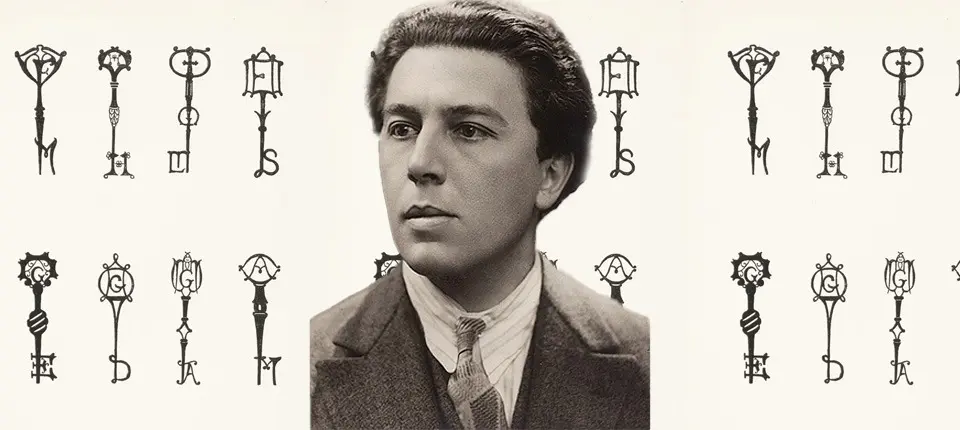
Today in literary history, we observe the sexagenary anniversary of the death of André Breton, the visionary French writer, poet, and principal theorist of the surrealist movement, who passed away in 1966. Breton’s death marked the end of an era for one of the twentieth century’s most disruptive and transformative artistic philosophies, yet his conceptual framework continues to resonate deeply within contemporary literature, art criticism, and creative practice.
Born in Tinchebray, France, in 1896, Breton initially pursued studies in medicine and psychiatry, a background that profoundly influenced his later intellectual trajectory. His early exposure to the theories of Sigmund Freud, particularly the exploration of the unconscious mind, dreams, and free association, provided the foundational architecture for what would become surrealism. During the First World War, Breton worked in neurological wards, observing soldiers suffering from shell shock. This firsthand encounter with the unvarnished depths of the human psyche cemented his skepticism toward rationalism and conventional bourgeois society, which he and his contemporaries blamed for the devastation of the global conflict.
In 1924, Breton codified these revolutionary impulses with the publication of the Surrealist Manifesto (Manifeste du surréalisme). In this seminal text, Breton defined surrealism as psychic automatism in its pure state, proposing that writers and artists might express—whether verbally, through the written word, or by other means—the actual functioning of thought. Dictated by the mind, in the absence of any control exercised by reason, and outside all aesthetic or moral preoccupations, surrealism sought to resolve the previously contradictory conditions of dream and reality into an absolute reality, a super-reality, or surréalité.
Throughout the 1920s and 1930s, Breton acted as the rigorous, often uncompromising leader of the surrealist group in Paris. He edited journals such as La Révolution surréaliste and Le Surréalisme au service de la révolution, fostering a dynamic community of painters, poets, and thinkers that included figures such as Paul Éluard, Louis Aragon, Max Ernst, Joan Miró, and Salvador Dalí. Breton’s commitment to artistic freedom was matched only by his dedication to political radicalism, leading him to briefly align the surrealist movement with the French Communist Party, though his fierce independence ultimately strained relations with orthodox political parties.
The outbreak of the Second World War forced Breton, whose anti-fascist stances and avant-garde works made him a target, to flee occupied France. He spent the war years in the United States, residing primarily in New York City, where he continued to champion surrealist principles and interacted with the burgeoning American art scene, leaving an indelible mark on the development of abstract expressionism and subsequent avant-garde movements in the United States. Following the war, Breton returned to Paris, where he remained a central, if increasingly canonical, figure until his death on September 28, 1966.
The Digital Echoes of Avant-Garde History
As contemporary writers, critics, and digital platforms reflect on the legacy of André Breton today, the discussions across the literary internet highlight how deeply ingrained surrealist techniques remain in modern storytelling. From flash fiction that defies traditional narrative structures to poetry that embraces illogical juxtapositions and dream-logic, the ghost of surrealism continues to haunt and inspire contemporary literature.
Online literary journals, academic blogs, and digital archives frequently revisit Breton’s manifestos and his novels, such as Nadja and Mad Love (L’Amour fou), to examine how writers navigate the complexities of identity, memory, and perception in the twenty-first century. While literary trends evolve rapidly across social media platforms, online magazines, and digital review sites, the fundamental desire to bypass conventional rationalism in pursuit of a deeper emotional and psychological truth—the very core of Breton’s life work—remains as vital today as it was a century ago.
As we continue to navigate today’s digital literary landscape, the intersection of historical retrospectives and contemporary publishing news reminds us of the continuous dialogue between past innovators and modern creators. Stay tuned to Lit Hub Daily for more updates, essays, and deep dives into the stories shaping our literary world.