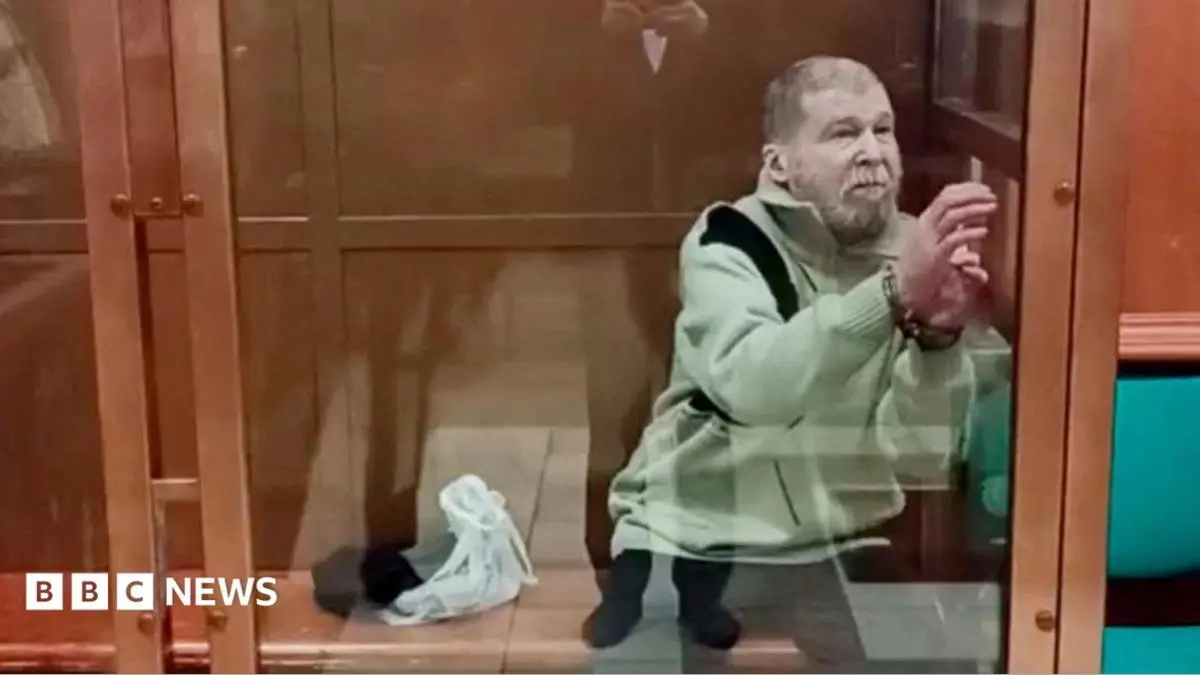
The geopolitical landscape between Washington and Moscow has shifted dramatically this week following the release of a detained American citizen, a development that President Trump attributed to direct, personal negotiations with Russian President Vladimir Putin. The release of the American, identified as Hubbard, marks a significant, if controversial, turning point in the ongoing diplomatic maneuvering between the two superpowers, occurring against a backdrop of escalating tensions regarding the war in Ukraine and shifting global energy alliances.
Writing on social media shortly after Russian state media confirmed the development, President Trump stated that the release was the culmination of a request he "made directly" to the Russian leader last week. Unlike previous instances where the return of American citizens from Russian detention was secured through formal, often arduous, prisoner swaps, the administration has framed Hubbard’s release as a result of direct high-level engagement.
The path to this outcome was not without political friction. Only days prior, President Trump faced intense scrutiny for his decision to suspend a tranche of sanctions against Russia just before they were slated to take effect. Defending that decision, the President argued that the move was a strategic necessity, noting that had the sanctions been implemented as scheduled, the delicate negotiations surrounding Hubbard’s release "would have come to a complete and total halt."
The U.S. State Department had long classified Hubbard, a Michigan native, as "wrongfully detained." The gravity of the situation was underscored by the President’s own remarks on Tuesday, when he signaled to reporters that a breakthrough was imminent. "Watch what happens," Trump told the press corps, emphasizing that the administration had been intensely focused on securing Hubbard’s return. According to reports from CBS News, the BBC’s U.S. media partner, Hubbard had been suffering from poor health during his detention and was expected to be transported to Texas for urgent medical evaluation and treatment.
The diplomatic atmosphere in St. Petersburg, where the final arrangements were solidified, appeared notably cordial. Steven Witkoff, a key figure in the recent round of high-level diplomacy, publicly praised the Russian president for the gesture. "You talk so much about my president, President Trump, being a humanitarian—you are a humanitarian also sir, and I salute that. I commend you," Witkoff said during the meeting. Hubbard was later observed thanking Witkoff, an interaction that took place in the presence of Kirill Dmitriev, a prominent financial adviser to the Russian government.
The significance of the meeting extended well beyond the humanitarian gesture of a single release. Witkoff, who had spent the previous day in Oslo holding discussions with Ukrainian President Volodymyr Zelensky, utilized the encounter with Putin to advocate for a broader de-escalation of the conflict. He formally requested that the Russian leader consider a series of proposals drafted during the Oslo meetings, which included the renewal of trilateral peace talks with Ukraine aimed at bringing an end to the hostilities.
However, the response from the Kremlin remains ambiguous. While Putin has engaged in this dialogue, he has not publicly indicated whether any of the proposals presented by the Norwegian-mediated talks would be acceptable to Moscow. To date, the Russian leader has maintained a rigid stance, consistently rejecting proposals from Kyiv and its European allies to freeze the current front lines or engage in substantive peace negotiations.
The diplomatic thaw—if such a characterization holds—is deeply intertwined with energy policy. During the same proceedings, President Trump expressed his "deep gratitude" to Putin for a separate deal reached earlier this month, which allows for the import of Russian diesel to the United States. Putin confirmed that the initial shipment under this agreement is expected to depart Russia within the next two to three days.
This diesel agreement has proven to be a major point of contention, drawing the ire of the Ukrainian government and contributing to a tumultuous period in U.S.-Ukraine relations. The move to source energy from Russia has exacerbated tensions, leading to a period of cooling between Washington and Kyiv, during which President Trump suspended several sanctions and publicly suggested that it might be time for Ukraine to seek new leadership. As the U.S. midterm elections approach in November, the administration has consistently sought to attribute rising fuel prices to Ukrainian military strikes against Russian energy infrastructure, a narrative that has further strained the alliance.
The friction is not one-sided. Kyiv has openly accused Washington of intentionally restricting intelligence sharing regarding deadly Russian strikes, an allegation that has caused significant loss of life, according to Ukrainian officials. Washington has vehemently rejected these claims as "scandalous." Furthermore, Kyiv has alleged that a sudden, deliberate restriction of the Starshield internet service—a critical tool in their war effort—was an act of sabotage by the U.S. side.
Despite these mounting grievances, there are signs of tentative stabilization. President Zelensky confirmed on Tuesday that intelligence sharing has resumed, a development he attributed to the "constructive" talks held with Witkoff in Oslo. As the St. Petersburg negotiations unfolded, Zelensky struck a cautious tone on social media, noting that "much depends on whether the American side can hear something new from Russia today—about peace, and not about continuing the war."
Russian state media outlet Ria Novosti reported that the St. Petersburg delegation focused heavily on the outcomes of the Oslo talks, with Witkoff presenting documents that outlined potential approaches to a formal peace process. The breadth of the agenda suggests a desire to reset the wider U.S.-Russia relationship; the two sides reportedly discussed the ongoing geopolitical situation surrounding Iran, the possibility of a future summit in China, and expanded economic cooperation. In a move that highlights the shifting economic priorities, Putin reportedly offered to supply the American market with significant quantities of fertilizer.
The talks in St. Petersburg, which lasted approximately three hours, have left the international community waiting to see if these private assurances will translate into a tangible shift in the trajectory of the war in Ukraine. While the release of Hubbard provides a clear, immediate success for the administration’s strategy of direct engagement, the broader question of whether this dialogue can lead to a sustainable peace remains unresolved. For now, the administration remains committed to its path of negotiation, balancing the release of its citizens with the complex, often volatile, realities of international energy markets and the ongoing, grinding conflict in Eastern Europe.