SHANGHAI — As guests took their seats at the highly anticipated Shushu/Tong runway presentation during Shanghai Fashion Week, they were greeted by a charming and deliberate token of theatrical set design: a brightly colored umbrella resting neatly on every chair. The vibrant props served as a direct visual nod to Jacques Demy’s 1964 whimsical cinematic classic, The Umbrellas of Cherbourg, establishing the primary aesthetic and emotional framework for the brand’s latest spring collection, aptly titled "Darling Melancholy."
The thematic reference brought a distinct touch of French New Wave elegance to the bustling runways of Shanghai, while skillfully weaving together a broader tapestry of mid-century sartorial influences. Alongside the cinematic French aesthetic, designers Liushu Lei and Yutong Jiang drew inspiration from the pioneering spirit of Mary Quant and André Courrèges, all while filtering the retro references through a signature, playful Miu Miu-esque sensibility. The resulting collection was an exploration of youthful nostalgia, blending historical fashion touchstones with the brand’s unmistakable contemporary identity.
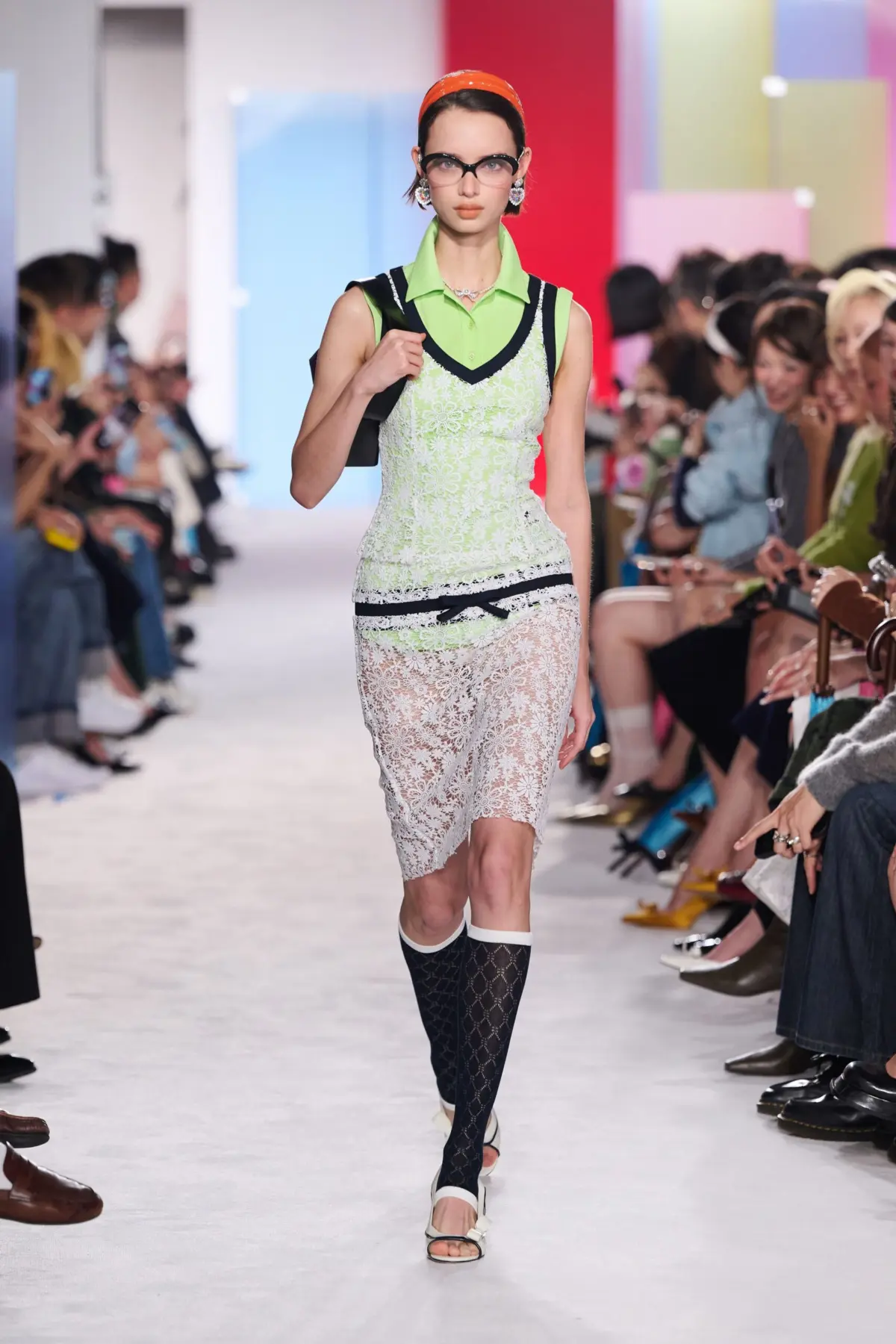
The runway unfolded as a parade of short, strikingly girly silhouettes that immediately captured the audience’s attention. Garments were detailed with delicate, petal-edged finishes, voluminous balloon skirts, and intricate macramé lace rendered in a mouth-watering palette of candy-colored combinations. To elevate the mood further and keep the atmosphere resolutely upbeat, the designers introduced a delicate drizzle of embellishments and charming beaded daisies scattered across various pieces. Every look was executed with meticulous attention to detail, resulting in garments that were exceedingly pretty, neatly proportioned, and, above all, disarmingly wearable for the modern consumer.
Yet, the concept of melancholy—front and center in the collection’s title—proved to be an entirely different matter on the runway. In Demy’s original film, the narrative is laced with poignant heartbreak and bittersweet longing. In the hands of Shushu/Tong, however, that cinematic heartbreak was essentially handed a pink umbrella and firmly told to cheer up. The weight of sorrow was systematically dismantled by an overwhelming tide of sweetness and youthful optimism. Just when the saccharine aesthetic threatened to become overwhelming, a few unexpected sporty details would jog down the runway, injecting a dynamic sense of casual energy into the mix.
Ultimately, it was the accessories that commanded the final word and cemented the collection’s visual vocabulary. Each model clutched a ladylike, boxy handbag tucked securely into the crook of her arm, resembling a collection of tactile, high-fashion Pop Art toys. These structured bags provided a sophisticated counterpoint to the flowing lace and bouncy balloon skirts, anchoring the whimsical silhouettes with a crisp, geometric finish.
Behind the whimsical presentation lie deeper creative roots that have long defined the Shushu/Tong label. Designers Liushu Lei and Yutong Jiang frequently speak of their enduring childhood obsessions with Japanese anime, a cultural sensibility that has historically hovered around the brand’s signature schoolgirl uniform codes and its cultivation of a slightly unreal, hyper-stylized prettiness. This season, the designers explained, they chose to pass the iconic aesthetic of the 1960s "through an Asian lens," resulting in a wardrobe that ultimately showed little to no interest in actual bittersweet longing.
While the melancholy may have firmly anchored itself in the collection’s title, it was conspicuously absent from the actual skirts and dresses sweeping down the runway. That triumphant disconnect between title and execution was not lost on the audience. The brand’s well-groomed front row looked on with the laser-focused attention of Very Important Customers and fashion insiders, already mentally calculating how quickly they could add the charming, sugar-spun skirts to their digital shopping carts.