
Nearly three decades after its initial premiere, Buffy the Vampire Slayer continues to hold a formidable and enduring place in television history. Created by Joss Whedon, the supernatural drama series did far more than simply lay the groundwork for a strong, well-rounded female lead in Buffy Summers, brilliantly brought to life by Sarah Michelle Gellar. Buffy actively subverted established horror tropes, consistently mastered the intricate "monster-of-the-week" format in a way that few late-90s programs could replicate, and routinely broke down long-standing stigmas and stereotypes. Throughout its iconic run, the show famously argued that femininity and world-altering strength were never mutually exclusive concepts, redefining what an action hero could look like on the small screen.
A successful television show that maintains its creative momentum across seven seasons is naturally bound to produce exceptional episodes. While some installments become unforgettable because of the formidable "Big Bad" antagonists they introduce, others leave a lasting impression through crucial character arcs, emotional developments, or exceptionally high stakes. Taking these various elements into account, audiences and critics alike have long debated which hours of the series stand out above the rest. Based on user ratings and critical consensus recorded on IMDb, here are the 10 best episodes of Buffy the Vampire Slayer of all time.
10. “Graduation Day: Part 2” (Season 3, Episode 22)
IMDb Rating: 9.1/10
While this massive two-part season 3 finale is arguably at its strongest when evaluated as a complete narrative unit, "Graduation Day: Part 2" serves as an immensely satisfying conclusion to several major overarching storylines. In this climactic battle, Buffy and the Scooby Gang are not left to fight the forces of evil in isolation. Instead, the entire student body of Sunnydale High bands together to defeat Mayor Richard Wilkins, portrayed by Harry Groener, as he executes his malevolent plot to ascend into a giant snake demon and slaughter the entire town.

This episode also functions as a major turning point for the brooding vampire Angel, played by David Boreanaz, who ultimately makes the painful decision to leave Sunnydale after realizing he can never provide Buffy with the ordinary, normal life she truly deserves. "Part 2" takes the show’s central premise—the metaphor that "high school is hell"—and pushes it to its absolute limits, allowing Buffy’s tireless, often silent efforts as the town’s protector to be finally recognized and validated by those she defends.
9. “Fool for Love” (Season 5, Episode 7)
IMDb Rating: 9.1/10
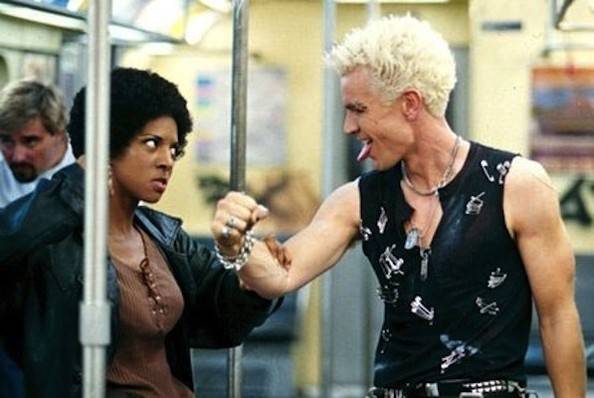
Standing as a definitive high point in the middle years of the series, "Fool for Love" profoundly humanizes the bleach-blond vampire Spike, played by James Marsters. The episode explores Spike’s pre-vampire backstory as William, a shy, hopelessly insecure 19th-century poet whose romantic advances were repeatedly rejected. Through flashbacks, the narrative demonstrates that vampirism does not completely erase a person’s core identity; rather, it amplifies their existing flaws in the most brutal ways imaginable.
Furthermore, the episode forces the audience to question established lore surrounding the Slayers. Spike posits the provocative theory that all Slayers possess an unconscious death wish. Given the crushing, inescapable responsibility that every Slayer must shoulder, they eventually succumb to burnout caused by their intensely isolated lifestyles, leading them to unwittingly embrace death—at least according to Spike’s cynical perspective. While Buffy is placed under harsh scrutiny throughout the episode, viewers are simultaneously granted a rare glimpse into Spike’s vulnerabilities and the deeply complicated nature of his obsession with the Slayer.
8. “Doppelgängland” (Season 3, Episode 16)
IMDb Rating: 9.2/10
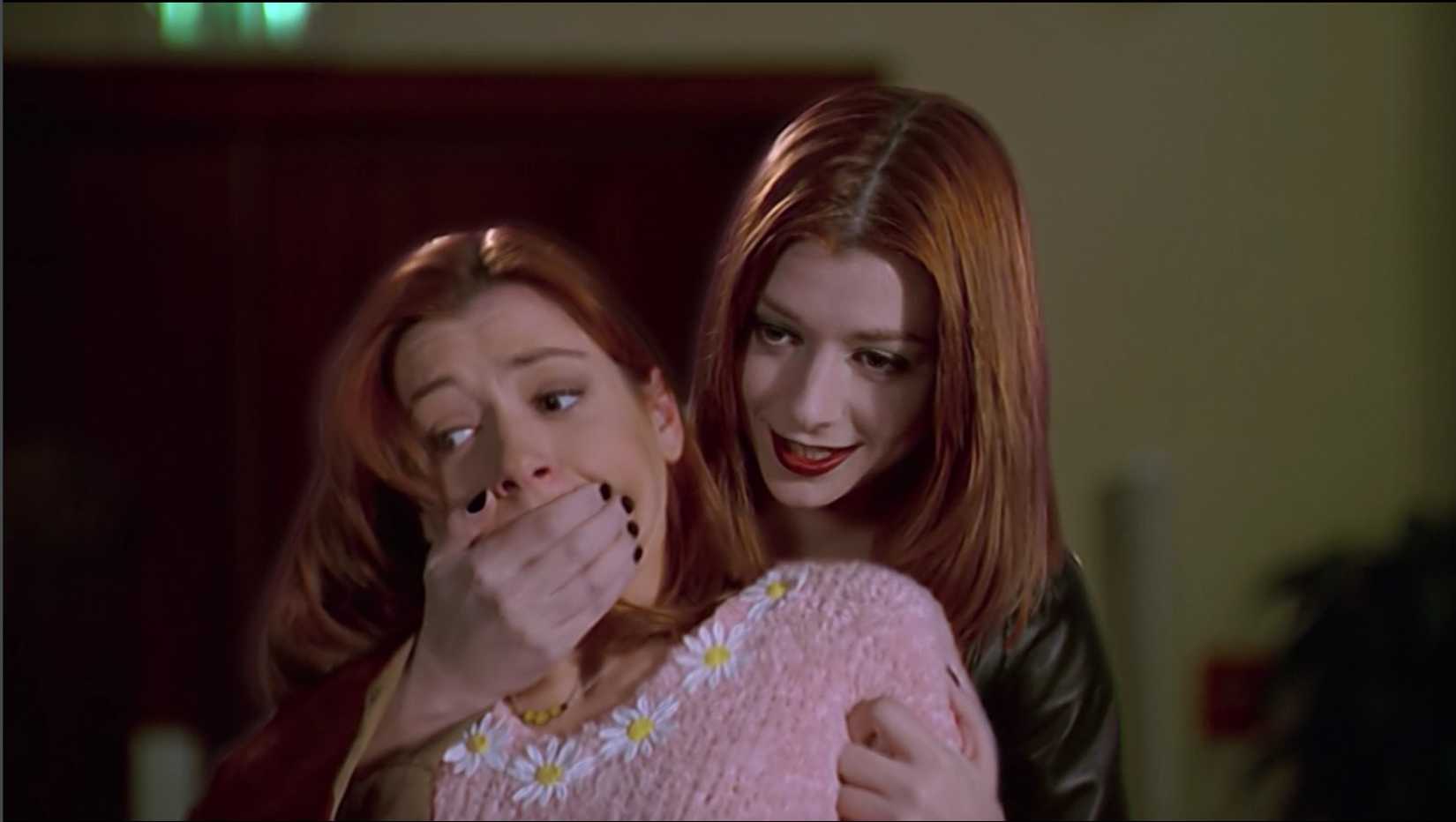
What would happen to the world in an alternate reality where Buffy Summers never arrived in Sunnydale to alter the supernatural landscape? The series explores this terrifying philosophical thought experiment in an earlier season 3 episode titled "The Wish," which reveals a grim alternate timeline where Willow Rosenberg and Xander Harris are not only evil vampires, but are also romantically involved. Later in that same season, the vampiric version of Willow is accidentally transported into the show’s primary reality in "Doppelgängland," arriving just in time to give the regular, reliable human Willow an unexpected and amusing confidence boost.
Alyson Hannigan delivers an electrifying dual performance, seamlessly toggling between her sweet, unassuming persona and her ruthless, leather-clad alter ego. A series of witty, mistaken-identity scenarios transforms the premise into a genuinely fun hour of television. Beyond the comedic beats, however, Willow is forced to confront the darker, more aggressive aspects of her own personality, ultimately learning to accept them to a degree without losing her moral compass.
7. “Passion” (Season 2, Episode 17)
IMDb Rating: 9.3/10
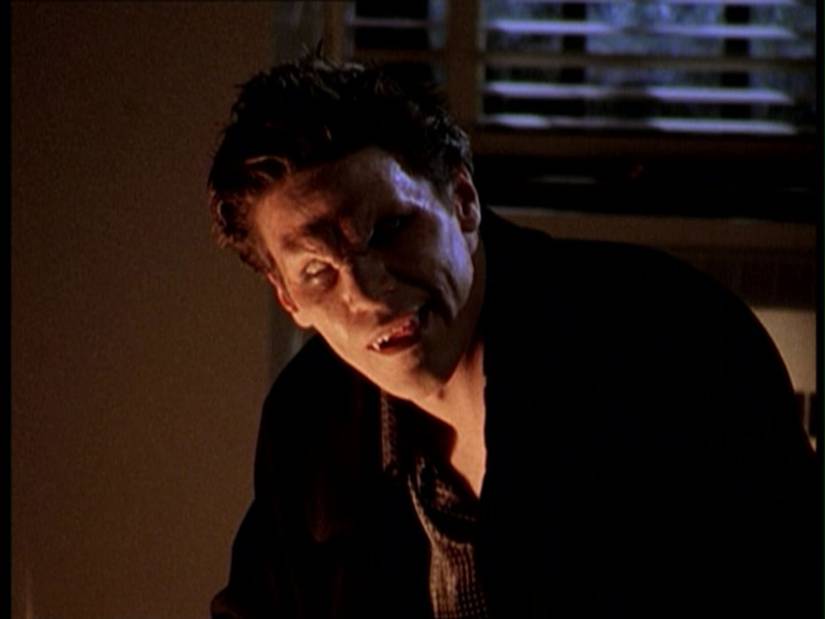
Despite his sincerely well-meaning actions and dedication to goodness throughout the entire first season, Angel always carried an underlying sense of menace due to his inherent vampiric nature. In season 2, that latent threat explodes into the foreground after Buffy and Angel sleep together, an intimate act that inadvertently triggers a moment of true happiness and breaks the gypsy curse that bound a human soul to the vampire.
A few episodes later, Buffy raises the dramatic stakes to devastating heights in "Passion." As Angel’s soulless alter ego, Angelus, returns to the forefront, he begins an active campaign of psychological torture and calculated murder against Buffy and her friends. This development adds a terrifying, deeply personal edge to Buffy’s lingering feelings for Angel, transforming her grief and guilt into a desperate war of attrition. The episode also features a shocking, permanent death that plunges every member of the cast—including the usually level-headed Rupert Giles—into the darkest depths of despair. Buffy regularly dabbled in mature themes, but "Passion" fully embraced the stark, uncompromised moral complexities of true villainy.
6. "Chosen" (Season 7, Episode 22)
IMDb Rating: 9.3/10
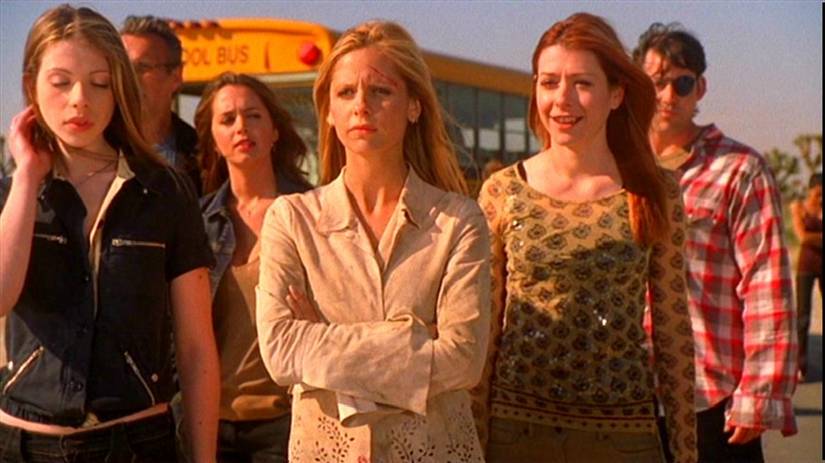
While the seventh and final season of Buffy is occasionally divisive among the fanbase, the series finale remains an all-time classic that successfully provides a fitting sendoff to nearly every principal character. The finale’s narrative masterstroke is a plan that fundamentally turns the show’s entire premise upside down. For centuries, being the Slayer meant carrying an inevitable, crushing burden of absolute isolation.
"Chosen" radically alters this status quo by allowing Buffy to finally share that weight with every potential Slayer across the globe, whose latent powers are activated simultaneously through a powerful spell cast by Willow. This spell serves as a literal game-changer, rewriting the rules of what it means to be a protector and ending generations of solitary tragedy. By the time the finale airs, Buffy has completed her long transformation from a reluctant, terrified teenager into a mature, strategic military and emotional leader. Spike also receives his long-awaited redemption arc, sharing a poignant, bittersweet moment with Buffy as the hellmouth collapses. Ultimately, the underlying sentiment of the finale is one of profound hope for the future, proving that power can be democratized rather than sustained by a single individual.
5. “The Gift” (Season 5, Episode 22)
IMDb Rating: 9.5/10
Buffy’s fifth-season finale is widely remembered as one of the most emotionally devastating hours in the show’s history. The narrative centers on the fate of Dawn, a mystical energy source that was rewritten into human form as Buffy’s younger sister to keep it hidden from the gods. When the god Glory attempts to use Dawn’s blood to open a dimensional portal and unleash multiversal chaos, Buffy refuses to accept the prevailing notion that her sister is a necessary sacrifice.
Instead, in an ultimate display of heroism and love, Buffy leaps into the swirling dimensional portal in Dawn’s place, sacrificing her own life to close the rift. There is a profound, emotional finality to this selfless act, underscoring Buffy’s complete maturation from a teenager complaining about her destiny into an adult willing to make the ultimate sacrifice to protect her loved ones. It stands as a bleak, tragic conclusion to a relentlessly courageous soul—even if the character was inevitably resurrected at the start of season 6.
4. “Becoming: Part 2” (Season 2, Episode 22)
IMDb Rating: 9.5/10
Another masterclass in season-ending television, "Becoming: Part 2" represents a defining zenith for Buffy as a warrior and a character. Cast out as a fugitive by the police and forced to forge an uneasy, desperate alliance with Spike, Buffy faces her greatest psychological and physical trial yet in her final showdown with Angelus.
This is the iconic episode where Buffy effortlessly blocks Angelus’s heavy swords with her bare hands during a brutal duel. When Angelus taunts her by asking, "No weapons, no friends, no hope. Take all that away, and what is left?", Buffy delivers one of the most famous lines in television history: "Me." While the battle ends in devastating personal heartbreak for Buffy, the episode also marks a crucial milestone for Willow, who takes her first tentative, powerful steps on the path toward becoming a formidable witch.
3. “The Body” (Season 5, Episode 16)
IMDb Rating: 9.7/10
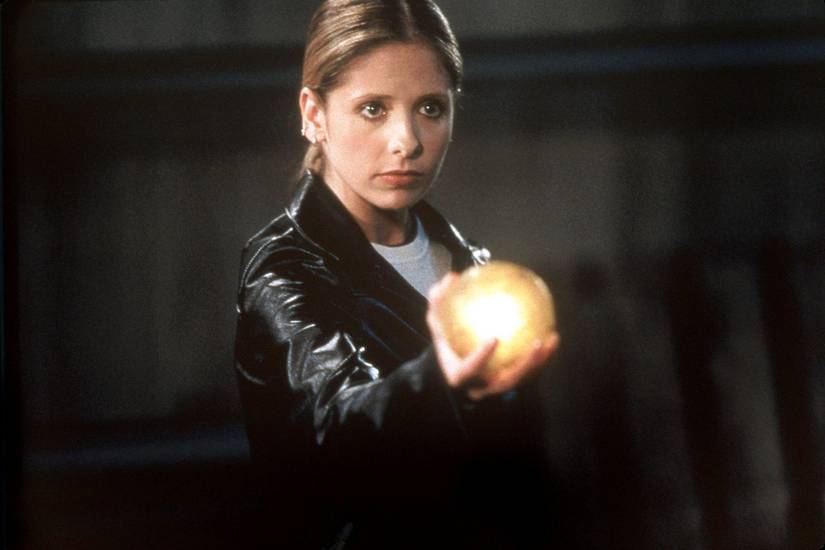
Remarkably, one of the most celebrated and critically acclaimed episodes in the entire run of Buffy the Vampire Slayer does not feature a single monster, demon, or vampire. When Buffy returns home to find her mother, Joyce, lying lifeless on the living room couch, the cause of death is mundane and sudden: a brain aneurysm.
The episode refuses to lean on supernatural interventions or melodramatic tropes, instead forcing the characters—and the audience—to sit in the stark, uncomfortable reality of natural death. Buffy is consumed by a numbing shock, while Xander and Willow process their grief outwardly through nervous energy and frustrated outbursts. Every reaction is portrayed with raw authenticity, capturing the unvarnished confusion and disorientation of sudden loss. Sarah Michelle Gellar delivers a restrained, profoundly vulnerable performance that anchors the harrowing narrative.
2. “Once More, with Feeling” (Season 6, Episode 7)
IMDb Rating: 9.7/10
On paper, a one-off musical episode in the middle of a dark, grounded season of a supernatural drama sounds like a cheesy, throwaway gimmick. However, "Once More, with Feeling" utilizes the musical format with brilliant narrative precision. Sunnydale is placed under a spell by a cheerful demon that compels every citizen to sing out their deepest, most hidden secrets and desires.

For the main characters, this magical compulsion forces painful revelations into the open, specifically regarding Buffy’s lingering trauma over being pulled out of heaven by her friends when they resurrected her at the start of season 6. The songs are exceptionally well-written, shifting genres to match the emotional tenor of each character—such as when Xander and Anya perform a 1950s-style number to mask their growing doubts about marriage. Seamlessly blending catchy show tunes with devastating character progression, the episode remains a high-water mark for television experiments.
1. “Hush” (Season 4, Episode 10)
IMDb Rating: 9.7/10
Widely regarded as one of the most inventive and daring episodes in the history of American television, "Hush" completely abandons Buffy‘s signature witty banter and fast-paced dialogue for nearly thirty minutes. When a group of eerie, fairy-tale antagonists known as the Gentlemen arrive in Sunnydale and steal the voices of every living person, the town is plunged into an unsettling silence.
This extended stretch without dialogue forces the characters to rely entirely on visual storytelling, silent cues, and physical gestures, stripping away their verbal defenses. The Gentlemen—pale, floating men in tailored suits who slice out human hearts in absolute quiet—remain among the most terrifying villains the show ever produced. Beyond the high-concept premise and significant romantic developments between Buffy and Riley Finn, "Hush" stands as a masterclass in mood and direction, earning two well-deserved Emmy nominations for Outstanding Writing in a Drama Series and Outstanding Cinematography.