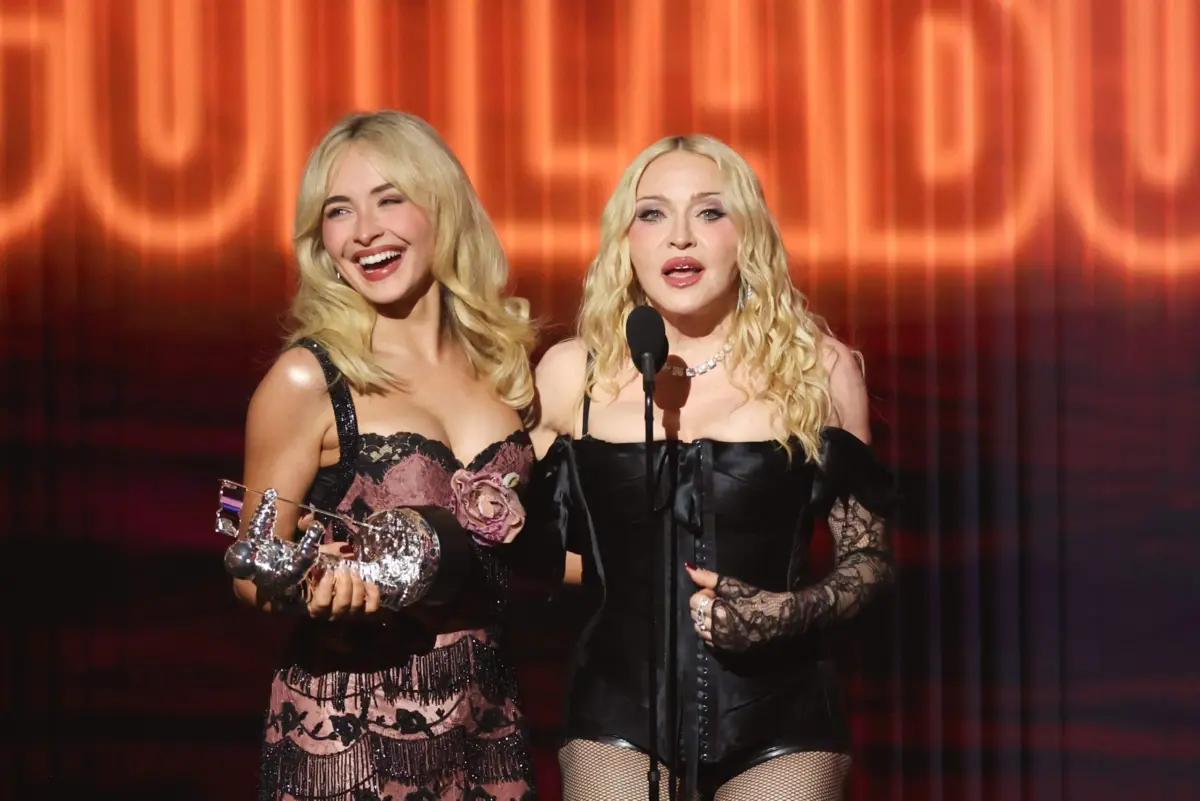
The iconic "Moon Man" trophy—the gold-plated symbol of music video excellence—appears to have found a renewed sense of cultural vitality. In a surprising ratings resurgence for the MTV Video Music Awards, the 2026 telecast captured the attention of millions, signaling a significant comeback for the long-running awards show. According to Nielsen Live+same day fast nationals, the Sunday night broadcast across CBS and MTV averaged a combined 8.43 million viewers. While these figures remain subject to adjustment once final data is processed, the current tally marks the most-watched VMA telecast in eleven years, representing a massive 51% increase over the previous year’s performance.
To find a comparable level of engagement, one must look back to 2015, when the show was broadcast exclusively on MTV. The current success suggests that the strategic decision to simulcast across network and cable platforms, combined with a high-profile lineup of talent and a fortuitous lead-in, has successfully reconnected the franchise with a broad, multi-generational audience.
The Impact of the NFL Lead-In and Scheduling Dynamics
The impressive viewership numbers were undoubtedly bolstered by a high-stakes Sunday night sports event. The VMAs were preceded by an NFL football game that stretched into overtime, specifically the match-up in which the Baltimore Ravens narrowly defeated the Dallas Cowboys. The resulting overrun pushed the start time of the awards ceremony back by several minutes, with the show officially beginning at 7:51 p.m. ET.
Although the live production was already underway inside the Peacock Theater at L.A. Live, the delay meant that the broadcast on CBS was effectively tape-delayed for viewers across the country. Historically, live events often suffer when scheduling is disrupted, but in this instance, the massive audience base built by the NFL served as a powerful springboard for the awards show. The audience remained tuned in, transitioning from the gridiron to the red carpet, a testament to the show’s ability to retain viewers who were already engaged with their televisions on a Sunday evening.
Comparing Year-Over-Year Growth
A granular look at the data reveals that this year’s growth was not merely a byproduct of different airing platforms. The 8.43 million viewer figure encompasses the combined reach of the CBS broadcast, the MTV simulcast, and the subsequent MTV encore. When making an "apples-to-apples" comparison to the 2025 ceremony—which took place on September 7 and also utilized a distribution strategy involving CBS and MTV—the growth is striking. The 2025 broadcast reached 5.60 million viewers; this year’s 8.43 million represents a substantial leap in overall reach.
The growth was reflected across all individual network touchpoints. The CBS telecast itself averaged 7.61 million viewers, marking a 52% increase from the 5.00 million who tuned in to the network last year. MTV’s simulcast saw a 40% jump, rising from 481,000 viewers in 2025 to 686,000 this year. Even the late-night encore on MTV showed healthy momentum, pulling in 142,000 viewers, a 31% increase from the 108,000 recorded last year.
CBS officials have noted that this performance represents the strongest same-day audience for the VMAs since 2015, a landmark year that saw the awards show draw 12.73 million viewers. While the industry has changed significantly in the intervening decade, the 2026 numbers suggest that the VMAs still hold the power to command a significant portion of the national attention span.
Demographic Gains and Social Media Dominance
Beyond the raw viewership numbers, the demographic breakdown paints a picture of a show that successfully re-engaged younger audiences, who are traditionally the most difficult to capture in the era of streaming and cord-cutting. In the coveted adults 25-54 demographic, the show reached 3.11 million viewers, the highest total since 2019 and a 34% increase from last year’s 2.32 million.
The growth was even more pronounced among younger cohorts. In the adults 18-49 category, the show drew 2.66 million viewers—the best performance since 2018 and a 32% increase over the 2.02 million who watched in 2025. Perhaps most notably, in the adults 18-34 demographic, the show averaged 1.09 million viewers, the best since 2020 and a massive 46% jump from last year’s 751,000. These figures suggest that the show’s blend of legacy artists and current chart-toppers was effectively calibrated to appeal to a wide age range, successfully drawing younger viewers who are often the primary drivers of social media discourse.
Speaking of social media, the influence of the VMAs extended far beyond the traditional television set. CBS reported that the event generated 31.1 million interactions and 159 million video views, an 8% increase in digital engagement compared to the previous year. This digital footprint underscores the "second screen" experience that defines modern awards shows, where the broadcast serves as the catalyst for a global conversation.
A Star-Studded Production and Artistic Milestones
The 2026 ceremony was characterized by a blend of nostalgia and contemporary music industry power. The evening kicked off with a major cultural moment: Madonna returned to the VMA stage for the first time in 23 years, performing alongside modern pop heavyweights Sabrina Carpenter and Charli XCX. This bridge between generations—pairing the "Queen of Pop" with current industry leaders—provided the kind of headline-grabbing spectacle that the VMAs have historically excelled at delivering.
Taylor Swift, a perennial fixture of the awards circuit, added to her historic tally by winning the coveted Video of the Year award and the MTV VMA Artist Director award. Her presence was further amplified by the premiere of her new music video for the track "Patient Zero," a move that ensured constant chatter across social media platforms throughout the evening.
The show also honored the history of the music video medium, with the legendary band Nirvana receiving the Video Vanguard Award. Additionally, the telecast featured somber and respectful tributes to industry icons Dolly Parton and George Michael, grounding the high-energy performances in a sense of reverence for music history. The performance roster was notably diverse and expansive, featuring sets from GENER8ION, Gunna, Kacey Musgraves, Lisa, Raye, Shaboozey, Sienna Spiro, Sombr, Teddy Swims, and Yung Lean.
Snoop Dogg served as the host for the evening, bringing his characteristic charisma to the proceedings. The production was a complex undertaking, spearheaded by Gunpowder & Sky and produced by Van Toffler. The heavy lifting behind the scenes was handled by a robust team of executive producers, including Jesse Ignjatovic of Den of Thieves, Barb Bialkowski, and Bruce Gillmer, working alongside Barry Barclay and Floris Bauer. Melanie Block served as co-executive producer, with Gary Lanvy as co-producer. Snoop Dogg himself took on a dual role, acting as both host and executive producer, supported by producers Sara Ramaker and Jasmin Ratansi, while Jen Proctor managed the event’s extensive executive talent needs.
With the 2026 VMAs now in the books, the data points toward a successful revitalization of the format. By balancing the reach of network television with the engagement of social media, and by leaning into a mix of iconic legends and the most relevant artists of the moment, the MTV Video Music Awards have proven that they still possess the capacity to serve as a centerpiece of the American pop culture calendar.