As the 99th Academy Awards approach, the conversation surrounding the relatively new category of Best Casting has shifted from mere speculation to a critical examination of what the award actually represents. Introduced only last year, the category is intended to recognize the immense craft required to assemble a cinematic ensemble. However, as the race for the upcoming March 2027 ceremony heats up, industry observers and voters are faced with a fundamental question: should the award go to the film with the most recognizable "A-list" roster, or should it honor the transformative power of discovery and authentic representation?
With updated predictions released on November 8, 2026, by Variety’s chief awards editor Clayton Davis, the landscape remains fluid. The awards circuit, which serves as the industry’s central hub for tracking the momentum of contenders across the Oscars, Emmys, Grammys, and Tonys, suggests that this year’s casting race is defined by two distinct, high-impact approaches to talent acquisition. Standing at the forefront of this discourse are two compelling films: Siân Heder’s Apple drama Being Heumann and the ambitious Netflix epic La Bola Negra, directed by the creative duo known as Los Javis.
Redefining Authenticity: The Casting of Being Heumann
Siân Heder’s Being Heumann has become a significant focal point for critics and voters alike, primarily due to its bold approach to casting. The film, which chronicles the life of disability rights activist Judy Heumann and the pivotal 1977 San Francisco sit-in that ultimately forced the U.S. government to enforce disability rights, required a casting strategy that prioritized authenticity over Hollywood convention.
Casting directors Bernie Telsey and Adam Caldwell faced the monumental task of populating a period piece with a cast that could accurately reflect the disability community of the late 1970s. Rather than relying on established stars to portray these historic figures, Telsey and Caldwell took a risk that many mainstream productions shy away from. They brought more than 20 disabled actors onto the screen, many of whom possessed little or no professional acting experience.
At the center of this ensemble is the breakout performance of Ruth Madeley, who portrays Judy Heumann. By surrounding Madeley with a community of performers who brought their own lived experiences to the set, the casting team managed to capture a sense of raw, historical truth that a more conventional, "star-studded" ensemble might have struggled to replicate. In the eyes of many pundits, this represents a "bigger swing" than perhaps any other contender in the race. It challenges the Academy to consider whether the "Best Casting" award should reward the ability to find and nurture new talent, particularly from underrepresented communities, rather than simply coordinating the schedules of the industry’s most bankable names.

The Multi-Generational Epic: The Ambition of La Bola Negra
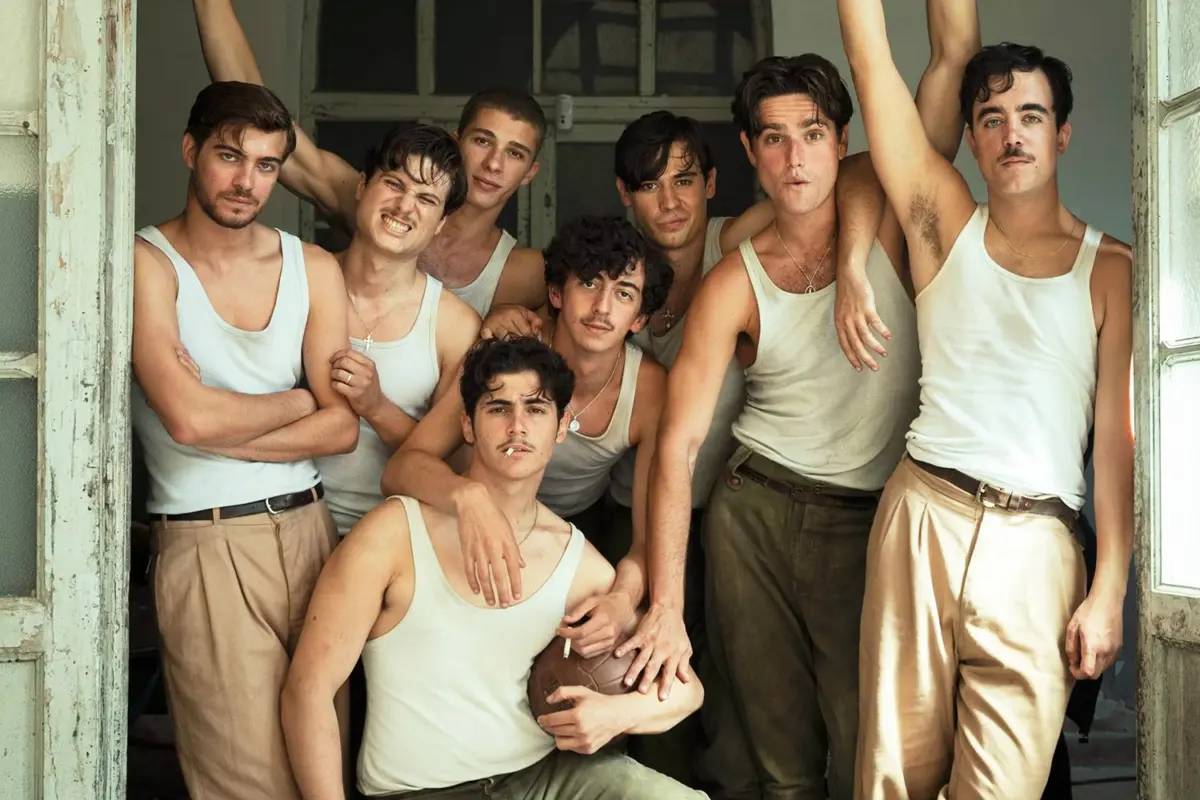
While Being Heumann focuses on the power of lived experience and grassroots casting, La Bola Negra offers a masterclass in blending new discovery with seasoned star power. Directed by Javier Calvo and Javier Ambrossi, the Netflix epic is a sprawling narrative that follows three gay men across three distinct eras of Spanish history.
Casting directors Eva Leira and Yolanda Serrano were tasked with maintaining a cohesive tone across a vast temporal scope, a challenge that required a sophisticated balance of talent. Their solution was to anchor the film with a series of striking discoveries. The casting team tapped pop singer Guitarricadelafuente for his acting debut, placing him alongside newcomers Milo Quifes and Carlos González. This decision to prioritize fresh faces—actors who could inhabit these characters without the baggage of pre-existing public personas—provided the film with a sense of immediacy and urgency.
However, Leira and Serrano did not rely solely on the strength of their discoveries. They carefully surrounded these newcomers with legends of the screen, including Penélope Cruz and a Spanish-speaking Glenn Close. The result is an ensemble that feels both grounded in contemporary energy and elevated by the gravitas of international icons. This synthesis of discovery and established excellence has made La Bola Negra a formidable contender in the casting category, demonstrating that effective casting is just as much about chemistry and juxtaposition as it is about finding the right person for a single role.
The Broader Awards Landscape
As the phase one period progresses, the industry continues to monitor which other films might emerge as potential disruptors. The casting category, being in its infancy, remains sensitive to the broader buzz surrounding Best Picture contenders. There is a lingering concern among some observers that voters might default to the most visible front-runner, effectively turning the Casting award into a "Best Picture" runner-up prize. If the Academy chooses to honor the most famous ensemble rather than the most innovative one, critics argue that the entire purpose of the category—to celebrate the distinct art of casting—could be undermined.
The path to the 99th Oscars is now clearly marked, with several key milestones approaching that will clarify the front-runners. Before the Academy turns its full attention to the nominations, the focus will shift to the Governors Awards on November 15, 2026. This ceremony will honor the careers of industry titans Glenn Close and Ridley Scott with honorary Oscars, an event that often sets the tone for the remainder of the awards season.

Following the Governors Awards, the process moves into the critical voting phase. Preliminary voting for the Oscar shortlists across 12 categories is scheduled for December 7–11, with the official shortlist announcement slated for Tuesday, December 15. This stage is vital for the casting race, as it often filters out the noise and leaves only the most technically and artistically impressive projects on the table.
Once the eligibility period concludes on December 31, 2026, the focus will shift to the nomination phase, which runs from January 11–15, 2027. The official announcement of the Oscar nominations is set for Thursday, January 21, 2027, at which point the final contenders in the Best Casting category will be locked in. The long road will culminate on Sunday, March 14, 2027, with the 99th Academy Awards ceremony, hosted by Conan O’Brien. The event will be broadcast live at 7 p.m. ET on ABC, reaching audiences in over 200 territories from the Dolby Theatre at Ovation Hollywood.
As voters prepare to cast their ballots, the debate over Being Heumann and La Bola Negra underscores a larger shift in the industry’s values. Whether the Academy chooses to reward the bold, community-driven casting of a period drama or the complex, multi-generational tapestry of a international epic, the result will set a precedent for how the craft of casting is viewed by the institution for years to come. For now, the films remain the standard-bearers for what is possible when casting directors are given the creative license to look beyond the obvious and redefine the faces of modern cinema.