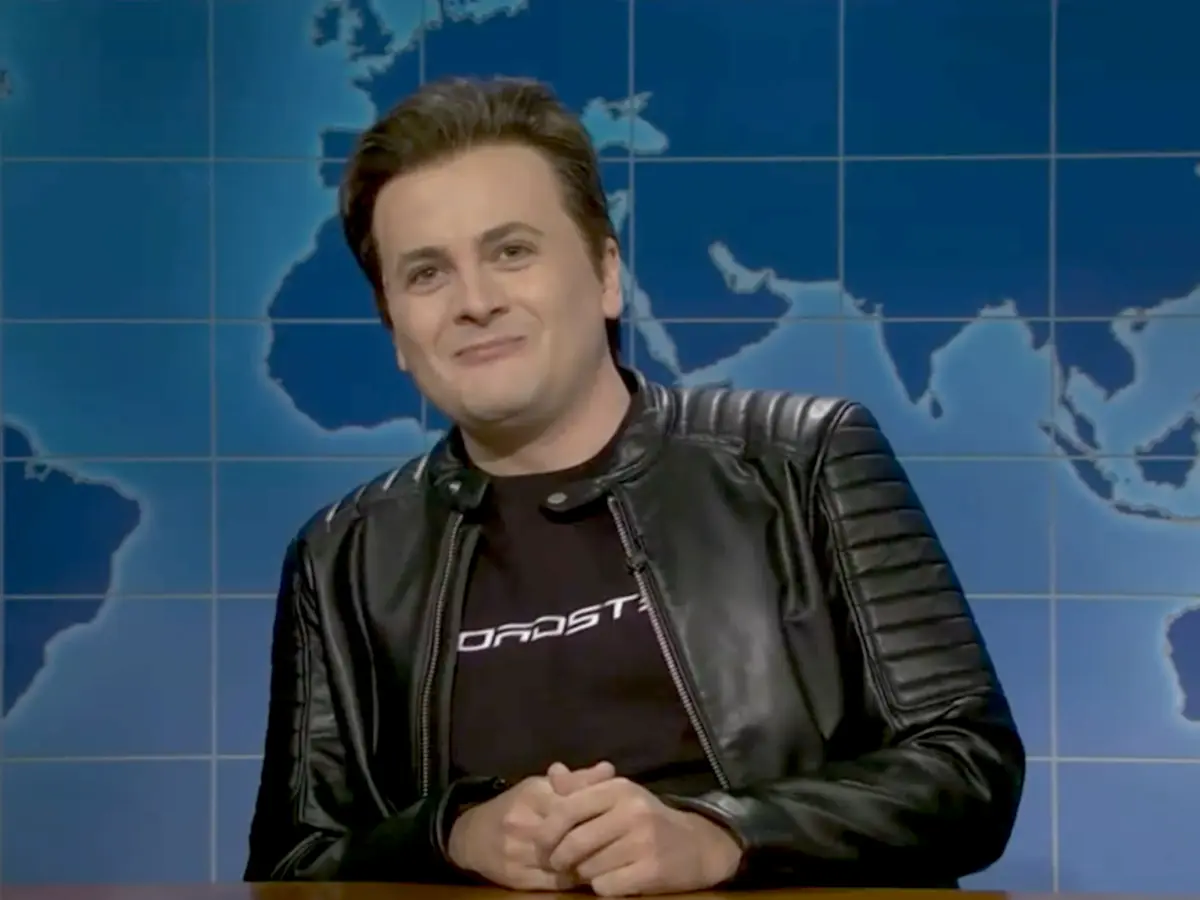
In a biting segment on this week’s episode of Saturday Night Live, the long-running comedy institution took aim at one of the world’s most prominent and polarizing figures: Elon Musk. The sketch, which featured SNL cast member Jeremy Culhane portraying the billionaire tech mogul, arrived during a particularly turbulent news week for the real-life Musk, whose high-profile financial and political bets have recently come under intense public scrutiny. As the dust settles from Tuesday’s midterm elections, the performance highlighted the growing dissonance between Musk’s ambitious public persona and the increasingly difficult reality of his business and political ventures.
The segment served as a satirical interrogation of Musk’s recent strategic failures, most notably his substantial financial investment in Republican candidates. Despite pouring nearly $500 million into various campaigns—with a heavy concentration on his adopted home state of Texas—the anticipated "red wave" failed to materialize in many key races. Instead, the political landscape in Texas saw a significant shift toward Democratic victories, leaving the man who has aggressively positioned himself as a major political donor facing the reality of a state government moving in the opposite direction of his preferences.
Weekend Update co-anchor Colin Jost wasted little time in holding the character to account. Sitting at the iconic desk, Jost confronted the faux-Musk with a direct inquiry: "Elon, you’ve been in the news because you wasted half a billion dollars on the midterms."
Rather than engaging with the complex political ramifications of his spending, the character of Musk—playing into the caricature of a man obsessed with his own narrative and tech-focused distractions—attempted to deflect the conversation entirely. "No, I’m in the news because my car did a flip," the character replied, seemingly oblivious to the gravity of his political losses. "My car did a flip. Remember? It was like a freaking Hot Wheel. It was like, and then pop, but I was like totally chill. I was like thug life. Imagine."
This refusal to address the $500 million expenditure underscored the broader criticism often leveled at Musk: that he prioritizes viral moments and personal brand management over the strategic outcomes of his massive financial commitments. The sketch utilized this trait to paint a picture of a billionaire whose public posturing is increasingly disconnected from his actual business and political footprint.
The tension in the sketch deepened when Jost pivoted to the operational challenges facing Musk’s companies, specifically the reported decision to halt production on the Tesla Cybertruck. The truck, which has been a flagship project for Tesla’s manufacturing hub in Texas, has been plagued by development hurdles and market uncertainty. When Jost asked for a comment on the production halt, the character of Musk remained steadfast in his refusal to engage with serious business news, instead retreating further into his own perceived glory.
"Hey, remember when my car did a flip?" the character deflected again. "It was epic. It was like, but everyone was like, ‘Whoa!’ But I was just like, ‘Hold my beer.’"
The sketch then devolved into a surreal, stream-of-consciousness monologue that highlighted the character’s perceived ego and isolation. The character began to ramble about a hypothetical scenario involving himself, Jost, and fellow Weekend Update anchor Michael Che. In the character’s imagination, the group would be engaged in an "epic vulgar roast" of one another, a fantasy that quickly descended into a strange, grandiose power trip. He described his leather jacket transforming into a suit of armor amidst a crowd of cheering fans, completely ignoring the reality of the political and professional isolation he currently faces.
Jost, clearly exhausted by the absurdity of the interaction, offered a moment of deadpan reality: "I cannot believe you are the richest person in the world."
The conversation eventually returned to the central irony of Musk’s recent migration patterns. Jost methodically recapped the sequence of events that brought the billionaire to his current predicament. "You moved to Texas because California was run by Democrats. You moved all your companies to Texas because you didn’t want to pay taxes. You even built your own town in Texas. And now Texas is run by Democrats. So now you’re going to have to pay taxes. So how does that make you feel?"
Faced with a direct question about the failure of his tax-avoidance strategy and the political shift in his new stronghold, the character finally offered a succinct, albeit defeated, response: "Bad."
"I guess that’s what I thought," Jost noted, dryly. "I mean, I would feel bad too."
The character, still desperate to regain control of the narrative, attempted to frame Jost’s pointed observation as a planned comedic beat. "Ouchie! Ouchie! That is another epic vulgar roast from Colin Jost, my poorest friend," he declared, pivoting to the concept of his AI project, Grok. According to the character, the "epic vulgar roast" was the most advanced feature of his AI platform, which he touted as being "so vulgar and hilariously funny."
In a final attempt to showcase the "power" of his technology, the character prompted Grok to generate a series of roasts directed at himself. The resulting AI-generated insults were remarkably sharp, cutting through the performative nonsense of the segment with a cold, algorithmic precision.
"Elon Musk, you’re the worst thing South Africa has ever done," the AI-generated roast began. It continued with, "When you’re on TV, it feels like an episode of Hate on the Spectrum," and concluded with a particularly stinging observation: "If you have 100 more kids, one of them will talk to you."
The realization that his own AI had turned against him—and hit upon a truth far more biting than anything Jost had managed—caused the character to panic. As the studio audience erupted in laughter, the fake Musk scrambled to maintain his composure before ultimately shouting, "Shut it down, Grok, shut it down!" before fleeing the Weekend Update desk.
The segment served as a potent reflection of the current public discourse surrounding Elon Musk. By blending the real-world news of his political losses and corporate setbacks with the chaotic, meme-centric style of his public communication, Saturday Night Live captured the surreal nature of a man whose influence is as vast as his public behavior is volatile. As the real-world consequences of the midterm elections begin to impact his business interests in Texas, the parody highlighted a growing sentiment: that for all his immense wealth and technological reach, Musk may be finding it increasingly difficult to control the narrative when the reality of his own investments starts to backfire.