A devastating act of violence shattered the tranquility of central Krakow on Saturday, as a gunman unleashed a hail of gunfire that left six people dead and multiple others injured. The attack, which unfolded in Poland’s second-largest city and a major cultural hub, has sent shockwaves through the nation, prompting an urgent investigation into the motive and background of the perpetrator.
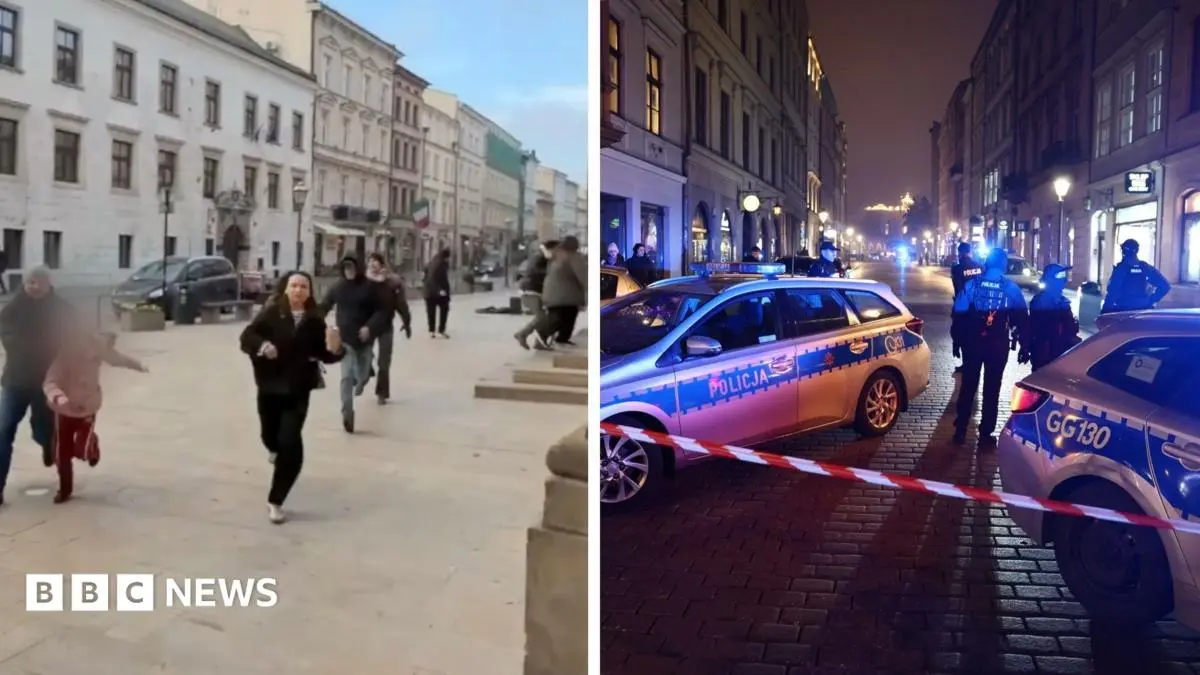
The sequence of events began in the city’s historic center, where the sudden sound of gunfire transformed a routine Saturday into a scene of terror. Witnesses described scenes of chaos as pedestrians fled for safety, seeking shelter in nearby buildings and storefronts as the gunman moved through the area. Footage authenticated by BBC Verify provides a chilling glimpse into the intensity of the situation; the video captures approximately a dozen people scrambling to find cover inside two separate buildings. Moments later, a black car with its front window rolled down is seen passing the scene, followed closely by a police vehicle, suggesting the rapid and desperate response of local law enforcement.
Other harrowing clips circulating from the scene capture the precise moment gunshots echoed across the city’s main market square—a location typically bustling with tourists and locals alike. The sudden onset of violence in such a prominent public space has intensified the sense of vulnerability felt by residents, as the city now grapples with the aftermath of what authorities are characterizing as a calculated and ideologically driven assault.
Official Response and Suspect Identification
As the investigation proceeded throughout the day, the Polish government moved quickly to provide clarity on the nature of the attack. Poland’s interior minister addressed the public, identifying the suspect as a 25-year-old Polish citizen. In a briefing that underscored the gravity of the situation, the minister explicitly linked the suspect to "far-right ideologies." This revelation has already sparked significant national discourse regarding the rise of extremist movements and the potential for radicalization to manifest in such violent acts.
Law enforcement officials have confirmed that the assailant utilized "military weapons" during the rampage, a detail that has raised pressing questions regarding how such high-grade weaponry was obtained and whether the attack was the result of long-term planning. The use of such hardware in a civilian setting marks a significant escalation in the nature of violent crime in Poland, leading to intensified scrutiny of domestic security protocols and the regulation of firearms.
Further Discoveries and Ongoing Investigations
The situation took a darker turn hours after the initial confrontation. Polish Prime Minister Donald Tusk announced that, during a search of the suspect’s residence, authorities discovered the bodies of three additional individuals. This grim discovery has significantly altered the scope of the investigation, leading officials to re-examine the suspect’s history and potential links to the victims found at his home.
The suspect’s residence remains a focal point for investigators, who are currently conducting a comprehensive forensic sweep of the property. The exact relationship between the victims found at the home and the violence perpetrated in the city center is currently being established, with police keeping a tight cordon around the site to preserve evidence. Prime Minister Tusk’s update, delivered in the immediate wake of the city center shooting, underscored the scale of the tragedy and the ongoing efforts by security services to ensure that no further threats remain.
As the investigation into the motives and actions of the 25-year-old suspect continues, the city of Krakow remains in a state of mourning. The impact of this violence extends far beyond the immediate casualties, as the country grapples with the reality of an attack fueled by extremist sentiment. Local authorities have called for calm as they work to piece together the events of the day, promising a thorough and transparent accounting of the tragedy.
The government has also indicated that they are closely monitoring the condition of those injured in the attack, many of whom remain under medical care in local hospitals. The resilience of the city’s emergency services—who responded to the scene within minutes of the first reports of gunfire—has been highlighted by officials as a critical factor in preventing a higher death toll. However, the sheer suddenness and the nature of the weaponry used have left the public demanding answers about how such a security failure could occur in the heart of one of Poland’s most significant urban centers.
The Broader Context of Extremism in Poland
The mention of "far-right ideologies" by the interior minister has placed the attack within a broader, often sensitive political context. In recent years, Poland, like many other European nations, has been navigating the complexities of political polarization. The rise of fringe ideologies and the rhetoric associated with them has been a subject of intense debate in the Polish parliament and among civil society groups. This attack, characterized by such extreme violence, has reignited these conversations, with many political leaders calling for a unified front against extremism.
The security services are now tasked with determining whether the suspect acted as a "lone wolf" or if he was part of a broader network of like-minded individuals. The use of military-grade equipment often points toward sophisticated logistical support or specialized knowledge, elements that police are now working to verify. The suspect, currently in custody, is expected to face a series of high-profile charges as the evidence from both the market square and his private residence is synthesized.
For the residents of Krakow, the weekend has been defined by grief and an attempt to process the brutality that occurred in their streets. The main market square, usually a symbol of the city’s rich history and vibrant culture, has become the site of a somber vigil as citizens lay flowers and light candles for the victims. The tragedy serves as a stark reminder of the unpredictable nature of modern security threats and the enduring challenges posed by radicalization.
As the investigation moves into its next phase, the Polish government has pledged to provide regular updates to the public. Prime Minister Tusk has emphasized that justice will be pursued with the full weight of the law. Meanwhile, security measures across other major Polish cities have been reviewed as a precautionary measure, though officials have stated that there is currently no evidence of an immediate, broader threat to the public.
The tragedy in Krakow has left an indelible mark on the nation. As investigators continue to sift through the evidence found at the suspect’s home and analyze the footage from the city center, the focus remains on ensuring that the full truth behind this horrific event is brought to light. For now, the city remains under a heightened state of alert, with the memory of the Saturday attack serving as a somber call to vigilance in an increasingly complex world. The ongoing investigation into the suspect’s background and the tragic discovery of the additional victims at his residence will undoubtedly form the basis of the legal proceedings to come, as the nation seeks answers to the questions raised by this dark chapter in its recent history.