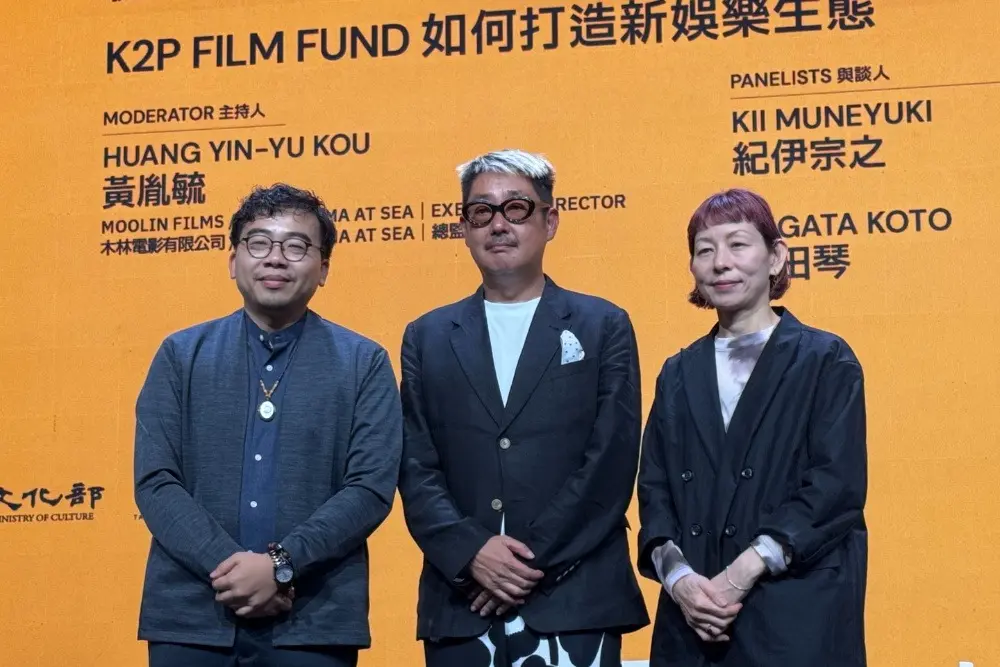
In a provocative address at the Taiwan Creative Content Fest (TCCF) in Taipei, Kii Muneyuki, the founder of K2 Pictures, shared a piece of industry advice he once received from legendary Hong Kong director Stephen Chow. According to Kii, who has shared drinks with the iconic filmmaker on several occasions in Tokyo, Chow issued a blunt challenge to Japanese creators: stop trying to mimic the aesthetic of kung fu cinema and instead leverage the untapped potential of Japan’s own rich martial arts history.
"He said, ‘You have karate, judo, jujitsu and kendo. That is Japanese culture. Only you can turn it into action films, so you should be the ones doing it. Stop aping kung fu,’" Kii recalled. For Kii, the advice resonates deeply, serving as a guiding philosophy for the type of content he hopes to foster at K2 Pictures. He pointed to the success of the Netflix sumo drama Sanctuary as a prime example of the "cultural specificity" that audiences are hungry for—projects that mine Japan’s unique traditions rather than chasing international trends.
Breaking the Production Committee Mold
K2 Pictures was established with a singular, disruptive purpose: to serve as a viable alternative to Japan’s entrenched production committee system. Historically, the Japanese film industry has relied on these committees to fund projects, a model that focuses heavily on domestic market returns. While this system offers a level of stability, Kii argues that its insular nature has created a significant bottleneck for the industry.
"The closed nature of that system kept out both foreign and outside investment," Kii explained, noting that this lack of external capital makes it increasingly difficult to share meaningful returns with the creators themselves. Kii, who cut his teeth in the industry by tearing tickets and managing concessions before rising through the ranks to become a producer at Toei, is determined to change the fiscal landscape of Japanese filmmaking.
At K2 Pictures, the approach to profit-sharing is transparent and title-specific. The company distributes 70% of profits back to its investors, while 30% is allocated to the creative side—a model Kii believes is essential to sustain the people who actually bring the stories to life. "Producers and the people involved in making the film aren’t putting up money, but the film exists because of their creativity," he stated.
Scaling the Fund and Strategy
K2 Pictures has made significant strides in its first year, completing six films and establishing a firm financial footing. The K2P Film Fund I, which successfully closed its $33 million equity round in February, has attracted a diverse roster of roughly 30 investors. The list is headlined by MUFG Bank, Japan’s largest lender, and includes major institutional players such as Bandai, Dentsu, the Development Bank of Japan, and prominent real estate firms like Tokyu Land and Mori Trust.
While the equity round is closed, Kii hinted that the door might reopen if existing backers agree to the expansion. The current equity is being bolstered by a series of loans that are expected to eventually total $67 million, bringing the total capitalization to $100 million. Kii’s ambitious roadmap aims to produce 50 films over a seven-year span.
A key pillar of K2’s growth strategy is what Kii calls "Japan plus one." Rather than attempting to produce content that is universally "global" in a vague, diluted sense, K2 targets specific international markets to pair with the Japanese release. "What Americans like about Japan, what the French like about Japan, what Taiwanese audiences like about Japan and what Koreans like about Japan are completely different," Kii observed. "The Japan that Japanese people like is different again."
This strategy extends to how the company handles distribution. K2 has opened outposts in Taiwan and Korea to manage direct distribution, moving away from the industry standard of licensing deals. Kii argues that licensing, which accounts for 99.9% of Japan’s overseas film business, does little to build the long-term brand equity of Japanese titles. "Japanese people taking Japanese films to that place and promoting them hard there—I think that’s what raises their value," he asserted.
Empowering Voices and Taboo Subjects
During his TCCF session, Kii was joined by director Nagata Koto, whose Fukushima-set noir, The Nuke Crab, was unveiled at the Cannes Film Festival in May. The film serves as a testament to the kind of risks K2 is willing to take. The project explores the influx of money into the Tohoku region following the radiation clean-up of the Fukushima disaster—a subject Nagata describes as socially taboo in Japan.
"When I took it to Kii-san, he immediately said, ‘That sounds interesting, let’s do it,’ and got it started," Nagata said. She noted that such material would typically be avoided by major studios or TV-network-backed productions, which prioritize safer, more palatable narratives.
Kii and Nagata are aiming to find an audience for the film not just in Japan, but in Eastern European territories like Poland and Ukraine. Kii believes that viewers who have lived through the legacy of the Chernobyl disaster will find a visceral, human connection to the story. Nagata echoed this sentiment, emphasizing that despite the cultural and regional differences, the emotional core of the film—dealing with themes like family, love, and jealousy—is universal. "I think jealousy and love are the same anywhere in the world, as long as we are human," she added.
Balancing Art and Commerce
Despite his ambitious goals, Kii remains grounded regarding the realities of the film business. When it comes to greenlighting projects, the decision-making rests with a small team of six or seven producers. Kii maintains a policy of not blocking any project a producer is passionate about, provided the financials are sound. "Nobody can tell whether a film will be a hit," he admitted, noting that this uncertainty applies to both high-concept commercial projects and smaller arthouse features.
His advice for managing risk is simple but rigorous: "If it’s only going to bring in JPY50 million ($330,000), make it for JPY20 million ($130,000)." This discipline is particularly crucial when working with first-time directors. By lining up pre-sales, securing streaming rights, and leveraging sponsorships early in the development phase, K2 aims to ensure that debut projects do not result in significant losses, which would otherwise jeopardize a director’s career.
"I want to keep launching new directors from K2 Pictures," Kii said. "And I want them to be grateful for the rest of their lives. Don’t forget us when you make it big."
The Future of Content Securitization
Looking toward the long term, Kii is advocating for fundamental changes in how Japanese law treats creative assets. In conversations with international legal and financial experts, he has drawn comparisons between the film industry and real estate, where assets are created and then effectively securitized to generate cash.
Japan passed an investment trust law around 2000 that allowed for the securitization of real estate, but that legislation has yet to be extended to creative content. Kii has been actively discussing the necessity of such a shift with legal experts, hoping to pave the way for a more sophisticated financial ecosystem for filmmakers.
As the session concluded, moderated by filmmaker Huang Yin-yu Kou of Moolin Films—who is also the founder of the Cinema at Sea: Okinawa Pan-Pacific International Film Festival—it was clear that Kii’s mission is as much about structural reform as it is about storytelling. By pushing for a "Japan plus one" strategy, demanding cultural authenticity, and fighting for a more equitable financial model, Kii Muneyuki is positioning K2 Pictures to challenge the status quo and reshape the future of Japanese cinema.