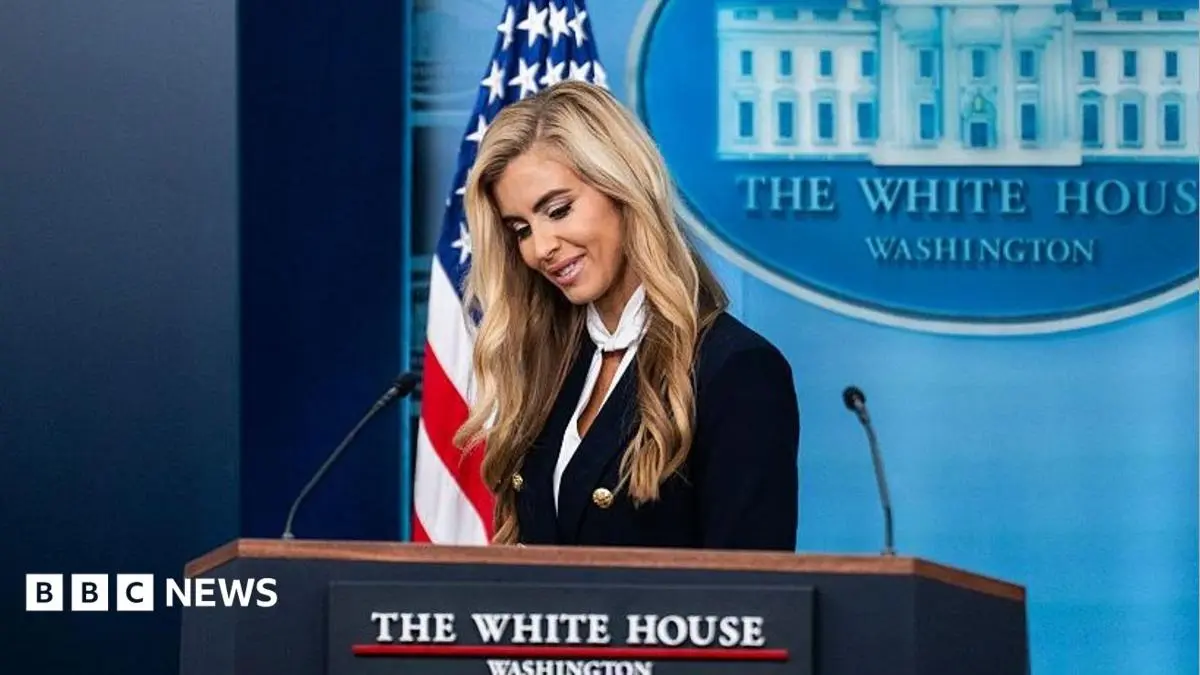
In a stunningly swift conclusion to what was already one of the most scrutinized introductions to a White House communications role in modern history, Katie Zacharia has announced her resignation as White House press secretary. Her departure comes just five days after a shaky public debut that sparked intense national debate over the vetting processes within the Trump administration and the overall stability of the current executive office.
The decision to step down was finalized on Friday, following an afternoon of mounting speculation. President Donald Trump, speaking to reporters in an impromptu press conference held on the South Lawn near the Marine One helicopter, revealed that he had suggested the exit to his newly minted spokesperson earlier in the day.
"I said, ‘Is this for you, Katie? Because honestly, you don’t need this,’" the President recounted to the gathered press corps. Trump went on to express his belief that Zacharia had been treated "pretty nastily" by the media throughout her brief tenure. He noted that he had told her she was under no obligation to continue in the role if it was not a good fit, suggesting that she reconsider her position given the intense scrutiny she had faced.
A Difficult Debut and Rising Pressure
Zacharia’s tenure was marked by friction from the very beginning. Her inaugural press briefing, held this past Tuesday, served as the catalyst for the scrutiny that would ultimately define her short time in office. The briefing, which lasted less than 15 minutes, saw the press secretary visibly nervous as she relied heavily on prepared talking points from a binder. She managed to take only three questions from the assembled reporters, and during the session, she committed a notable gaffe by referring to her husband as "the president."
The aftermath of that briefing saw Zacharia immediately forced into a defensive posture. News outlets and political observers began to dig into her background, raising pointed questions regarding her professional qualifications, her legal credentials, and her level of preparedness for the high-pressure environment of the West Wing.
The most damaging line of questioning centered on her legal status. Both the President and various administration officials had previously referred to Zacharia as an attorney, and it was widely reported that she was a graduate of Pepperdine University’s law school. When asked during her first briefing where she had passed the bar exam—a fundamental requirement for practicing law in the United States—Zacharia responded, "When I was in China."
Following days of sustained pressure and intense investigation by the media, Zacharia admitted on Thursday that she had not, in fact, passed the bar exam in the United States. She issued a statement clarifying that she had practiced international transaction law while in China and maintained that she held the "appropriate credentials" for her work there. However, the revelation that she was not a licensed attorney in the U.S. cast a shadow over her appointment, as the administration had leaned heavily on her legal background as a key component of her professional profile.
The Spotlight of Conservative Media
The scrutiny was not limited to legacy news outlets or political opponents; it also extended to conservative-leaning media, which often serves as a critical barometer for the Trump administration. On Thursday, during an appearance on Fox News, host Sean Hannity confronted Zacharia with the mounting evidence regarding her background.
When questioned about why she had not simply stated that she had never practiced law in the U.S. when the subject first arose, Zacharia struggled to provide a clear answer. The interview grew more intense as Hannity asked if she believed the White House staff should have better prepared her for the role, given that she had been hired less than a week before her first briefing.
The questioning continued on Friday morning when Zacharia appeared on Fox & Friends, a program known to be closely monitored by the President. During the segment, the hosts pressed her on whether she had disclosed her lack of a U.S. law license to the President during the hiring process. Zacharia insisted that she had not been deceptive, noting that "those questions weren’t asked" and that she had been recruited for a communications role, not a legal one.
When host Lawrence Jones asked directly if she believed she still held the confidence of the President, Zacharia avoided a direct confirmation. Instead, she offered a diplomatic closing statement: "I hope to be able to build the confidence and trust of everyone around me."
Political Fallout and Historical Context
The abrupt nature of the resignation has provided ammunition for the Democratic Party as the nation approaches the critical November midterm elections, which will determine the balance of power in the U.S. Congress. Democrats have been quick to frame the incident as evidence of internal dysfunction within the Republican White House.
Hakeem Jeffries, the top Democrat in the House of Representatives, utilized social media to highlight the instability. "The White House Press Secretary is gone. MAGA extremists continue to fall apart," Jeffries posted on X, signaling that the opposition intends to use the incident to cast doubt on the administration’s competence in the final stretch of the campaign season.
Following the announcement of her departure, Zacharia took to X to express her gratitude toward the President. Despite the circumstances, she remained effusive in her praise, describing Donald Trump as "kind, wonderful, gracious, thoughtful, enthusiastic, and the most hardworking man" she had encountered. She added that it had been an "honour" to serve in his administration, regardless of the brevity of the appointment.
This exit marks the fastest resignation for a member of the White House press team during the Trump presidency, but it is not the first time the administration has seen a high-profile, short-lived tenure. The event has inevitably invited comparisons to Anthony Scaramucci, who served as White House communications director for only 10 days during the President’s first term.
Scaramucci, reflecting on the news on Friday, acknowledged the historical parallel. "Records are made to be broken," he wrote on X, though he added a note of empathy, stating, "But I take no pleasure in other people’s pain."
As the administration moves to fill the sudden vacancy, the focus remains on the vetting process that led to such a high-profile error. For now, the White House finds itself once again searching for a voice to represent its agenda, having lost its primary spokesperson less than a week after the appointment was made. The incident stands as a stark illustration of the volatility that continues to characterize the communications strategy of the current administration, leaving political observers to wonder how the vacancy will be filled and whether the White House will adjust its approach to vetting future staff members.
The exit of Katie Zacharia, while swift, has left a significant imprint on the current political cycle, serving as a focal point for debates over administrative preparedness and the intense, often unforgiving, nature of modern political media relations. As the dust settles, both the White House and the political establishment are left to assess the impact of this brief but chaotic chapter in the administration’s ongoing efforts to manage its public image.