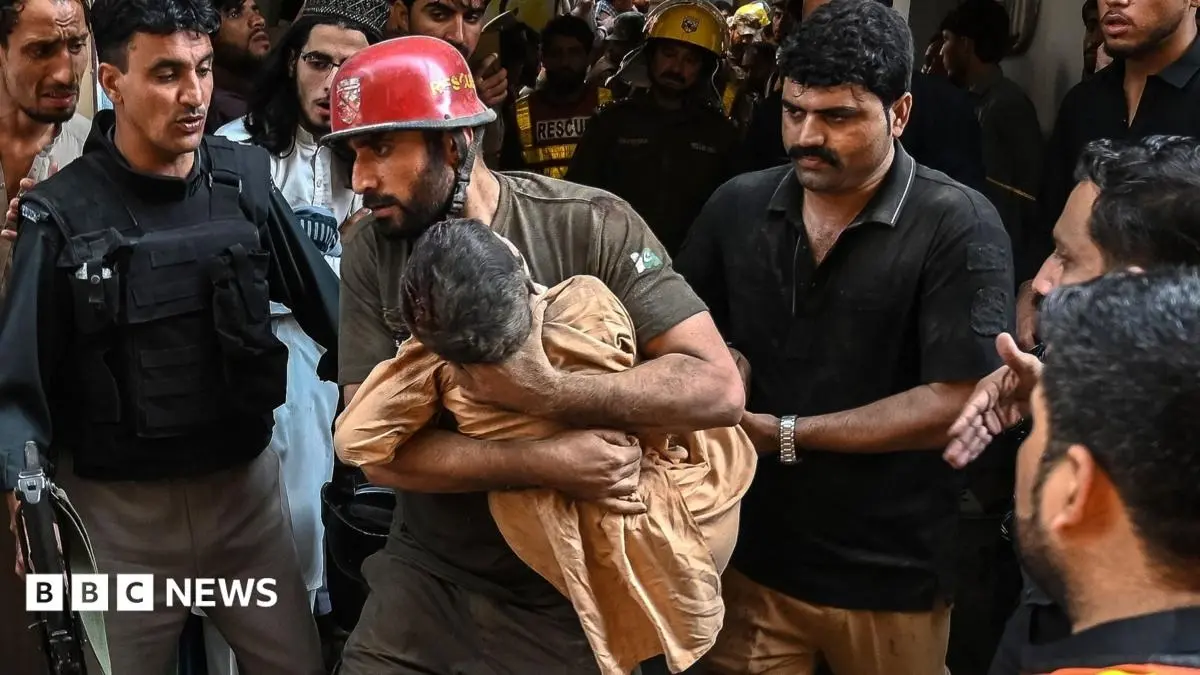
At least 33 pupils and a teacher have been killed after a catastrophic school roof collapse in the north-western Pakistani city of Peshawar, according to reports from local hospital officials. The incident, which has left the local community in a state of profound shock and mourning, occurred on Thursday morning, turning a place of learning into a scene of unimaginable devastation. In addition to the confirmed fatalities, more than a dozen other individuals have been left injured, with medical staff indicating that several of those survivors remain in a critical condition, fighting for their lives.
As rescue operations continue at the site of the Al-Khair school in Dir Colony, authorities have expressed grave concerns that several children may still be trapped beneath the dense mounds of concrete and steel rubble. The scale of the disaster, which unfolded during the morning hours, has mobilized emergency responders and local volunteers in a desperate race against time to locate any remaining survivors.
The alarm was raised at approximately 08:48 local time (03:48 GMT) on Thursday, shortly after the start of the school day. At this hour, classrooms were filled with students engaged in their morning lessons, unaware of the structural failure that was about to unfold. A rescue official confirmed that emergency services were alerted immediately, but the nature of the building’s collapse presented significant challenges to the teams attempting to reach those caught in the debris.
Speaking to the BBC, rescue official Bilal Faizi described the harrowing scene that greeted emergency teams upon their arrival. According to Faizi, the tragedy originated when the roof of an upper-floor classroom gave way. The structural failure of this top-level slab created a domino effect; the sheer weight of the debris crashing downward was enough to breach the ceilings of the classrooms located directly beneath, resulting in a progressive collapse of the building’s internal levels. "The children in the affected classrooms were trapped under the debris," Faizi stated, highlighting the precarious position of the students who were buried as the internal structure buckled.
The building housing the Al-Khair school was, according to emergency official Arif Khattak, constructed on a temporary basis. The nature of this construction, which appears to have lacked the rigorous engineering standards required for multi-story institutional buildings, is now at the center of a growing inquiry. While initial reports from the scene suggested that the collapse was localized to a two-storey section of the facility, further assessments by authorities revealed a more comprehensive failure.
Peshawar police chief Mian Saeed later provided a more detailed account of the disaster, confirming that the collapse had affected classrooms across three separate floors. The density of the student population in the building at the time of the collapse underscores the magnitude of the loss. According to Chief Saeed, there were approximately 30 pupils in the top-floor classroom, 40 in the middle-floor classroom, and 45 on the ground floor. The cascading failure meant that students across all three levels were simultaneously exposed to the falling wreckage as the roof slab compromised the integrity of the floors below it.
The structural integrity of the Al-Khair school building is now being scrutinized as a primary factor in this tragedy. Police Chief Saeed noted that the entire structure had been built with "substandard" roof slabs. This assessment suggests that the building was fundamentally unequipped to support the load it was carrying. In his assessment, the structure was "overloaded" and far exceeded the weight-bearing capacity for which it was originally intended. The combination of substandard materials and the heavy density of students occupying multiple floors appears to have created a lethal environment that was unable to withstand the pressures of daily use.
For the families of the victims in Dir Colony, the day has been marked by confusion, heartbreak, and a desperate search for information. As news of the collapse spread through Peshawar, parents rushed to the site and to local hospitals, hoping for news of their children. The sight of the damaged building, with its internal levels pancaked into a singular pile of rubble, serves as a grim testament to the speed and violence with which the collapse occurred.
The rescue operation remains the primary focus of the authorities on the ground. Heavy machinery and manual tools are being used with extreme caution to navigate the unstable piles of masonry, steel, and school equipment. The presence of multiple layers of collapsed flooring means that rescuers must work in a confined and dangerous environment, attempting to stabilize the remaining structure while searching for those who remain unaccounted for.
The incident has prompted widespread concern regarding the regulation of private educational institutions in the region. Many such schools operate in buildings that may not have been designed for institutional purposes or that have been modified without oversight from professional engineers. The fact that the school was housed in a structure built on a "temporary basis" has led to immediate questions regarding the safety protocols and building codes governing private schools in Peshawar.
Local officials have pledged a thorough investigation into the circumstances surrounding the collapse, including an examination of how the school was permitted to operate within a building deemed structurally deficient. The loss of 33 young lives and a teacher has sent ripples of grief through the entire province, with many community leaders calling for immediate accountability and a comprehensive safety audit of all school buildings in the area.
As the sun sets on Peshawar, the recovery efforts continue in the hope of finding any remaining survivors, though the window of opportunity is rapidly closing. The tragic loss of life at Al-Khair school serves as a devastating reminder of the necessity for strict adherence to building safety standards. For the families mourning their children, the focus remains on the identification of victims and the painful process of laying them to rest. The city remains in mourning, with flags at half-mast and the local community united in grief for the victims of this preventable tragedy. The full extent of the structural failure and the specific legal responsibilities of those who managed and built the school will undoubtedly be the subject of intense investigation in the days and weeks to follow. For now, the priority remains the rescue of the missing and the care of the survivors who have been traumatized by the sudden collapse of their classroom environment. The emergency response teams, exhausted by hours of grueling labor, continue their work under floodlights, maintaining a somber silence as they carefully sift through the debris in search of their fellow citizens. The tragedy has left an indelible mark on the community of Dir Colony, raising difficult questions that the authorities will be forced to answer as they seek to ensure that such a catastrophe is never repeated.