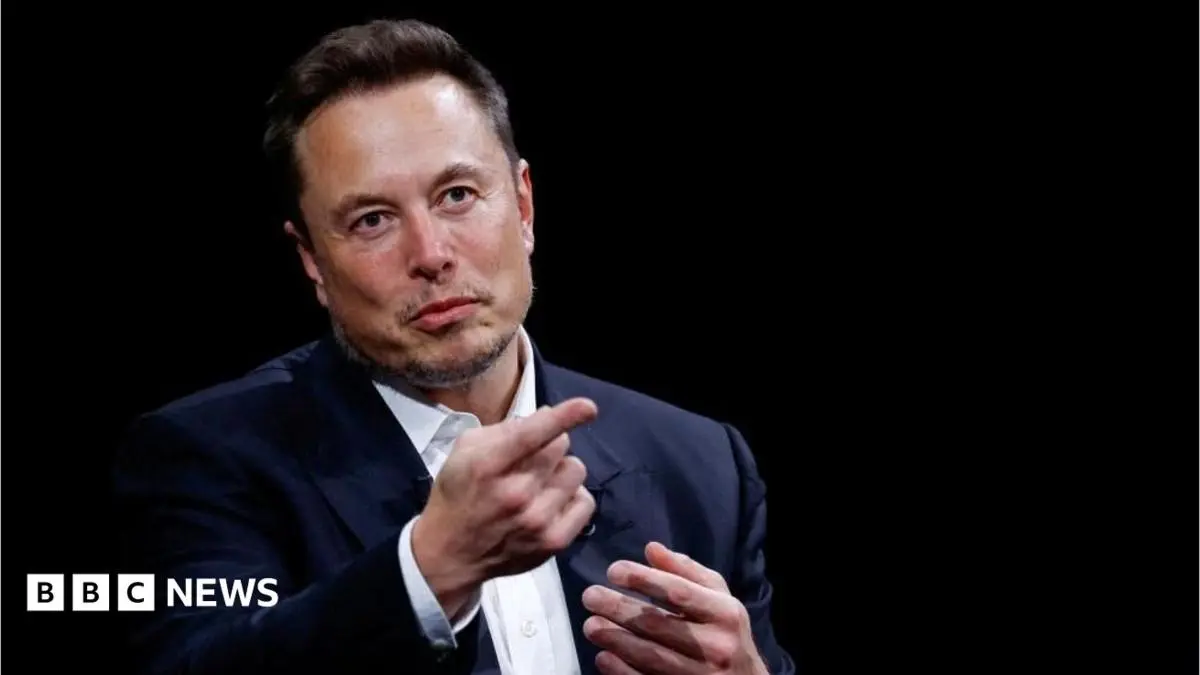
Elon Musk has suggested that the United States government may be the driving force behind recent restrictions placed on the speed and connectivity of Ukraine’s weapons systems operating via SpaceX’s Starlink network. The revelation comes at a critical juncture in the conflict, as Ukraine struggles to maintain its battlefield edge against intensifying Russian aerial campaigns.
Starlink has functioned as an indispensable tool for Kyiv throughout the ongoing war, providing the high-speed, low-latency connectivity required to guide drones toward Russian targets and maintain a defensive shield over Ukrainian airspace. However, the operational landscape shifted dramatically on Tuesday night when Ukrainian officials reported that unexpected new speed limits—effectively capping usage at 100mph (160km/h)—were disrupting vital battlefield missions. Any weapons or platforms traveling in excess of this threshold found themselves severed from the network, rendering them ineffective in real-time combat scenarios.
The Diplomatic Friction Behind the Technical Glitch
The timing of these restrictions has fueled intense speculation regarding the underlying motivations. An adviser to President Volodymyr Zelensky stated publicly that he believed the technical limitations were not merely a coincidence, but rather a direct byproduct of the deepening diplomatic strains between Kyiv and Washington.
As news of the connectivity outages spread, Ukrainian officials made urgent pleas to SpaceX for a restoration of services. President Zelensky, speaking to UK media, expressed his confusion and frustration: "I hope that it’s a mistake, maybe a huge technical problem. I don’t know, but we are asking to switch it on."
Responding to these appeals on the platform X, Elon Musk deflected responsibility, shifting the focus toward the US government’s role in managing military-grade satellite infrastructure. Musk clarified that Starshield—the specialized, military-grade sister service to the civilian Starlink network—is under the direct control of the US government.
"Any limits on speed or usage are decided by the US military and ultimately the US President," Musk wrote. He further elaborated that while Starlink is a product of his company, SpaceX, its utility is intended for "civilian or defensive activities." According to Musk, utilizing the network for "offensive military action" would be inappropriate for a commercial entity, suggesting that the government, as the ultimate authority over the Starshield platform, holds the keys to operational parameters.
A Critical Operational Disruption
The impact of the speed caps was immediate and severe. By Wednesday evening, former Ukrainian defence minister Mykhailo Fedorov reported that the restrictions had been partially lifted, but he emphasized that the total removal of these limits was "critical for Ukraine’s defense." Fedorov took to social media to thank Musk for his engagement, while simultaneously urging for continued, unrestricted support.
The timing of the restrictions coincided with one of the most significant Russian aerial assaults in recent memory. Ukrainian officials reported a wave of deadly attacks that struck Kyiv and devastated critical communications and energy infrastructure. President Zelensky described it as one of the largest bombardments to date, noting that while a significant portion of incoming drones were intercepted by Ukrainian air defenses, several hits were confirmed. The resulting damage left at least 600,000 people across the country without electricity, and many residents reported a total lack of warning before the impacts, as the targeted communication facilities struggled to maintain uptime.
Serhiy Beskrestnov, an adviser to the Ukrainian president, summarized the frustration felt by officials in Kyiv, noting on Telegram: "It is clear that this action cannot be a coincidence and is related to the current political situation."
The Shadow of US-Ukraine Political Tensions
The friction surrounding satellite connectivity is playing out against a backdrop of increasing political volatility in the relationship between the US and Ukraine. Reports have surfaced that US President Donald Trump has grown increasingly frustrated with Ukraine’s persistent targeting of Russian energy facilities, which has caused market fluctuations and geopolitical anxiety.
While Zelensky has previously claimed that the US threatened to curtail intelligence sharing if he did not align with Trump’s proposed energy ceasefire, President Trump denied such threats on Tuesday. The diplomatic atmosphere remains tense, compounded by recent economic developments. During a visit to London on Wednesday, President Zelensky was asked by journalist Piers Morgan if he felt betrayed by the United States following news of a deal between Washington and Moscow to import 300,000 tonnes of Russian diesel.
"Really yes," Zelensky admitted, though he carefully qualified his response, adding, "but it’s a little bit more complicated than just my emotions or my feelings."
International Support and Future Outlook
Despite the growing complexities in the US-Ukraine relationship, other Western allies have moved to shore up their commitment to Kyiv. During his one-day visit to the UK, President Zelensky was greeted with a show of diplomatic unity, receiving a public embrace from UK Prime Minister Andy Burnham at Downing Street before attending an audience with King Charles.
The visit served as a platform for the UK to reaffirm its strategic partnership with Ukraine. Ahead of the president’s arrival, Number 10 Downing Street announced a formal acceleration in the delivery of lightweight multirole missiles. These weapons have been instrumental in Ukraine’s efforts to neutralize Russian drone threats, which have plagued the nation’s infrastructure.
"We are behind you and that will not change," Prime Minister Burnham stated, offering a stark contrast to the growing uncertainty surrounding US support.
As the situation stands, the distinction between Starlink—a civilian service utilizing satellites in low Earth orbit for remote internet access—and Starshield—a platform tailored for government and military requirements—remains at the heart of the dispute. The US government has yet to issue a formal comment regarding the speed restrictions or the allegations that they were politically motivated.
For now, Ukraine continues to operate in a high-stakes environment where its battlefield effectiveness is tethered to the evolving, and often contentious, policies of its international partners. With critical infrastructure under constant threat and the political landscape shifting, the reliance on satellite connectivity remains both a major strength and a significant vulnerability for the Ukrainian military. The ability to navigate these restrictions will likely remain a central theme in the ongoing conflict, as Kyiv balances its military necessity against the strategic interests of its global supporters.