In the ever-shifting landscape of contemporary literature and cultural commentary, understanding how books are received requires a look at the week’s most compelling critical evaluations. This week’s quintet of quality reviews, curated through Book Marks—Lit Hub’s trusted home for book reviews—offers a wide-ranging exploration of new and reissued works. Spanning historical biographies, rediscovered novels of manners, deeply personal memoirs, politically charged fiction, and dense, avant-garde institutional studies, these five reviews capture the breadth and depth of modern critical discourse.
The selected pieces explore Shawn Gude’s examination of Eugene V. Debs, Barbara Trapido’s long-overdue literary revival, Meghan O’Gieblyn’s philosophical grapple with addiction, Madeline ffitch’s complex community-driven narrative, and Tom McCarthy’s latest dense foray into bureaucratic labyrinths. Together, these critiques highlight the ongoing conversations shaping how readers and critics make sense of history, human consciousness, community struggle, and structural complexity.
Revisiting the Legacy of Eugene V. Debs and American Socialism
What can the history of American socialism tell us about the present and future of democratic politics? Over the last decade, the United States has witnessed a tangible resurgence of interest in socialist politics, catalyzed by Bernie Sanders’s presidential campaigns, the emergence of prominent progressive figures like Alexandria Ocasio-Cortez, and local electoral milestones such as Zohran Mamdani’s election as mayor of New York. Each of these modern political figures has had to confront a deeply entrenched assumption in American political culture: the persistent belief that socialism can never truly find structural traction in the United States.
Shawn Gude, a former editor at Jacobin, offers an essential and timely corrective to this narrative in his new book, American Socialist: The Life and Legacy of Eugene V. Debs. Writing in The New Republic, reviewer Joanna Scutts notes that Gude’s biography illuminates the complex forces that shaped America’s foremost socialist evangelist, alongside the extraordinary, systematic efforts of his political and economic opponents to crush him and his fledgling movement. Along the way, the book reveals a profound underlying truth: in the United States, the historical story of socialism is very often the story of intense, organized opposition to socialism.

As Gude describes it throughout the biography, Debs possessed a unique brand of political communication that successfully fused nationalist and Christian mythology with Marxist principles. He routinely evoked both the spiritual spirit of Christ and the fiery rhetoric of abolitionists—a potent ideological brew that resonated deeply with working-class crowds wherever he spoke. During an era of political oratory that frequently made unlikely public speakers into national stars, Debs captivated audiences with an intensity that photographs and flat text transcripts can barely convey. To those listening live, his speeches felt charged with an almost electrical current. Debs would ultimately spend the remainder of his life spreading the gospel of this new political religion, leading both critics and devoted followers to frequently draw comparisons between him and Jesus Christ.
The international socialists who initially inspired Debs at the start of his ideological conversion were wildly excited about the vast potential for the American labor movement. They wondered how far a nation might go that possessed no traditional kings to depose, no centuries-old entrenched hierarchies to uproot—a country so young, iconoclastically minded, and rich in natural resources. Yet, that initial optimism met with a disillusionment as brutal as the mines and mills themselves, as they witnessed just how powerful the pushback from capital and the state would be.
While the ultimate promise of American socialism remains unfulfilled, Scutts observes that the United States is a country where almost anything can be resisted, rethought, and reinvented. This spirit of reinvention applies equally to politics and capitalism. Ultimately, the story of Eugene V. Debs, when told with the meticulous care demonstrated by Gude, suggests that true societal transformation will not emerge from a single charismatic leader—no matter how inspiring—but rather from the collective resistance, solidarity, and joyful community built by ordinary people.
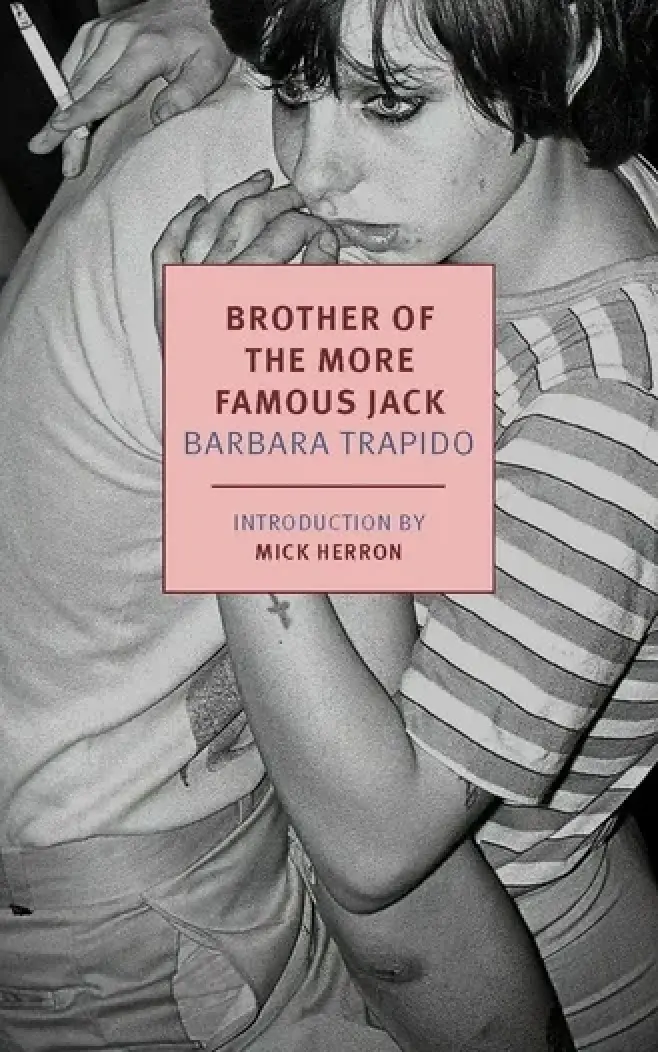
Rediscovering Barbara Trapido’s Brother of the More Famous Jack
For readers seeking fiction that balances wit, cruelty, and deep human eccentricity, the literary world has recently been offered a welcome reminder of a neglected talent. Barbara Trapido’s novel Brother of the More Famous Jack has returned to the spotlight, earning high praise from critics who argue that the book deserves a permanent place in contemporary discussions. Writing in The New York Times, Dwight Garner reflects on the novel’s unique charm, confessing an immediate, total immersion into its pages and expressing genuine chagrin at having to climb back out to face reality.
Garner notes that the book is ideally proportioned, brief enough to read in a sustained sitting yet rich enough that a reader yearns to live inside the charmed parenthesis it opens up amidst the daily grind. Part of the novel’s historical neglect may stem from its awkward and elusive title—an obscure allusion to William Butler Yeats’s talented painter brother, Jack. However, with its return to availability, Garner argues that the literary community must reckon with a truth it should have acknowledged all along: we should have been talking about Barbara Trapido continuously.

Garner shares a personal affinity for a specific subgenre of fiction: stories about young people who grow up in narrow, culturally limited circumstances—homes with few books on the shelves or art on the walls—who intuitively sense that another way of living exists and manage to find it by being befriended, or nearly adopted, by unconventional, urbane mentors. Noting that this narrative arc mirrors his own life story, Garner explains why Willa Cather’s One of Ours holds a special place in his heart above My Ántonia. In this context, Brother of the More Famous Jack stands as a brilliant modern ornament to this cherished genre.
The brilliance of Trapido’s novel is particularly evident in its razor-sharp character dynamics. According to Garner, the dialogue throughout the book approaches the sophisticated, rapid-fire level of Tom Stoppard. The characters frequently engage in verbal sparring that feels like a constant testing of boundaries, yet this persistent hassling is precisely how they articulate and express their underlying affection for one another.
Ultimately, Brother of the More Famous Jack strikes Garner as a true "pocket classic"—a book that takes human life seriously, earns its emotional resonance naturally, and befriends the reader without ever slipping into sentimentality or mawkishness.
Meghan O’Gieblyn’s Will and Attention and the Persistence of the Soul
In an era dominated by technological binaries, secular disenchantment, and digital nihilism, concepts like the human soul often feel antique, swirling with the dust and patina of a bygone intellectual age. To take such a concept seriously today risks branding a writer as potentially unserious—someone overly committed to abstraction, favoring emotional resonance over cold logic and material reality. After all, the very instruments that define modern daily life, from the computers we type on to the smartphones we endlessly scroll, operate entirely on underlying binaries of zeros and ones.
Yet, in American writer Meghan O’Gieblyn’s latest book, the memoir Will and Attention, the soul—and the vast human consciousness and humanistic intellectual tradition for which that single word serves as shorthand—refuses to be easily dismissed. Set largely against the tumultuous backdrop of the COVID-19 pandemic, the memoir traces O’Gieblyn’s abrupt, terrifying relapse into alcoholism, juxtaposed alongside her unexpected, complex flirtation with Catholicism years after she had formally renounced religion and embraced atheism.
Writing in The Baffler, reviewer Rhian Sasseen highlights how the book functions as a profound exploration of obliteration in various forms. It examines the blotting out of the self that occurs when substance abuse obscures an individual’s life from their own perception, functioning like an indistinct reflection in a fogged mirror. Simultaneously, it explores the dissolution of the ego when confronted with the concept of the divine.
Over the course of the memoir, O’Gieblyn successfully trains her authorial gaze squarely onto herself, wrestling with the twin philosophical problems introduced in the book’s will, encompassing the concepts of free will and the conscious drive to change one’s life, and attention, representing the rigorous focus we pay to self-examination and the world around us. Drawing intellectual sustenance from French philosopher Simone Weil, German thinker Arthur Schopenhauer, traditional Catholic theology, and various other intellectual touchstones, O’Gieblyn elevates the standard addiction memoir into something far more expansive. She offers a salient, piercing exploration of the varieties of care and ethical attention we owe both to ourselves and to others.
O’Gieblyn is keenly aware of a central irony that frequently surfaces in recovery: the reality that once a degree of emotional equilibrium has been established in a life—once stability, a steady relationship, a thriving career, or travel has been achieved—profound boredom often sets in. From that quiet boredom emerges a different kind of willfulness: a self-destructive urge to dismantle the very happiness one worked so hard to build.
For readers who approach addiction memoirs with complex emotional baggage—such as those who grew up as the children of alcoholics and harbor knee-jerk judgments toward authors for the pain caused to loved ones—O’Gieblyn’s work offers a sophisticated counterweight. While acknowledging that such reactions are rarely logical, Sasseen points out that addiction itself is fundamentally irrational. The human impulse to blot oneself out and instigate internal destruction defies simple categorization. By situating her personal narrative within a deep historical lineage of human philosophical and spiritual inquiry, Will and Attention successfully bypasses the restrictive pitfalls of viewing addiction solely through the binary lens of a medical disease or a simple moral choice.
Madeline ffitch’s Avalon, Rise and the Complexities of Community Courage
Balancing intellectual sophistication with sly, subversive humor, Madeline ffitch’s new novel Avalon, Rise offers a direct, unflinching exploration of confronting societal evil with courage. Writing in The Atlantic, critic Lily Meyer notes that the novel makes a compelling case on nearly every page that opposing large-scale malevolence—the proverbial "Big Bad"—is an absolute necessity. However, ffitch’s narrative shrewdly suggests that establishing this basic ethical principle does not make the day-to-day reality of standing up to those who threaten a community any easier. Indeed, the constantly shifting balance between moral clarity and lived complication forms the beating heart of the novel.
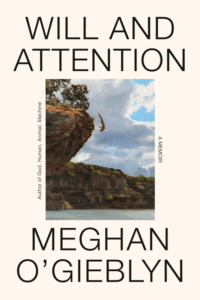
ffitch maintains this delicate narrative balance largely because she exhibits little interest in demonstrating moral purity, either through her own authorial posturing or the flawless behavior of her characters. Avalon, Rise is entirely unconcerned with whether its fictional inhabitants execute the precise, politically correct action in every scenario. Consequently, the novel achieves a rare artistic feat: it maintains a distinct, unshakeable sense of right and wrong without ever degenerating into preachiness or heavy-handed didacticism. It transforms into an authentic exploration of how genuinely confusing and agonizingly difficult it is to attempt to do good.
By braiding multiple intersecting storylines into the overarching tale of the town of Avalon defeating its modern-day giant, ffitch constructs a layered narrative that expresses a clear ethical viewpoint without hammering the reader over the head. While this narrative approach is rarely executed successfully in adult fiction, it remains a defining standard of excellence within classic children’s literature. ffitch explicitly nods to this tradition throughout Avalon, Rise, weaving in references to beloved juvenile classics such as Abiyoyo, Frog and Toad, Herschel and the Hanukkah Goblins, and The Dead Bird.
Each of these referenced works demands that its characters face daunting situations with courage, taking seemingly simple human tasks—such as burying a small bird, celebrating a holiday, or navigating mundane daily routines—and surrounding them with emotional complication, mischief, humor, and genuine delight.
This thematic framework translates directly to Avalon, Rise as the community confronts a very real threat, making it clear that white supremacists are unwelcome in their town. The novel understands, just as the finest classics of children’s literature do, that when an individual is small, fallible, and confused, everything in the world feels intensely exciting, yet almost nothing is straightforward or easy. Furthermore, the book understands as well as any great adult novel how profoundly difficult it is to compel people to work together cohesively, regardless of how high the stakes may be. By harmonizing these two distinct yet complementary insights, ffitch has produced a remarkable work of fiction.
Tom McCarthy’s The Rhyl Poster and the Labyrinth of Bureaucracy
While some writers tend toward stylistic inarticulacy and sparse minimalism as their careers progress—noting how Samuel Beckett spent his final years trading in lonely phrases and flinty little fragments—Tom McCarthy is moving firmly in the opposite direction. A distinct intellectual geekiness that first announced itself prominently in his 2021 novel The Making of Incarnation—filled with Feynman diagrams, Fisher kernels, Prandtl tunnels, and hyper-converged-infrastructure systems—has now forcefully asserted total dominance over McCarthy’s prose style.
Writing in The New Yorker, critic Max Callimanopulos observes that McCarthy’s latest novel, The Rhyl Poster, is thoroughly saturated with references to “networks and spreads,” “channels of association and disclosure,” avenues, angles, vectors, eddies, and even “contrafluvial vectors.” As readers navigate the text, they often feel adrift, realizing that the European legal system is vast, sprawling, and overwhelmingly complicated, and that McCarthy possesses an seemingly endless vocabulary to articulate that exact reality.
For a perceptive reader squinting at the page, the structural bones of a traditional legal thriller might briefly appear—resembling something like a John Grisham paperback rewritten by French experimentalist Georges Perec. However, upon closer inspection, The Rhyl Poster reveals itself to be nearly identical in ethos to McCarthy’s previous two novels. While repetition and creative reenactment may serve as the twin engines driving McCarthy’s fiction, Callimanopulos admits it can be slightly disheartening to repeatedly read about alienated men and their ultimately fruitless attempts to construct some grand, infrastructural master-meaning out of their contemporary historical moment.
Progressing through The Rhyl Poster often yields the irritating sensation that the author is hovering somewhere overhead, chuckling knowingly at the reader’s dutiful annotations and frequent marginal expressions of exasperation. McCarthy’s novels have a long-standing habit of proactively preempting their own criticism. For instance, he famously opened the largely eventless Satin Island with the warning: “Events! If you want those, you’d best stop reading now.” Yet, The Rhyl Poster pushes this impulse even further, occasionally appearing deliberately engineered to deflect standard literary pleasures.
The sentences, dense with specialized jargon, can beat down the reader with their elaborate banality, while the plot—recycled wholesale from earlier works—feels simultaneously frantic and empty. Reading The Rhyl Poster does not evoke the cool, quiet contemplation of stepping into a curated art gallery, much like his breakout novel Remainder did; instead, it feels closer to stumbling into a cluttered junk shop overflowing with miscellaneous odds and ends that McCarthy has accumulated over the course of his literary career. Reaching the final page and setting the book aside, however, brings a strange shift in perspective, as the eccentric weight of the novel slowly begins to grow on the reader.
Ultimately, a novelist who remains so rigorously committed to a single formal method must eventually wonder what creative territory is left to explore with it. Early in the novel, a character named Stanton reflects on his clandestine document-smuggling, concluding that the endeavor constitutes “a topographic, not a spiritual, drama.” Callimanopulos suggests that this single phrase might well serve as an accurate summary of McCarthy’s entire literary career. The author has rarely shown deep interest in exploring how or what his characters emotionally feel. Yet, in the closing chapters of The Rhyl Poster, McCarthy appears to be attempting to escape his characters altogether.
While he may never write another novel as clean, spare, and plainly pleasurable as Remainder, the novelist who once found his primary creative inspiration within the sterile, curated spaces of the contemporary art world appears, in these late moments, to be finding his way toward an entirely different kind of book: one that finally stops trying to X-ray invisible bureaucracies and massive institutions, and starts, much more simply, looking directly at the world around us.