Researchers at Tufts University School of Medicine and the Graduate School of Biomedical Sciences (GSBS) have unveiled a sophisticated three-dimensional model that provides new insight into how the human nose regenerates nerve tissue. This discovery challenges long-held scientific assumptions, revealing that a specific type of stem cell, previously dismissed as largely dormant, plays an essential and active role in preserving our sense of smell. The findings, published recently in the journal Cell Reports Methods, could pave the way for new therapeutic strategies for individuals suffering from olfactory dysfunction.
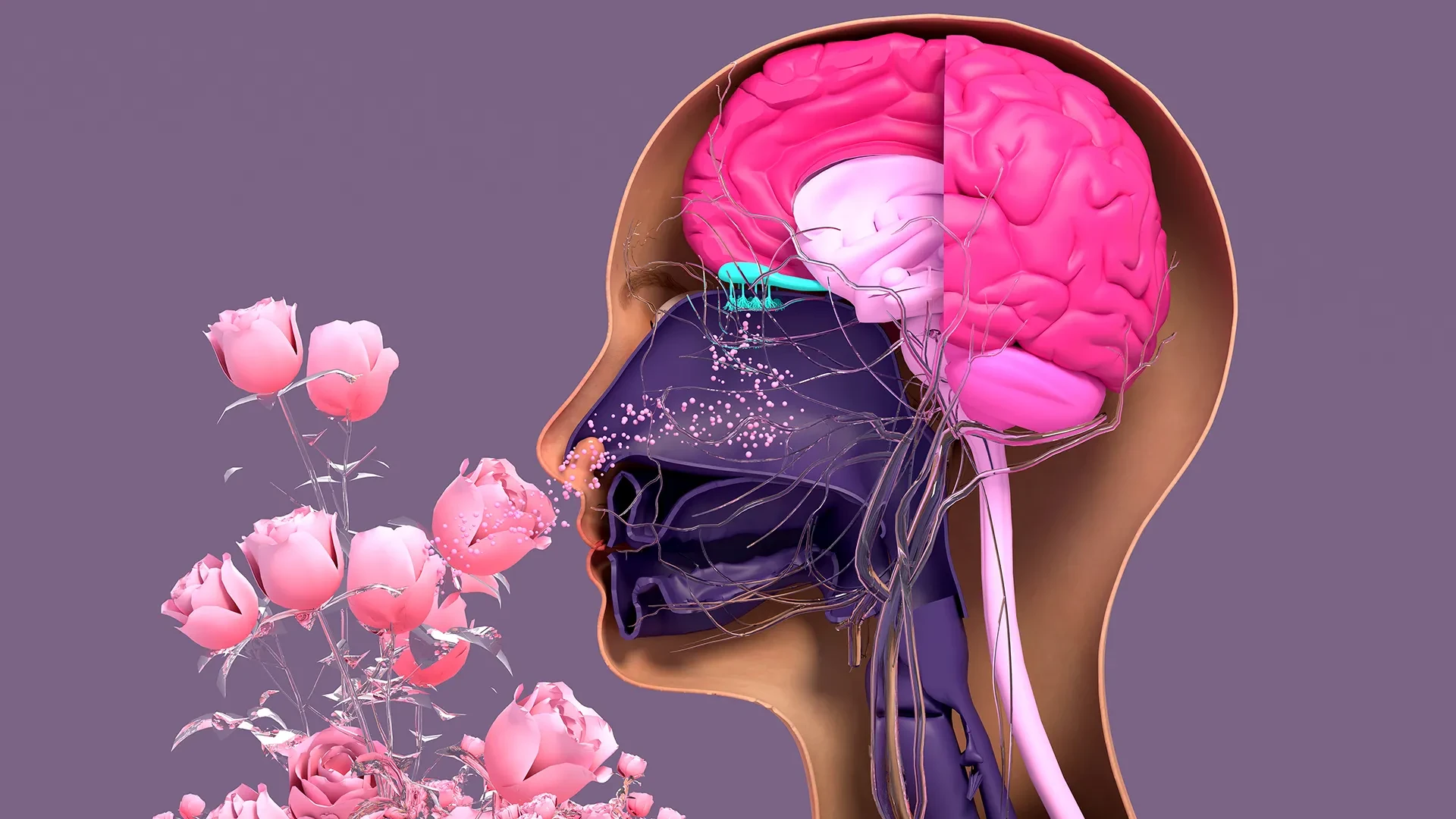
The human sense of smell is a complex biological feat, relying on sensory neurons located within the nasal cavity. Unlike the neurons found in the central nervous system, which generally possess a limited capacity for repair, sensory neurons in the nose demonstrate a remarkable ability to regenerate throughout a person’s entire lifespan. This resilience is necessary, as these cells are in constant, direct contact with the external environment—an exposure that naturally subjects them to potential damage from toxins, pollutants, and pathogens.
However, this regenerative capacity is not invincible. Viral infections—most notably SARS-CoV-2, the virus responsible for COVID-19—along with chronic exposure to environmental toxins and the natural processes of aging, can significantly impair the function of these neurons. When these cells lose their ability to replicate and repair, the result can be a partial or total loss of smell, a condition that profoundly impacts a person’s quality of life, nutritional health, and safety.
To better understand the mechanisms governing this regeneration, the research team at Tufts developed a novel, accessible three-dimensional olfactory tissue mouse model. By creating these organoids—miniature, simplified versions of organs grown in a lab setting—the scientists sought to observe how neurons are continually formed and to identify the specific biological roadblocks that arise during disease or the aging process.
Unlocking the Secrets of Stem Cell Interdependence
Central to the research is the discovery of the interplay between two distinct populations of stem cells in the nose: horizontal basal cells (HBCs) and globose basal cells (GBCs). Traditionally, the scientific community viewed GBCs as the primary workhorses of neurogenesis, responsible for the ongoing production of olfactory neurons. In contrast, HBCs were largely characterized as a "reserve" population, thought to remain dormant until a major injury required their intervention.
"Our research suggests that these two stem cells may be interdependent," explains Brian Lin, senior author on the study and a research assistant professor in the Department of Developmental, Molecular and Chemical Biology at Tufts. "One type that we thought was largely dormant—HBCs—may actually play a crucial role in supporting the production of new neurons and the repair of damaged tissue."
By utilizing their 3D organoid model, the team identified a specific subpopulation of HBCs marked by the expression of the protein KRT5. Through controlled experiments, the researchers observed that these KRT5-positive HBCs were not merely waiting on the sidelines; they were actively facilitating the generation of new olfactory neurons. Most tellingly, when the team selectively depleted these specific HBCs from the organoid cultures, the regenerative process was significantly impaired, confirming that these cells are essential players in the health and maintenance of the olfactory system.
The study also shed light on the impact of aging on these cellular processes. By comparing cells derived from mice of different ages, the researchers observed a clear decline in the regenerative capacity of cells taken from older subjects. "We found a decline in the ability of the older mice cells to generate new neurons," Lin notes. "We think this is due to a decrease in the GBC population as we age, but we need to do more work to test this hypothesis and, if so, develop ways to rejuvenate them."
Democratizing Research with Accessible Models
A significant hurdle in medical research is the cost and complexity of the tools required for high-level experimentation. The lead author of the study, Juliana Gutschow Gameiro, a former Ph.D. student visiting GSBS from the State University of Londrina in Brazil, focused on creating a model that would be both effective and accessible to labs operating with limited resources.
The timing of this innovation is particularly significant. As the global medical community grapples with the long-term effects of the COVID-19 pandemic, the study of olfactory health has moved from a niche interest to a major focus across multiple fields. "Because loss of smell is associated with COVID-19, as well as with Parkinson’s disease and other conditions, a much larger number of researchers from a variety of different fields have begun researching olfactory epithelial cells in the last few years," says Lin.
By designing a model that is easy to produce, the team hopes to lower the barrier to entry for non-stem cell biologists. The goal is to provide a standardized, reliable, and inexpensive platform that allows researchers to investigate why olfactory regeneration fails in various clinical contexts. "We wanted to develop an easy-to-use model so that non-stem cell biologists and those working in labs with limited resources could use it to better understand how olfactory neurons regenerate and what happens that causes that process to diminish or fail completely," Lin adds.
From Mouse Models to Human Therapeutics
While the current findings represent a significant leap forward in understanding olfactory biology, the team is already looking toward the next frontier: the creation of a human organoid. The ultimate objective is to establish a platform that can be used for high-throughput drug screening, allowing scientists to test potential treatments for people whose sense of smell has been significantly compromised or lost entirely.
Organoids offer a distinct advantage over traditional methods, such as whole-animal testing or standard two-dimensional human cell cultures. They are generally quicker to develop, more cost-effective, and offer a more accurate representation of the physiological environment of an actual organ. While organoid technology has already revolutionized research into the lungs, kidneys, and other organ systems, the olfactory system has remained a challenging target.
The primary obstacle to creating a human olfactory organoid is the difficulty of obtaining pure, isolated olfactory tissue. In a clinical setting, obtaining a sample involves using a brush—similar to those used for COVID-19 nasal swabs—to collect cells from deep within the nasal cavity. However, these samples are notoriously heterogeneous, often containing a mixture of both respiratory and olfactory stem cells that are difficult to separate.
"It’s challenging to get pure olfactory tissue from humans," Lin explains. Because these cells are intermingled, the current challenge for the research team is to develop a reliable and affordable technique for isolating human olfactory stem cells from these mixed samples and effectively coaxing them to grow and differentiate in a laboratory setting.
Should the team succeed in developing this human-based model, it would represent a transformative tool for personalized medicine and pharmaceutical research. By modeling the human olfactory system in a dish, researchers could observe the direct effects of various pharmacological compounds on regenerating nerve tissue, potentially uncovering new pathways to restore smell in patients suffering from the aftereffects of viral infections, neurodegenerative diseases, or age-related degeneration.
As the team continues their work, the focus remains on bridging the gap between basic biological discovery and practical clinical application. By unraveling the complex, interdependent relationships between stem cells in the nose, the Tufts researchers have provided a foundation that could change how science approaches the repair of the human sensory system. While the path to a fully functional human olfactory organoid involves overcoming significant technical hurdles, the current 3D mouse model serves as a vital proof of concept, demonstrating that the secret to restoring the sense of smell may lie in the very cells once thought to be sleeping.