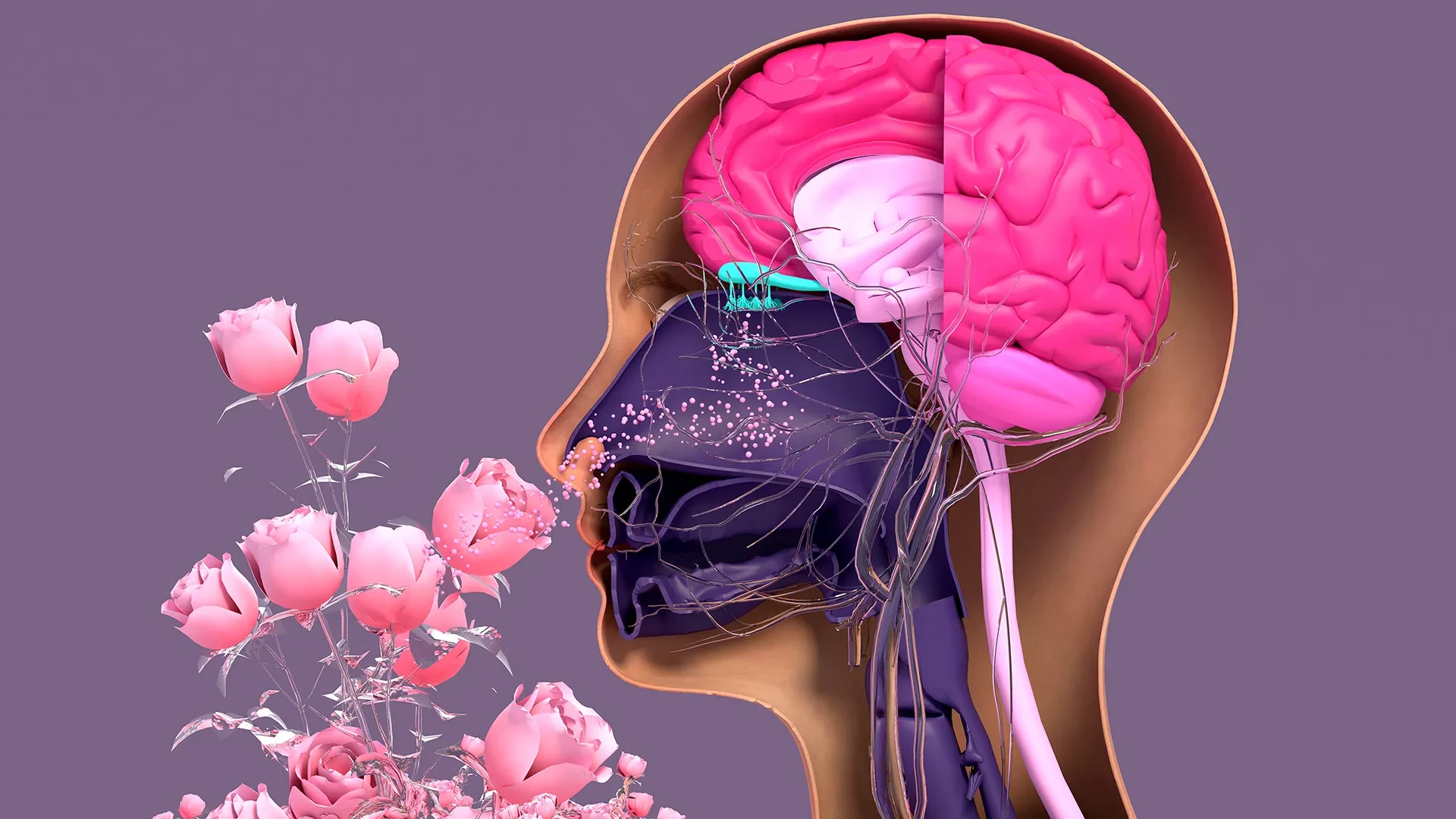
In a significant breakthrough for sensory biology, researchers at the Tufts University School of Medicine and the Graduate School of Biomedical Sciences (GSBS) have unveiled a sophisticated three-dimensional model that sheds new light on how the human nose repairs itself. By studying the regeneration of nerve tissue in the nasal cavity, the team has discovered that a specific type of stem cell—long believed to be largely dormant—actually plays a pivotal, active role in preserving our sense of smell.
This discovery challenges long-standing assumptions about olfactory tissue and offers a potential pathway toward treating the millions of people worldwide struggling with a diminished or lost sense of smell.
The Regenerative Power of the Nose
Unlike the vast majority of the central nervous system, which possesses a notoriously limited capacity for repair, the sensory neurons residing in the nasal cavity are remarkably resilient. Throughout a human being’s lifetime, these neurons undergo a constant cycle of renewal, a necessary adaptation given their continuous exposure to the harsh, often toxic, outside environment.
However, this biological machinery is not infallible. Whether through viral infections—a phenomenon brought into sharp focus by the COVID-19 pandemic—chronic exposure to environmental toxins, or the natural degradation associated with aging, the function of these neurons can falter. When the ability of these cells to replicate and repair themselves is compromised, the result is often a partial or complete loss of smell, a condition that can have profound impacts on an individual’s quality of life, nutritional health, and psychological well-being.
To better understand the mechanics of this decline, the Tufts research team, led by senior author Brian Lin, a research assistant professor in the Department of Developmental, Molecular and Chemical Biology, devised a new, three-dimensional olfactory tissue mouse model. Known as an organoid, this miniature, lab-grown version of nasal tissue provides a controlled environment for scientists to observe how neurons are formed and, crucially, why that process falters in the presence of disease or the progression of time.
Unveiling the Role of Stem Cell Interdependence
The team’s research, recently published in Cell Reports Methods, utilizes this organoid model to map the intricate communication between two distinct types of stem cells found within the nose: horizontal basal cells (HBCs) and globose basal cells (GBCs).
Historically, the scientific community had categorized GBCs as the primary workhorses of olfactory regeneration, while HBCs were largely viewed as a quiescent, dormant reserve, activated only under extreme conditions. The Tufts study disrupts this narrative, suggesting that these two cell populations are far more interdependent than previously understood.
"Our research suggests that these two stem cells may be interdependent," says Lin. "One type that we thought was largely dormant—HBCs—may actually play a crucial role in supporting the production of new neurons and the repair of damaged tissue."
By utilizing their 3D model, the researchers identified a specific subpopulation of HBCs, characterized by the production of the protein KRT5, which actively fosters the generation of new olfactory neurons. When the team performed experiments to selectively deplete these KRT5-producing HBCs from the organoid cultures, they observed a significant impairment in the generation of new neurons. This finding confirms that these cells are not merely "backups" waiting for a catastrophe, but are, in fact, essential participants in the ongoing regenerative process that keeps the olfactory system functional.
The study also delved into the impact of biological aging on these cellular processes. By growing cells from mice of varying ages within the organoid model, the team observed a distinct decline in the capacity of older cells to generate new neurons. "We found a decline in the ability of the older mice cells to generate new neurons," Lin notes. "We think this is due to a decrease in the GBC population as we age, but we need to do more work to test this hypothesis and if so, develop ways to rejuvenate them."
An Accessible Model for Global Research
A key priority for the research team, particularly for the study’s lead author, Juliana Gutschow Gameiro, was accessibility. A visiting Ph.D. student at GSBS from the State University of Londrina, Parana, in Brazil, Gameiro was deeply committed to developing a model that could be replicated in laboratories with limited funding and equipment.
The urgency of this work has only increased in recent years. As the prevalence of smell loss has become a hallmark symptom of COVID-19 and a common indicator in neurodegenerative conditions like Parkinson’s disease, the scientific community has seen a surge of interest in the olfactory system.
"Because loss of smell is associated with COVID-19, as well as with Parkinson’s disease and other conditions, a much larger number of researchers from a variety of different fields have begun researching olfactory epithelial cells in the last few years," says Lin. "We wanted to develop an easy-to-use model so that non-stem cell biologists and those working in labs with limited resources could use it to better understand how olfactory neurons regenerate and what happens that causes that process to diminish or fail completely."
By simplifying the methodology, the team hopes to democratize this area of research, allowing scientists across the globe to contribute to the collective understanding of olfactory health without the need for prohibitive, high-end infrastructure.
The Path Toward Human Organoids
While the mouse model has provided invaluable insights, the ultimate objective of the Tufts team is to translate these findings into a human organoid. Such a model would serve as a powerful platform for pre-clinical drug screening, potentially leading to therapies that could restore the sense of smell in patients who have lost it due to illness or injury.
Organoids offer a significant advantage over traditional research methods. They are generally quicker and less expensive to manage than whole-animal studies and often provide more reliable data than existing human cell cultures. While organoid technology has already been successfully applied to other complex organs, such as the lungs and kidneys, the development of human olfactory organoids has remained elusive.
The primary hurdle, according to Lin, is the inherent complexity of human nasal tissue. "It’s challenging to get pure olfactory tissue from humans," he explains. The current collection process involves using a brush—similar to a COVID-19 test wand—to sample deep within the nasal cavity. However, unlike in the mouse model, the human samples collected via this method contain a difficult-to-separate mixture of respiratory stem cells and olfactory stem cells.
The research team’s next challenge is to develop a simple, cost-effective technique to isolate these human olfactory stem cells and successfully coax them to grow in a laboratory setting. By bridging the gap between their current mouse-based success and a robust human model, the team aims to provide a vital tool for clinicians and drug developers alike. As the research continues, the possibility of rejuvenating the sense of smell moves one step closer to reality, promising a future where the loss of this vital sense is no longer an inevitable or permanent consequence of age and disease.