In a significant breakthrough for sensory biology, researchers at Tufts University School of Medicine and the Graduate School of Biomedical Sciences (GSBS) have unveiled a new three-dimensional model that provides unprecedented insight into how the nose regenerates nerve tissue. By utilizing this innovative 3D organoid model, the team has discovered that a specific type of stem cell—long believed to be largely dormant—actually plays a critical, active role in preserving the human sense of smell.
This discovery, published recently in the journal Cell Reports Methods, offers a fresh perspective on the biological mechanisms that allow our olfactory system to repair itself, while also shedding light on why that ability often falters due to viral infections, environmental toxins, or the natural process of aging.
A Rare Ability to Regenerate
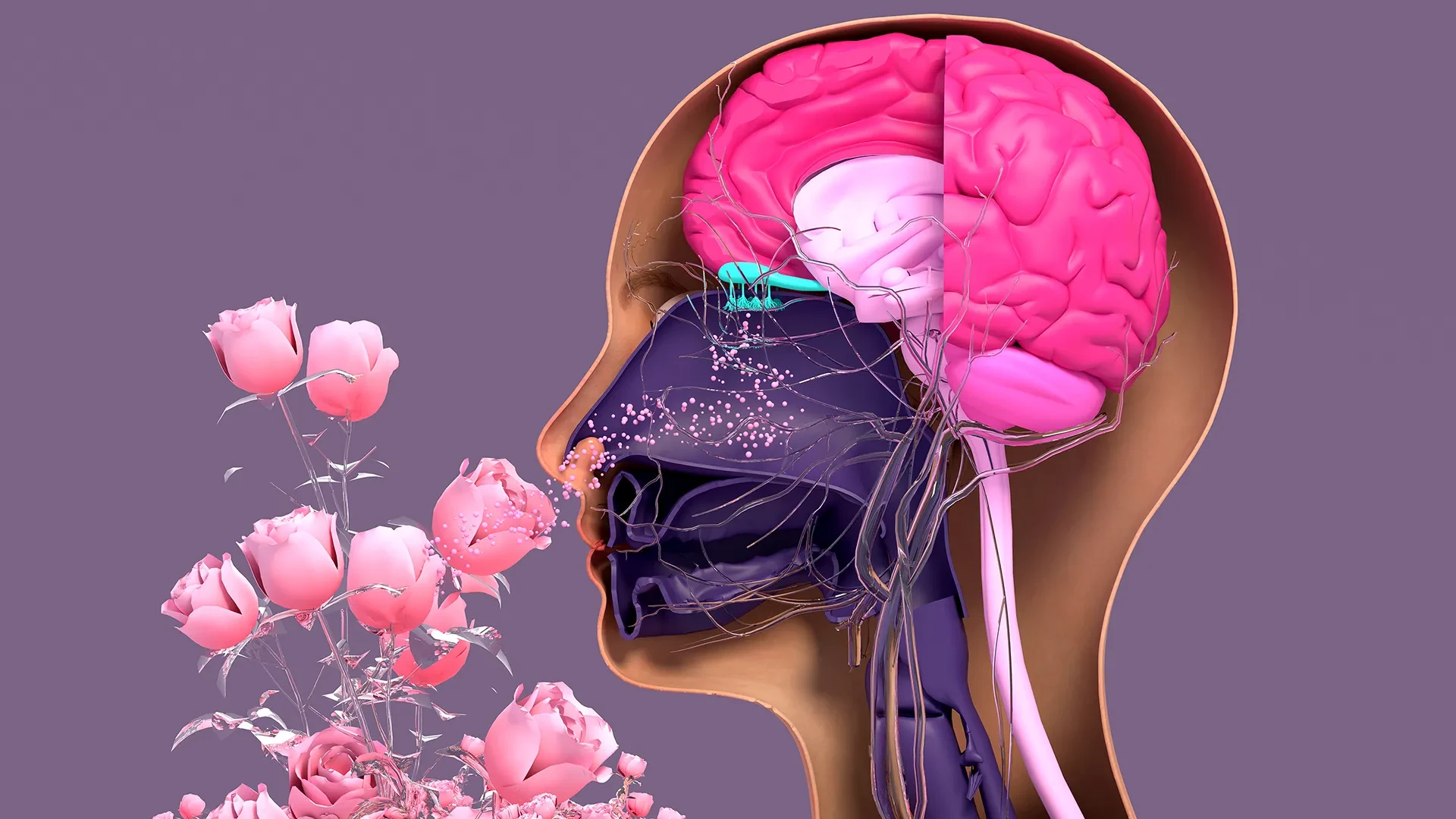
Unlike the neurons found in the central nervous system, which are notoriously difficult to repair or replace once damaged, the sensory neurons within the nasal cavity possess a remarkable, lifelong capacity for regeneration. This is a vital biological feature, given that the nose is in constant contact with the outside world, frequently exposing its delicate lining to pathogens, pollutants, and irritants.
However, this regenerative capacity is not infinite. Viral infections—most notably SARS-CoV-2, the virus responsible for COVID-19—as well as long-term exposure to airborne toxins and the inevitable decline associated with aging, can disrupt this delicate process. When the replication of these sensory neurons is hindered, individuals may experience partial or complete loss of smell, a condition that can have profound impacts on quality of life, appetite, and emotional well-being. To better understand the mechanics of this decline, the Tufts research team set out to develop a simplified, effective model that could mirror the complex environment of the nose in a laboratory setting.
The Interdependency of Stem Cells
The study centers on the complex interplay between two primary populations of stem cells found in the nose: horizontal basal cells (HBCs) and globose basal cells (GBCs). Traditionally, the scientific community viewed HBCs as a dormant reserve, a "backup" cell type that only activated under extreme circumstances to repair catastrophic tissue damage. In contrast, GBCs were widely considered the primary drivers of routine, day-to-day neuronal replenishment.
The Tufts researchers, led by senior author Brian Lin, a research assistant professor in the Department of Developmental, Molecular and Chemical Biology, found that this binary view of the two cell types may be an oversimplification. Their research indicates that these two stem cell populations are, in fact, deeply interdependent.
"Our research suggests that these two stem cells may be interdependent," says Lin. "One type that we thought was largely dormant—HBCs—may actually play a crucial role in supporting the production of new neurons and the repair of damaged tissue."
Through the use of their 3D organoid model, the team identified a specific subpopulation of HBCs, identified by their production of the protein KRT5, that acts as an active partner in the regenerative process. When the team experimentally depleted these KRT5-producing HBCs from their organoid cultures, the generation of new olfactory neurons was significantly impaired. This observation confirms that these cells are not merely a dormant reserve but are essential, active contributors to the maintenance of the olfactory system.
Aging and the Decline of Regeneration
Beyond identifying the roles of specific stem cells, the team sought to investigate why the sense of smell often deteriorates as people grow older. By cultivating cells from mice of different ages within their 3D model, the researchers observed a clear trend: cells harvested from older mice showed a diminished capacity to generate new neurons compared to their younger counterparts.
"We found a decline in the ability of the older mice cells to generate new neurons," Lin notes. "We think this is due to a decrease in the GBC population as we age, but we need to do more work to test this hypothesis and, if so, develop ways to rejuvenate them."
This finding opens new avenues for future research. If the decline in smell is indeed tied to a reduction in the GBC population, the next challenge will be determining whether these cells can be stimulated or supported to recover their youthful regenerative vigor.
An Accessible Tool for Global Research
A primary focus for the research team, particularly for the study’s lead author, Juliana Gutschow Gameiro—a former Ph.D. student who visited GSBS from the State University of Londrina in Brazil—was the democratization of this research tool. They aimed to create a model that was not only scientifically accurate but also accessible to laboratories that may not have access to high-end equipment or unlimited funding.
The rise of COVID-19, which brought the phenomenon of smell loss into the global spotlight, has galvanized a diverse array of researchers from various fields to begin investigating olfactory epithelial cells. By developing a model that is easy to create and maintain, the Tufts team hopes to lower the barrier to entry for scientists who are not traditional stem cell biologists.
"We wanted to develop an easy-to-use model so that non-stem cell biologists and those working in labs with limited resources could use it to better understand how olfactory neurons regenerate and what happens that causes that process to diminish or fail completely," Lin explains.
Toward a Human Organoid Future
The development of the mouse-tissue organoid is viewed as a vital stepping stone toward the ultimate objective: the creation of a human olfactory organoid. Such a tool would provide a powerful platform for pre-clinical drug screening, allowing researchers to test potential treatments for people suffering from chronic smell loss—whether caused by neurodegenerative conditions like Parkinson’s disease, viral infections, or idiopathic age-related decline.
Organoids offer a significant advantage over traditional research methods. They are faster, less expensive, and potentially more predictive than using live animal models or conventional 2D human cell cultures. While scientists have successfully developed organoids for other organs, such as the lungs and kidneys, human olfactory tissue has proven notoriously difficult to replicate in the lab.
The challenge, according to Lin, lies in the collection and isolation of the tissue. In humans, obtaining pure olfactory tissue requires a delicate procedure where a brush, similar to a standard COVID-19 testing swab, is inserted deep into the nasal cavity. The resulting sample is a mixture of respiratory stem cells and olfactory stem cells, which are notoriously difficult to separate from one another in a laboratory setting.
The current challenge for the Tufts team and their colleagues is to refine a technique that is both simple and inexpensive, allowing them to isolate human olfactory stem cells from these mixed samples and successfully coax them into stable growth. By bridging the gap between mouse models and human biology, the researchers hope to transform how we understand and eventually treat the loss of one of our most fundamental senses. As the team moves forward, their work stands as a testament to the importance of looking past established "dormant" labels to find the hidden biological mechanisms that keep our bodies functioning.