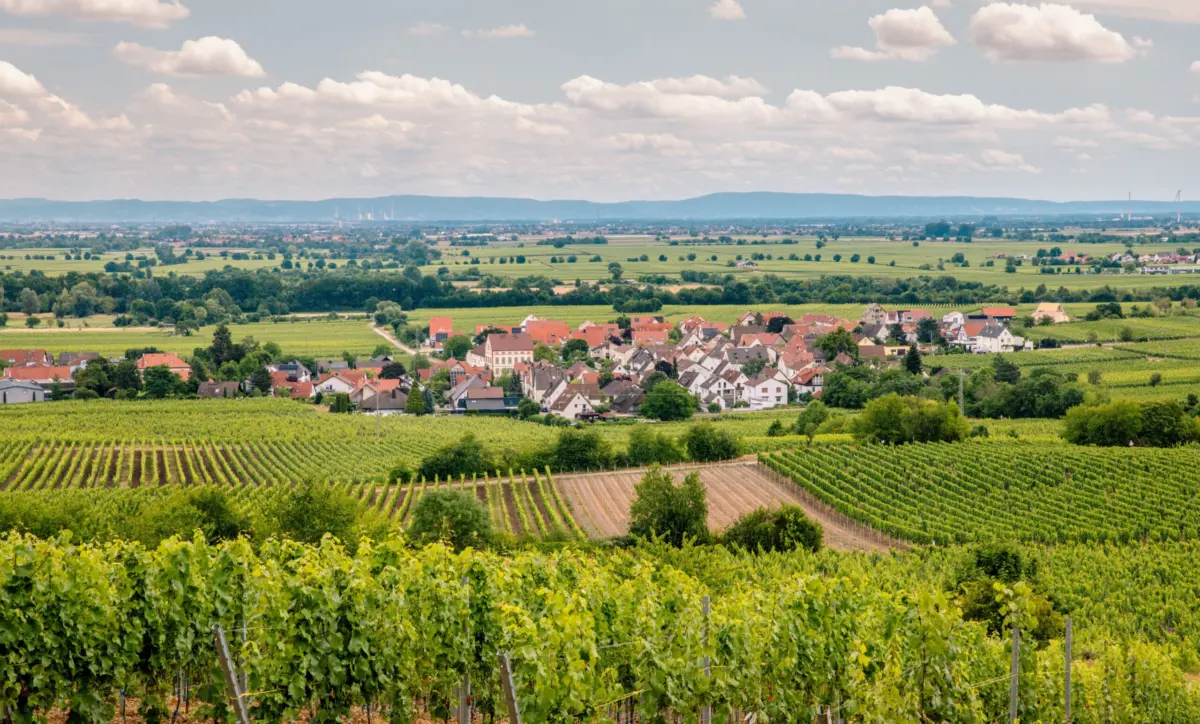
All appears deceptively normal in the southern German hamlet of Deidesheim. With a population of just 3,700, life here moves with the rhythmic, unhurried pace of a town that has existed for centuries. In the late afternoon, schoolchildren straggle home along cobblestoned streets that date back 400 years, while the sun blazes down on the surrounding vineyards—the lifeblood of a region whose reputation is built on the dedication of niche, small-batch wine producers. Occasionally, a high-end Mercedes AMG with Frankfurt plates slows to a crawl, its occupants pausing to admire the impeccably preserved medieval architecture. To the casual observer, there is nothing in this picturesque town to suggest that it has recently become the epicenter of Germany’s fine-dining scene, now home to the Michelin Guide’s latest three-star restaurant.
With this recent designation, Deidesheim has joined a rarefied club, bringing Germany’s total number of three-star establishments to 12. It is a seismic shift for a town that usually measures its importance by the changing of the seasons and the traditional rhythms of the harvest.
When asked what it feels like to have the world’s most prestigious culinary accolade bestowed upon one’s doorstep, the response from the locals is one of quiet, albeit joyous, disbelief. There was no street parade or town crier to announce the news. In Deidesheim, the calendar is already dictated by events of long-standing tradition. The most significant of these is "Goat Day," an ancient throwback held on Whit Tuesday, during which a neighboring village ceremoniously delivers a goat in exchange for historical grazing rights. This is equaled only by the annual Wine Festival in August, a two-weekend extravaganza where Schlager music fills the air, over a dozen winery cellar doors swing open to the public, and a DJ spinning tracks from a souped-up 1970s Kombi van creates an atmosphere that feels more akin to the avant-garde cool of Berlin’s Berghain than the sleepy, bucolic countryside one might expect.
Yet, despite its seemingly quaint exterior, Deidesheim possesses a high-end lilt that belies its Mona Lisa-sanguine façade. The star of the show is L.A. Jordan—a restaurant named not for athletic footwear, but for its founder, Ludwig Andreas Jordan. On the eve of the announcement, the atmosphere at the restaurant was, for a moment, uncharacteristically muted, but the subsequent reaction from the team was decidedly non-Teutonic in its intensity.

"It was like we won the food version of the Soccer World Cup, the Culinary World Cup," says managing director Ole Leidner, reflecting on the moment the news broke. "There was screaming; I may have even cried."
The sentiment is shared by Chef Daniel Schimkowitsch, the man behind the stove. Schimkowitsch earned L.A. Jordan its first Michelin star the year it opened in 2014, followed by a second star nine years later. Now, having reached the pinnacle of the culinary world, his perspective remains rooted in humility. "I’m speechless, happy, full of respect, humility, and gratitude to my entire team, the Michelin Guide, our guests, and my owner," he says. With this third star, the restaurant has not only climbed the national ladder but has also earned a place in the elite Rolodex of the top 150 restaurants internationally.
While local radio stations continue to trumpet the news of one of Germany’s smallest towns securing such a massive accolade, the reality is that Deidesheim has long served as a secret weekend sanctuary for the well-heeled. For years, Frankfurt financiers, diplomats, and high-profile gourmands have made the "warp speed" one-hour roar down the Autobahn to escape the pressures of city life. The town’s Deidesheimerhof restaurant, located on the main square, has historically served as a gateway to German culture for global dignitaries. Chancellor Helmut Kohl famously brought international heavyweights to the table here, including Queen Elizabeth II, Margaret Thatcher, and Mikhail Gorbachev. Even Michael Jackson was known to frequent the establishment.
However, the current iteration of L.A. Jordan represents a new generation of prestige. According to Leidner, the impact was immediate. "The phone started ringing instantly, and our waiting list exploded overnight," he explains, noting that inquiries are coming in from as far away as New York and the United Kingdom. The restaurant is now fully booked through September. For those lucky enough to secure a table, the anticipation is palpable, fueled by glowing reviews—most notably the Michelin judge’s report, which praised the Atlantic monkfish served with chanponzu sauce and Périgord truffle, a dish described as having lit firecrackers under the palates of the inspectors.

The allure of the region extends far beyond the plate. As one explores the vineyards, it becomes clear why this area has such a storied history. The rows of vines form a verdant belt that pulls taut around the town’s collection of medieval houses. The plots are held with iron-fisted commitment by local families, often interspersed with inviting picnic tables and tangled terrace stairways. In one particular vineyard, the "Eva of Pardisegarten," a 15-foot nude sandstone sculpture of a woman mid-frolic, stands as a testament to the region’s whimsical side.
Beyond the world-famous Riesling that defines the Rheinpfalz region, the area is a treasure trove for oenophiles. The terroir supports a diverse array of varietals, including aromatic Gewürztraminer, Spätburgunder (Pinot Noir), and the "sniper" of the region: Auxerrois, a white wine so deceptively easy to drink that it can catch even the most vigilant taster off guard.
Back in the heart of the town, the Weinstrasse serves as the primary artery of social life. One can spend an entire day "ping-ponging" between cellar doors, starting at the historic Weingut von Winning and moving toward the glass-structured architecture of Weingut Reinhardt. The innovative Weingut Reichsrat von Buhl is another highlight, particularly during the Wine Festival, when it frequently hosts Mexican food trucks, providing a unique culinary contrast to the traditional local fare. For those seeking a quieter experience, the Kimich Winery offers a secret rear garden, complete with a resident turtle and the occasional sound of flamenco guitarists.
The town’s oscillation between quiet, tumbleweed-strewn afternoons and the electric, saxophone-filled energy of its summer festivals is exactly what draws visitors back. For residents, it is a daily reality; it is not uncommon for a romantic couple to steal a kiss against a lounge room window during the height of the summer festivities.

The calendar in Deidesheim is a masterclass in seasonal living. In March, the landscape is transformed by the Pfälzer Mandelblüte, as cherry and almond trees erupt in a sea of white and pink. May brings the famed Goat Festival, which earned UNESCO cultural status last year, while July features the International Wine and Summer garden party at the Ketschauer Hof. As autumn arrives and the leaves turn to gold, the Jazzwanderung—a progressive jazz and wine walk—taps its way toward the forest. Even in the depths of winter, the town holds its own, with a cloaked St. Martin’s Day procession featuring lantern-carrying children and one of the most charming, yet under-the-radar, Christmas markets in Germany.
While there are no tour buses clogging the streets and English is spoken as a second language, the world is clearly taking notice. "Around 75 percent of our visitors are German," Leidner observes, "but L.A. Jordan is the new and modern Deidesheim that has just added an international impact to the landscape. That’s what this latest star does to an area."
For those seeking an alternative to the high-stakes dining of L.A. Jordan, the town is well-equipped. The 1718 restaurant at the Ketschauer Hof provides a more casual, French-themed experience, while the Riva terrace at the Kaisergarten, with its tranquil koi pond, offers impeccable service on sunny afternoons. Mornings are best spent at the couple-run Café-Bistro Bellavigna, and no trip to the region is complete without sampling the face-sized schnitzels at the Gaststätte Winzerverein, served in a charming, pergola-covered setting.
For those venturing further afield, the Waldschenke Deidesheimer Hütte serves as a rustic, cabin-style beer garden tucked away in the forest, just a 30-minute hike from the main street. Alternatively, Sushi.B, located within the grounds of the Weingut Reichsrat von Buhl, offers a high-end, Japanese-inspired departure from the otherwise Eurocentric culinary scene.

For drinks, the Weinbar 1911 in the main square is the premier spot for people-watching with a glass of Riesling. The rear courtyard of Gasthaus Zur Kanne offers a serene oasis, particularly known for its refreshing lavender syrup mocktails. As a final local tip, visitors should familiarize themselves with the Dubbeglas—a traditional, dimpled 17-ounce glass. To truly blend in and pace oneself, many locals opt for a Weinschorle, a 50-50 mix of wine and sparkling water, ensuring that the enjoyment of the region’s viticulture can be sustained throughout the day.
Michelin may have officially awarded the town three stars, but for the residents who call these medieval streets home, the rating is far higher. In the quiet, historic, and now world-renowned hamlet of Deidesheim, the stars are not just on the restaurant sign—they are a reflection of a way of life.