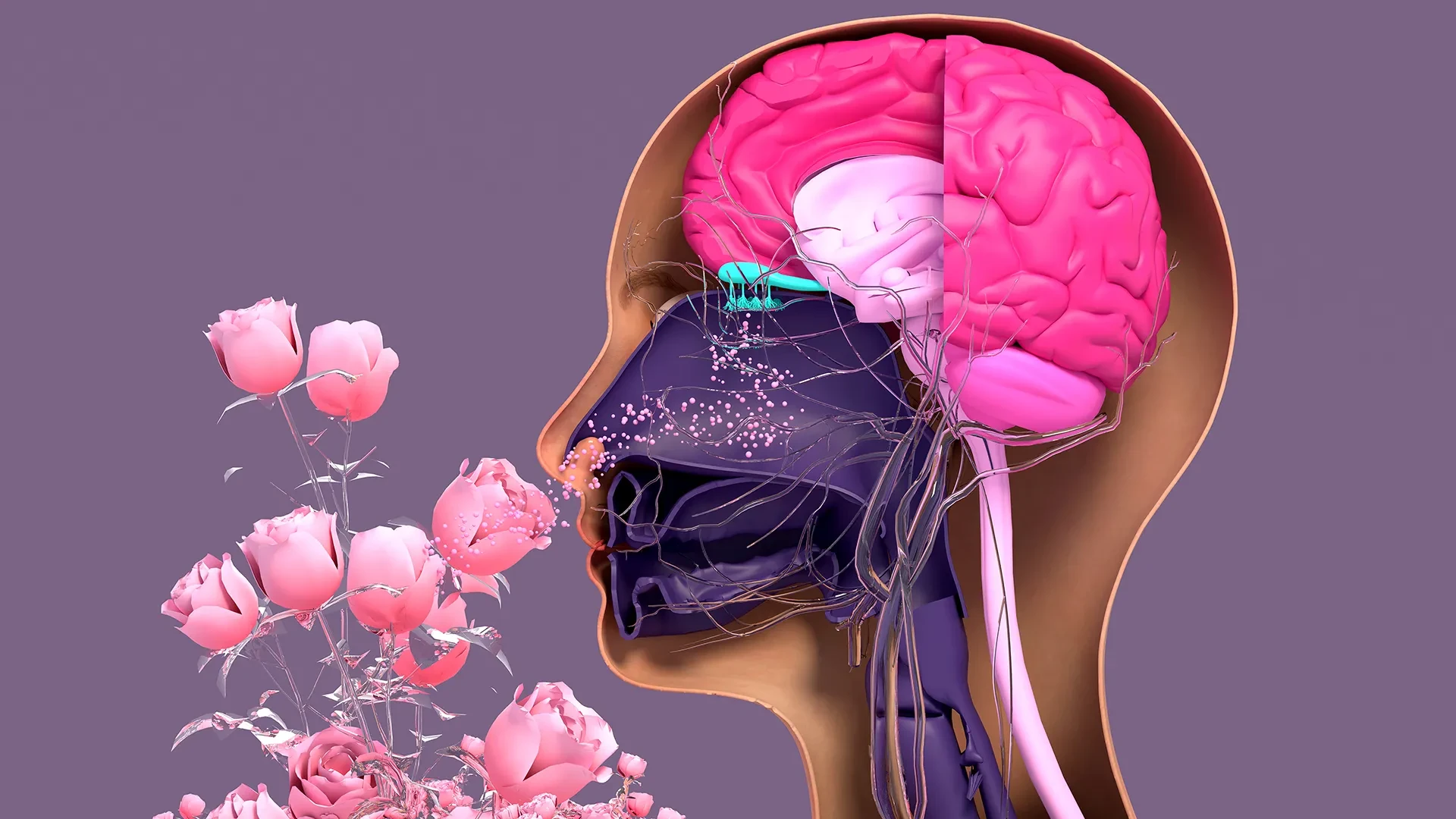
In a significant breakthrough for regenerative medicine, researchers at the Tufts University School of Medicine and the Graduate School of Biomedical Sciences (GSBS) have unlocked new insights into the biological mechanics behind the sense of smell. By developing a sophisticated, three-dimensional model to observe the regeneration of nerve tissue within the nasal cavity, the team has challenged long-standing assumptions about the life cycle of olfactory stem cells. Specifically, the study reveals that a class of stem cells previously categorized as dormant actually plays an indispensable role in maintaining and repairing the neural pathways that allow us to perceive scent.
The human sense of smell relies on a delicate, constantly regenerating network of sensory neurons. Unlike the cells of the central nervous system—which are notoriously difficult to repair once damaged—the sensory neurons in the nasal cavity possess a unique and remarkable capacity to regenerate throughout a person’s entire life. This resilience is vital, as the nose is in constant contact with the external environment, exposing delicate tissues to pollutants, pathogens, and environmental toxins.
However, this regenerative process is not infallible. Viral infections—most notably SARS-CoV-2, the virus responsible for COVID-19—as well as chronic exposure to environmental toxins and the natural progression of aging, can significantly impede the function of these neurons. When these cells lose their ability to replicate and differentiate, the result is often a partial or complete loss of smell, a condition that can have profound impacts on a patient’s quality of life, nutritional intake, and mental well-being. To better understand why this regenerative capacity falters, the Tufts-led team engineered a new, cost-effective three-dimensional olfactory tissue mouse model, or organoid. Their findings, recently published in the journal Cell Reports Methods, provide a clearer picture of how the nose sustains its complex sensory machinery and why that machinery eventually breaks down.
Decoding the Communication Between Stem Cells
The study centers on the complex interaction between two primary types of stem cells found in the nasal epithelium: horizontal basal cells (HBCs) and globose basal cells (GBCs). For years, the scientific consensus held that GBCs were the primary workhorses of olfactory regeneration, while HBCs were relegated to a background role, often described as dormant or serving only as a "reserve" pool to be activated during catastrophic tissue injury.
The new research by the Tufts team, however, paints a much more active and collaborative portrait. "Our research suggests that these two stem cells may be interdependent," explains Brian Lin, a research assistant professor in the Department of Developmental, Molecular and Chemical Biology and the senior author of the study. "One type that we thought was largely dormant—HBCs—may actually play a crucial role in supporting the production of new neurons and the repair of damaged tissue."
By utilizing their 3D organoid model, the researchers identified a specific subpopulation of HBCs, distinguished by the expression of the protein KRT5. These KRT5-positive cells were found to be instrumental in the creation of the organoids themselves. When the team selectively depleted this specific subpopulation from the organoid cultures, the capacity of the tissue to generate new olfactory neurons plummeted, signaling a significant impairment in the regenerative process. These results suggest that the HBCs are far from passive; they are essential, active participants in the ongoing maintenance of the olfactory system.
The study also delved into the impact of biological aging on these processes. By comparing cells derived from mice of different ages, the researchers observed a marked decline in the regenerative potential of cells taken from older subjects. "We found a decline in the ability of the older mice cells to generate new neurons," Lin notes. "We think this is due to a decrease in the GBC population as we age, but we need to do more work to test this hypothesis and if so, develop ways to rejuvenate them." This potential link between age-related cellular depletion and sensory loss offers a promising avenue for future therapies aimed at restoring smell in older populations.
A Democratized Tool for Olfactory Research
A defining feature of this study is the emphasis on accessibility. The organoid model was designed to be easily replicated, even in laboratories that might lack the extensive funding or specialized, high-end equipment required for more complex stem cell research. This was a primary goal of the study’s lead author, Juliana Gutschow Gameiro, a former Ph.D. student who visited the GSBS from the State University of Londrina in Brazil.
The demand for such tools has surged in the wake of the COVID-19 pandemic. With millions of people worldwide reporting the sudden, and sometimes long-lasting, loss of smell following infection, the field of olfactory research has expanded rapidly. "Because loss of smell is associated with COVID-19, as well as with Parkinson’s disease and other conditions, a much larger number of researchers from a variety of different fields have begun researching olfactory epithelial cells in the last few years," says Lin.
By prioritizing a "user-friendly" design, the team hopes to lower the barrier to entry for non-specialists. "We wanted to develop an easy-to-use model so that non-stem cell biologists and those working in labs with limited resources could use it to better understand how olfactory neurons regenerate and what happens that causes that process to diminish or fail completely," Lin adds.
Moving Toward Human Organoid Therapy
While the success of the mouse-tissue organoid is a major step forward, the ultimate goal of the research team is the creation of a human olfactory organoid. Such a tool would be invaluable for pre-clinical drug screening, allowing researchers to test therapeutic interventions on human tissue in a controlled, in vitro environment. This approach is generally faster, more ethical, and often more predictive of human response than animal testing or traditional cell culture methods.
While organoids have been successfully developed for other organs—including the lungs, kidneys, and liver—creating a stable human olfactory organoid remains a significant technical hurdle. The primary challenge lies in the collection and purification of the necessary cells. Unlike the mouse model, where the environment is tightly controlled, obtaining pure olfactory tissue from humans is difficult. The standard procedure involves the use of a brush, similar to a COVID-19 testing wand, which is inserted deep into the nasal cavity to collect a sample.
"It’s challenging to get pure olfactory tissue from humans," Lin explains. During the collection process, the target olfactory stem cells are often mixed with respiratory stem cells. Separating these two distinct cell populations has proven to be a complex task, as they share many characteristics.
The research team’s next phase of investigation will focus on overcoming this bottleneck. Their objective is to develop a reliable, cost-effective technique that can isolate human olfactory stem cells from these mixed samples and coax them to proliferate and organize in a lab setting. If successful, this would provide a vital platform for testing new treatments for conditions that cause the loss of smell, moving the field one step closer to restorative therapies for millions of people. For now, the successful validation of the mouse organoid model serves as a foundation, confirming that the path to restoring the sense of smell lies in understanding the complex, previously underestimated dialogue between the different stem cells that inhabit the nasal lining.