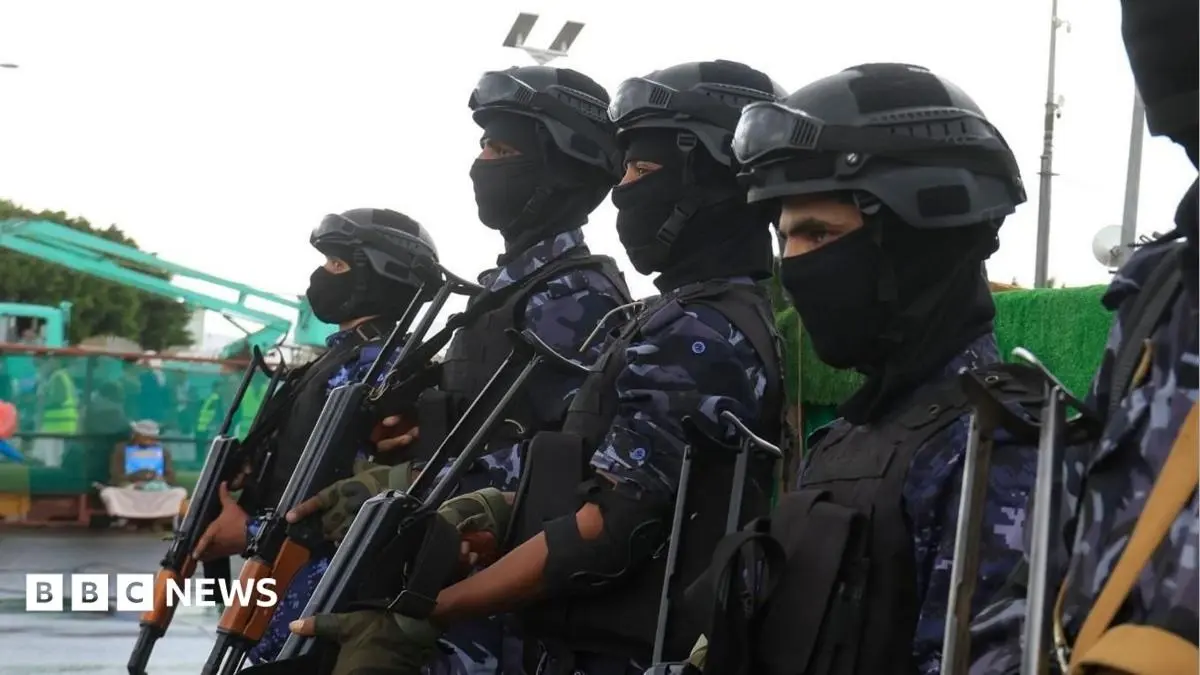
The foreign ministers of the G7 nations have issued a stern, unified demand for Iran to immediately cease its arming and material support of Houthi rebels in Yemen. In a joint statement released on the sidelines of the annual United Nations General Assembly in New York, the top diplomats from the United Kingdom, Canada, France, Germany, Italy, Japan, and the United States condemned the Houthi movement’s recent military aggression in the strongest possible terms.
The G7’s intervention comes as the conflict in Yemen experiences a dangerous new phase of escalation. The group highlighted that recent Houthi offensives against Saudi-backed forces and civilian infrastructure represent a profound threat not only to regional stability but to global energy security. This escalation has prompted an urgent call from the international community for a return to the political process, as the world watches the humanitarian and economic fallout of the fighting unfold.
A Critical Chokepoint Under Siege
The urgency of the G7 statement is driven by the strategic geography of the current conflict. In recent days, Houthi forces have seized significant swaths of territory along Yemen’s Red Sea coastline. Of particular concern to international observers is the rebels’ proximity to the Bab al-Mandab Strait. This narrow maritime corridor serves as a critical artery for global trade, through which a substantial portion of the world’s oil and commercial goods must pass.
The territorial gains by the Iran-backed group have triggered a mass exodus of thousands of refugees, further straining the already fragile humanitarian situation in Yemen. The G7 ministers emphasized that the Houthis’ actions constitute a "reprehensible" pattern of behavior that risks exacerbating the conflict, undermining international trade, and triggering broader economic instability.
"We call on the Houthis to immediately cease all military actions, all threats and attacks against civilian shipping, and to return to the political process in good faith," the foreign ministers declared. The ministers reaffirmed their unwavering commitment to the unity, sovereignty, independence, and territorial integrity of Yemen, pledging continued support for the country’s legitimate government as it attempts to stave off the Houthi insurgency.
The Regional Spiral of Violence
The Houthi movement, which explicitly aligns itself with the Iranian-led "axis of resistance"—a geopolitical bloc that includes Hamas in Gaza and Hezbollah in Lebanon—has maintained a steady campaign of aggression against Saudi Arabia. In retaliation for the Saudi-led coalition’s efforts to push back their territorial gains, the Houthis have launched hundreds of drones and ballistic missiles at cities and critical infrastructure within Saudi Arabia, including the capital, Riyadh.
In response, Saudi Arabia has mounted a sustained aerial campaign, launching hundreds of strikes against Houthi positions across the region. The intensity of this tit-for-tat violence has reached a level that has forced world powers to reassess their involvement and the security protocols of their embassies in the Middle East. On Sunday, the United States issued new security alerts for its diplomatic outposts across the region, reflecting the heightened risk of spillover from the intensified fighting.
Escalating International Involvement
As the conflict intensifies, Western powers are increasingly drawn into the fray, albeit with varying degrees of direct involvement. Prime Minister Andy Burnham announced that the United Kingdom would provide "defensive air-to-air refuelling" support for Saudi Arabia. This mission will involve a single British Voyager aircraft, currently stationed at RAF Akrotiri in Cyprus.
Prime Minister Burnham noted that the decision followed a formal request for military support from the Saudi government. The move was finalized after rigorous consultation with Defence Secretary Wes Streeting and Foreign Secretary Ed Miliband, emphasizing that the support is strictly defensive in nature and intended to bolster regional security.
Diplomatic sources have indicated that France is also considering a deeper role, pledging support and signaling a readiness to collaborate on securing Saudi energy infrastructure. French officials described their potential contribution as a "strictly defensive approach," aimed at preventing further disruption to global energy supplies.
The situation has also placed immense pressure on the United States. Reports from the New York Times suggest that Saudi Crown Prince Mohammed bin Salman has requested direct military support from President Donald Trump. The U.S. president, however, appears to be navigating a complex political landscape. According to reports, President Trump has spent weeks weighing the pros and cons of intervention. Earlier, the president remarked to Fox News that he was in a "deciding mode," carefully evaluating the strategic implications of further involvement in the war against Iranian-aligned forces.
The Shadow of Tehran
At the heart of the international tension lies the disputed role of Tehran. While the G7 ministers and their allies have pointed to the Houthis as clear proxies of the Iranian regime, Tehran has consistently denied providing weapons to the movement. Iranian officials maintain that their support for the Houthis is purely political, despite the sophisticated weaponry—including drones and missiles—that have been recovered and attributed to Iranian design.
The timing of the G7’s statement is no coincidence. With senior Iranian officials expected to address the United Nations General Assembly in New York, the diplomatic messaging from the G7 serves as a public rebuke of Iran’s regional policies. By making their position clear before the UN stage is taken, the G7 nations are aiming to isolate Iran’s narrative and bring renewed international focus to the clandestine support networks that sustain the Houthi war effort.
As the UN General Assembly proceedings begin, the international community remains divided between the urgency of restoring maritime security in the Red Sea and the fear of a broader, uncontrolled regional war. For now, the G7’s declaration serves as a benchmark for the current state of international relations: a fragile balance between maintaining the status quo and reacting to an increasingly bold and well-armed insurgency that shows little sign of stepping back from the brink. The coming days at the UN will be a test of whether diplomatic pressure can curb the momentum of a conflict that has already displaced thousands and threatened the lifeblood of the global economy.