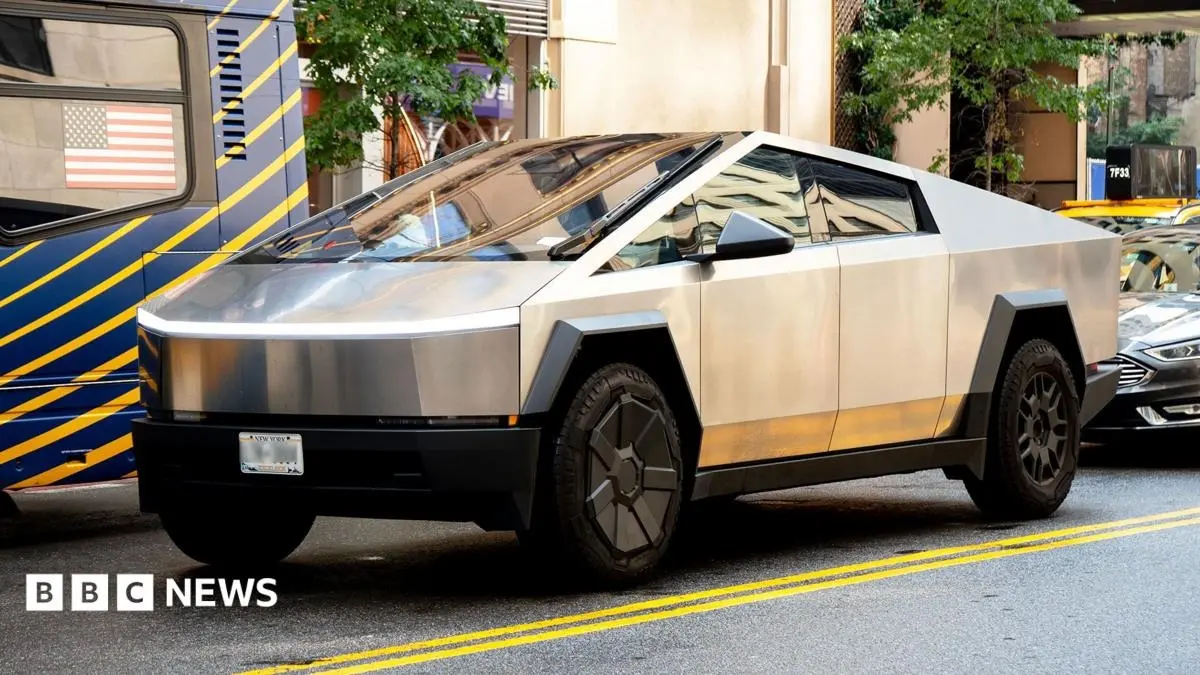
Tesla is set to wind down production of its polarizing Cybertruck at its Gigafactory in Texas next year, marking a significant pivot for the company as it shifts its manufacturing focus toward the development and scaling of its self-driving Cybercab. Elon Musk confirmed the move, signaling a potential end to the road for the angular electric pickup that has served as both a technological showcase and a lightning rod for debate since its inception.
While Musk did not explicitly clarify whether the company intends to shutter the project entirely or relocate production to an alternative facility, his commentary suggested that the primary driver for the decision is the urgent need to "make room" for the upcoming Cybercab. The Cybercab, a key component of Tesla’s long-term vision for autonomous transport, appears to be taking priority as the company looks to lean further into robotics and self-driving software.
The implications of the decision were clarified further by Wes Morrill, Tesla’s lead engineer for the Cybertruck. In a post on the social media platform X, Morrill appeared to confirm the discontinuation of the vehicle, framing the truck’s legacy in the context of broader technological advancement. "Cybertruck was an incredible technology development platform and lives on through Cybercab," Morrill wrote, suggesting that the engineering lessons learned from the truck’s unique stainless-steel architecture and complex manufacturing processes have already been absorbed into the DNA of the next generation of Tesla vehicles.
The news has sent ripples through Tesla’s dedicated fan base, many of whom have taken to social media to mourn the end of the truck’s production run. One prominent supporter on X lamented the news, describing the Cybertruck as "the best vehicle Tesla has ever made" and expressing frustration over its impending exit from the assembly line. In a rare moment of direct interaction regarding the future of the product, Musk responded to the post with a simple "true," before offering a measure of reassurance to current owners: "But the Cybertruck fleet will be around for a long time."
Investors reacted positively to the announcement, with Tesla’s stock rising 4.7% on Friday. The market’s favorable response suggests that shareholders may be relieved to see the company shifting focus away from a project that, while iconic, has struggled to meet ambitious sales targets and has been plagued by production complexities.
A Passion Project Faced with Reality
The Cybertruck was long considered a passion project for Musk, who championed its design and engineering throughout its arduous journey from concept to reality. As recently as March of this year, Musk told his followers that the vehicle was "way more awesome than people realise," and followed up in April by calling it the "best product Tesla has ever made to date."
However, despite the CEO’s enthusiasm, the Cybertruck struggled to find its footing in the fiercely competitive American pickup market. The vehicle’s history is defined by a dichotomy: it was simultaneously celebrated by early adopters for its bold, retro-futuristic aesthetic—often compared to the vehicles in Blade Runner—and mocked by critics who labeled it "ugly as sin."
The truck’s public introduction in 2019 set the tone for its difficult trajectory. During a high-profile live demonstration, Musk attempted to showcase the durability of the truck’s "armor glass," only for the windows to shatter upon impact. Despite that initial gaffe, the truck managed to capture the public imagination, with Musk claiming it had received 146,000 pre-orders while still in development.
When the vehicle finally reached production in 2023, it retained the controversial, angular stainless-steel design that had become its signature. Yet, once the initial wave of orders from enthusiasts was fulfilled, the vehicle faced stiff headwinds. Sales figures have been stark; according to data from Kelley Blue Book, Tesla sold just 20,237 units in 2025, a sharp decline from the 38,965 units sold the previous year. These numbers fell far short of the ambitious annual sales target of 250,000 that Musk had originally projected during the early stages of commercial production.
Operational Challenges and Market Hurdles
Beyond the design debates, the Cybertruck faced significant operational challenges that likely contributed to the decision to wind down production. The vehicle was subject to several high-profile recalls, including a major incident in 2025 that affected more than 46,000 trucks due to concerns that exterior trim components could detach, posing a safety risk. Such recalls, combined with the inherent difficulty of manufacturing a vehicle made of stainless steel, created a drag on Tesla’s broader efficiency goals.
Pricing also remained a point of contention. While Musk had famously told Wall Street analysts in previous years that the company needed to make the vehicle at a price point that average consumers could afford, the reality proved more complicated. The entry-level models were initially positioned to compete in the broader market, but the premium "Cyberbeast" model, with its high-performance specifications, arrived with a price tag of $102,000 in 2026. By comparison, the base models, which came with all the expected features, were priced around $61,000. These price points placed the Cybertruck in a luxury tier that limited its mass-market appeal, preventing it from truly disrupting the high-volume truck segments dominated by legacy automakers.
The transition away from the Cybertruck highlights a recurring theme in Tesla’s corporate strategy: the willingness to pivot rapidly when a product fails to meet the company’s internal metrics for growth or when a newer technology—in this case, the Cybercab—promises higher margins or greater strategic alignment.
As the Texas factory prepares to reconfigure its lines to accommodate the Cybercab, the Cybertruck will likely be remembered as a singular experiment in automotive design. It served as a testbed for extreme manufacturing techniques and a vehicle for Musk’s personal vision of the future. While it may not have achieved the commercial ubiquity that some of Tesla’s earlier models enjoyed, its impact on the company’s engineering culture and its role as a precursor to future autonomous platforms remain significant.
For the thousands of owners currently driving the trucks, the focus now shifts from production to longevity. With Musk’s assurance that the fleet will remain on the road for years to come, the Cybertruck is destined to transition from a controversial new release to a niche collector’s item—a fleeting, angular icon of a singular moment in electric vehicle history. As Tesla looks toward an autonomous future, the legacy of the Cybertruck will be measured not by the volume of units sold, but by the technological evolution it sparked within the halls of the company.