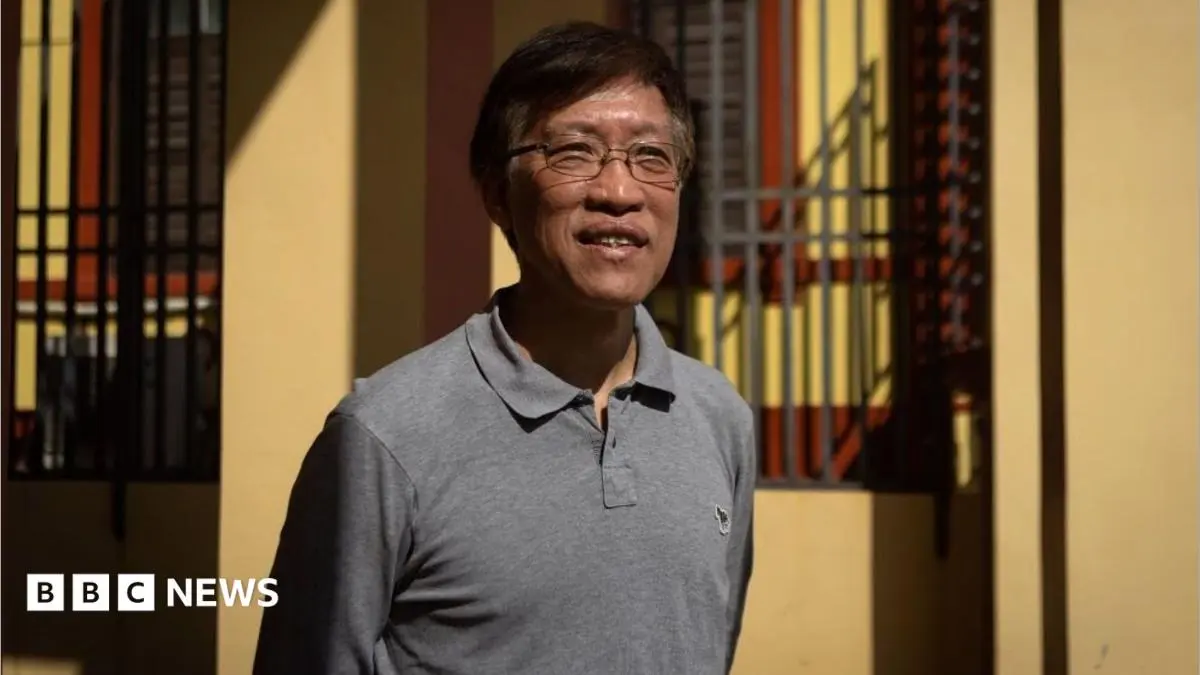
In a development that signals a deepening crackdown on political dissent in the Special Administrative Region, Macau has sentenced veteran pro-democracy campaigner and former lawmaker Au Kam San to 12 years and six months in prison. The conviction, delivered this past Friday, marks the first time the city has utilized its national security framework to secure a major sentence against a prominent political figure.
Au, 69, a former primary school teacher who spent two decades as a vocal advocate for democratic reform within the city’s Legislative Assembly, was found guilty of "subversion against the political power of the state," among other charges. The sentencing follows a secretive, closed-door trial that has drawn sharp criticism from family members and observers who view the proceedings as an effort to silence one of the few remaining independent voices in Macau’s political landscape.
A Controversial Prosecution
The judicial proceedings against Au have been characterized by a lack of transparency that has become increasingly common in the region’s legal landscape. Following his arrest in July 2025, Au faced seven distinct charges: three counts of subverting the state’s power, three counts of endangering national security by allegedly establishing contact with foreign organizations, and one count of breach of confidentiality.
At the conclusion of a three-day trial that ended in September, a judge found Au guilty of four of the seven charges. Throughout the process, the court operated behind closed doors, with the presiding judge citing the need to "ensure that no prejudice is caused to the interests of national security." This secrecy has extended to the broader details of the evidence presented by the prosecution.
According to the state’s case, Au was accused of collaborating with "external hostile organizations." Prosecutors alleged that over a "long period of time," the former legislator had been collecting, preparing, and disseminating information that was "manifestly filled with political claims of a subversive nature against the state."
The legal process faced significant hurdles from its inception, according to reports from Au’s family. They maintained that the former lawmaker was denied the right to appoint his own legal counsel, with the court instead assigning him a lawyer. This restriction, combined with the lack of public disclosure regarding the specific evidence or witness testimony, has led to intense scrutiny from his supporters.
Following the sentencing, Au’s wife, Virginia Cheang, issued a defiant response. In an open letter released on Friday, she condemned the court’s decision, labeling the entire case a "groundless persecution designed to humiliate Au." Addressing the bleak reality of his incarceration, Cheang expressed a desperate, tempered hope that the authorities would at least grant her family permission to maintain contact with him. "I dare not hope for more as I believe that will only lead to greater disappointment," she wrote.
Shifting Legal Landscapes
The case against Au is set against the backdrop of a fundamental transformation in Macau’s legal and political environment. Macau, which transitioned from 400 years of Portuguese administration to Chinese sovereignty in 1999, initially operated under a "one country, two systems" framework intended to preserve its unique legal and civil liberties.
However, the legal infrastructure has undergone significant revisions over the last decade. While a national security law was first enacted in 2009—aimed at criminalizing treason, secession, and subversion—the scope of that law has expanded dramatically in recent years. In 2023, the law was revised to broaden its reach to include non-violent acts of secession. Further amendments were introduced this year, explicitly allowing for judicial proceedings to be held behind closed doors.
These changes have effectively brought the city’s legal mechanisms into closer alignment with the stringent security standards seen in mainland China and, more recently, in Hong Kong. For many, the case of Au Kam San represents the practical application of these revised laws to eliminate political opposition.
A Legacy of Dissent
Au Kam San’s career was defined by his role as a rare, consistent challenger to the pro-Beijing establishment that dominates Macau’s legislature. Elected to the Legislative Assembly in September 2001, he served for 20 years as one of the few pro-democracy voices in a body overwhelmingly comprised of pro-Beijing loyalists.
During his tenure, Au was known for his advocacy on social and political issues, often highlighting the need for greater government accountability. Perhaps most notably, he was a key figure in organizing annual vigils in Macau to commemorate the victims of the 1989 Tiananmen Square crackdown in Beijing.
For many years, these vigils were a visible, tolerated feature of public life in both Macau and Hong Kong, serving as a testament to the distinct political freedoms once enjoyed in the two cities. However, the space for such public expressions has vanished in recent years. Following the imposition of a sweeping national security law on Hong Kong in 2020, the annual vigils were effectively outlawed across both territories. The jailing of Au is viewed by many analysts as the final chapter in the suppression of these commemorative activities and the broader democratic movement he represented.
Regional Context and Comparisons
The sentencing of Au comes at a time of heightened regional concern regarding the use of national security laws to target activists. His imprisonment occurred just one day after a Hong Kong court sentenced Joshua Wong, perhaps the most recognizable face of that city’s pro-democracy movement, to 10 years in prison.
Wong, who was only 30 at the time of his sentencing, has been a central figure in regional politics since his teenage years. Having been held in custody for the past six years, his sentencing—like Au’s—has underscored the severity with which regional authorities are now handling individuals deemed to be threats to the state’s political power.
The proximity of these two sentences has drawn international attention to the diminishing space for political pluralism in both Macau and Hong Kong. For observers, the events of the past week confirm a trend that began several years ago: the systematic dismantling of democratic institutions and the criminalization of activities that were previously considered protected speech and assembly.
As Au begins his 12-year sentence, the silence surrounding his case remains as profound as the secrecy of his trial. The Macau authorities have yet to provide detailed public explanations for the evidence that led to his conviction, leaving his family and supporters to grapple with the aftermath of a legal process that has fundamentally altered the political character of the city. For now, the future of the pro-democracy movement in Macau appears increasingly confined to the walls of the institutions that sought to suppress it, with the long-time activist now serving as a symbol of the end of an era.