WASHINGTON — Higher education institutions, scientific organizations, and municipal leaders are stepping up their resistance against an expanding effort by the federal government to exert greater political control over billions of dollars in federal grants.
While the White House must wait until mid-December to finalize a sweeping and controversial rule that would fundamentally reshape how federal funding is distributed, a broad coalition of more than 100 organizations is sounding the alarm that multiple federal agencies are already implementing similar policies. In a strongly worded letter sent to Capitol Hill on Thursday, prominent groups including the Association of American Universities and the American Association for the Advancement of Science warned lawmakers that these agency-level maneuvers directly undermine bipartisan legislation passed by Congress just months ago.
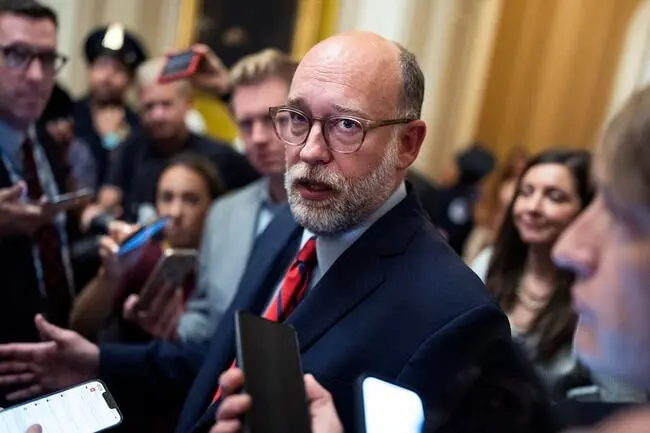
The controversy centers on initiatives led by the Office of Management and Budget, headed by Director Russell Vought. The OMB first introduced sweeping proposals in May that would subject federal grants to heightened political review. Under the proposed framework, the administration would gain expanded authority to cancel funding for projects that fail to align with the sitting president’s strategic priorities.
Originally slated for a faster rollout, the finalization of the OMB rule has been delayed until mid-December as the agency works through a staggering volume of public feedback. The proposal generated intense pushback, drawing at least 164,000 public comments, many of which raised severe legal and operational concerns. Analysts expect that any finalized rule issued by the OMB will immediately face robust legal challenges from a coalition of disgruntled stakeholders.

However, rather than waiting for the overarching OMB regulations to clear the administrative and legal hurdles, other executive branch entities have taken matters into their own hands. According to the coalition’s letter to Congress, the Department of Education and the National Science Foundation have already proposed standalone rules that closely mirror the delayed OMB regulations.
Furthermore, the copycat policy changes have spread across the federal apparatus. NASA, along with the Departments of Agriculture, Energy, and Housing and Urban Development, have each sought to incorporate key components of the controversial OMB grant-making controls directly into their own agency-specific policies.
The organizations behind Thursday’s letter argue that these piecemeal adoption strategies represent an alarming end-run around both the legislative branch and the administrative rulemaking process. They contend that these moves are in direct contradiction to bipartisan language that Congress enacted in September as part of a temporary federal funding measure.
For the recipients of federal funding—ranging from major research universities and scientific laboratories to local governments and community nonprofits—the concurrent agency actions create a deeply unstable operating environment. The lack of uniformity and the looming threat of politically motivated funding cancellations threaten to disrupt long-term scientific research, educational initiatives, and community development projects that rely heavily on predictable federal support.
Legal experts and institutional leaders point out that these actions touch upon fundamental constitutional questions regarding the separation of powers between the executive and legislative branches. Under the U.S. Constitution, Congress holds the ultimate power of the purse, dictating how taxpayer funds are appropriated and spent. By implementing rules that allow political appointees to selectively redirect or cancel congressionally approved funding based on shifting political whims, the executive branch risks overstepping its constitutional mandate.

"Allowing agencies to circumvent an appropriations directive diminishes Congress’s ability to control the use of federal funds—regardless of which party controls the executive branch," the coalition emphasized in their congressional correspondence.
The alliance pushing back against the administration’s actions represents a remarkably diverse cross-section of American civic and academic life. In addition to higher education powerhouses and scientific societies, the signatories include state and local government associations, national nonprofit networks, and various other public-interest organizations. Despite their varied primary missions, these entities are united by a shared interest in preserving a federal grants system that remains stable, lawful, and ultimately accountable to Congress rather than transient political leadership.
As the mid-December deadline for the final OMB rule approaches, pressure on Capitol Hill is mounting. Lawmakers from both sides of the aisle will face increasing demands from their home districts and institutional stakeholders to address what critics describe as an unauthorized expansion of executive branch authority over federal spending. With legal challenges anticipated the moment the OMB releases its final text, the ongoing battle over the future of federal grant-making promises to remain a central flashpoint in federal governance.