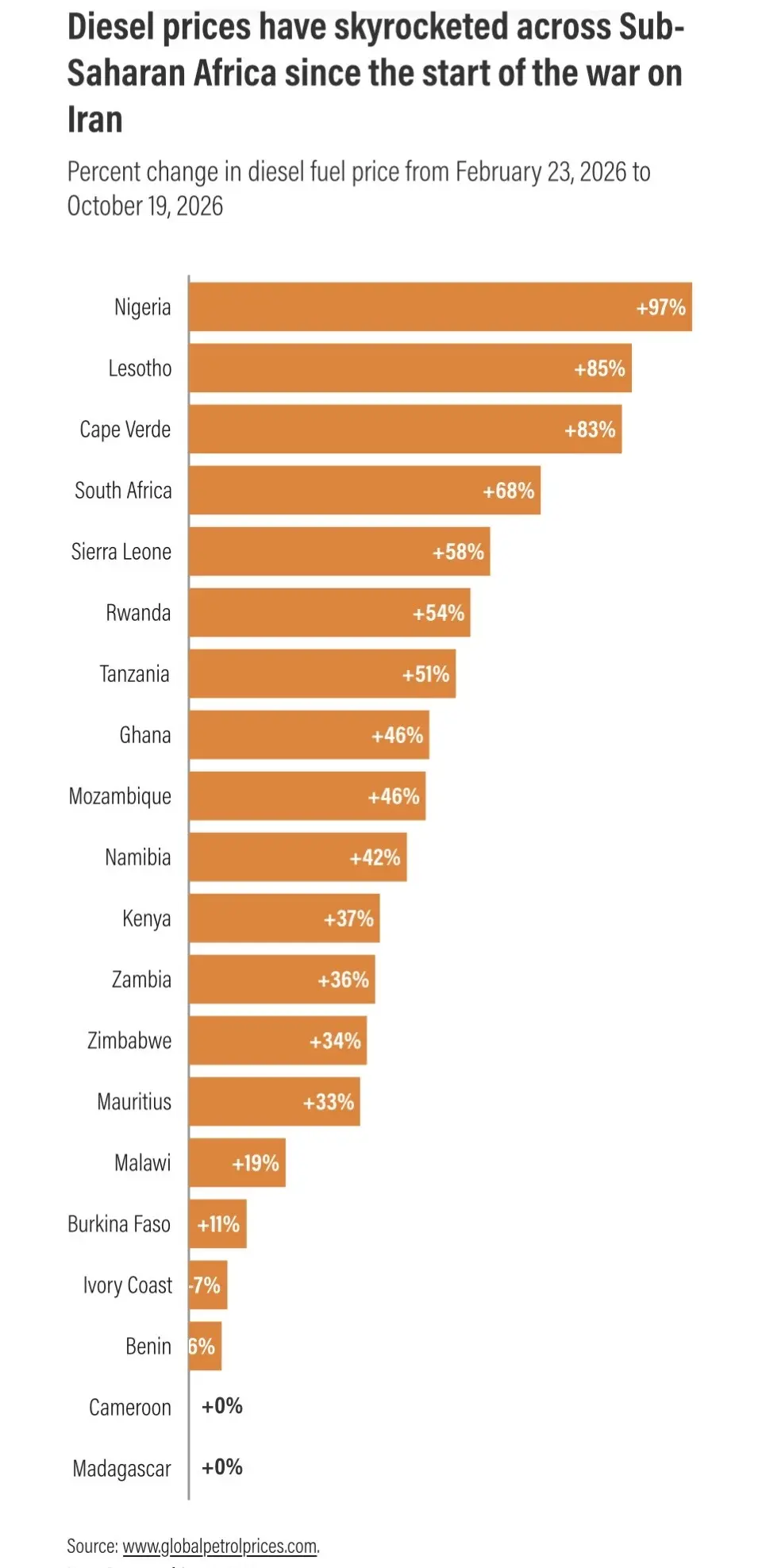
Global diesel prices have surged dramatically, climbing nearly 33% from 2025 to 2026, with some developing regions experiencing even more severe price spikes. For millions of the world’s rural farmers, agricultural processors, and small-business owners, this ongoing fossil fuel volatility has created an immediate operational crisis. As traditional energy costs skyrocket, distributed solar-powered equipment is rapidly emerging as a vital, practical, and economical alternative to diesel dependence.
The real-world impacts of these price shocks are acutely visible in places like Chamwino, a dry hillside region in central Tanzania. For years, local mango farmers watched their crops struggle through extended dry spells without adequate rainfall. Irrigation was technically possible through diesel-powered pumps designed to lift water from nearby boreholes, but high fuel costs made the system practically unusable for smallholders. Because diesel prices fluctuated unpredictably, farmers were forced to irrigate sparingly, resulting in depressed crop yields, lower production volumes, and households trapped in a cycle of low-margin agriculture.
However, a pilot project launched in 2021 introduced a solar-powered water pump and drip irrigation system to replace the legacy diesel setup. Within a single growing season, participating farmers reported that their mango production and average sales revenue roughly doubled. The technology allowed them to extend irrigation far beyond the rainy season and manage their orchards with far greater intensity. For these farmers, transitioning from a volatile fossil fuel to a reliable, predictable source of clean energy transformed their economic stability.

Chamwino is far from an isolated case. Across Africa and various other developing regions, rural economies are uniquely vulnerable to sudden diesel price shocks. Because diesel is the primary energy source powering irrigation pumps, rural generators, grain mills, and cold-storage refrigeration units, every upward tick in fuel prices directly translates to higher operating expenses, razor-thin profit margins, and heightened financial risk for rural communities. Distributed clean energy is increasingly recognized as the most effective pathway to break this expensive and precarious dependence.
Energy Access Without Energy Security
Although national electricity access rates have expanded significantly over the past decade, diesel continues to form the backbone of rural daily life across much of sub-Saharan Africa. Data from the World Bank and tracking initiatives indicate that only about 33% of the rural population enjoys access to electricity. Even among connected households and businesses, chronic power outages and poor grid reliability compel farmers, processors, retailers, mining operations, and telecommunications providers to rely heavily on diesel generators for primary or backup power.
A study published by the Energy Growth Hub estimated that between 150 and 190 gigawatts of distributed diesel generator capacity was actively operating across Africa, compared with 268 gigawatts of total grid-connected capacity. Excluding South Africa, sub-Saharan Africa maintained nearly 1.5 times as much diesel generator capacity as grid-connected capacity, with diesel outstripping grid capacity in at least 26 African nations.

Geopolitical tensions and conflicts in the Middle East have dramatically exposed the underlying vulnerabilities of this extensive "shadow power system." The global average retail diesel price surpassed $1.50 per liter in the second quarter of 2026, marking a 20% increase from the previous quarter and a 32.9% surge year-over-year. Across 42 African economies, retail diesel prices jumped by an average of 25% between mid-January and mid-June 2026.
This regional average, however, masks significant disparities between individual countries. While some governments utilized subsidies, tax adjustments, and administered price ceilings to cushion consumers from international price shocks, these measures placed severe strains on public budgets, particularly in fuel-importing nations with limited fiscal space. In other areas, consumers absorbed punishing cost increases at the pump. Between January and June 2026, retail diesel prices spiked by 86% in Nigeria and by more than 50% in both Tanzania and Ethiopia.
The economic fallout extends far beyond the direct cost of running generators. Diesel fuel powers the agricultural machinery, tractors, and transport networks required to move crops from remote farms to regional markets. Consequently, broader energy crises ripple quickly through interconnected food, fertilizer, and logistics supply chains. In several African markets, agricultural fertilizer prices climbed by 30% to 45% following the onset of Middle Eastern conflicts, threatening to reduce application rates, shift cropping patterns, and cause farmers to miss critical planting windows entirely.

These pressures are felt most intensely by vulnerable local groups. Members of a women’s groundnut processing cooperative in Nigeria reported that rising fuel and transport expenditures inflated the market price of raw groundnuts and finished oil by 33%. Similarly, in Myanmar—a nation that imports more than 90% of its fuel and relies almost exclusively on road transport—escalating diesel prices have driven up the cost of food distribution and agricultural inputs, pushing retail rice prices higher for everyday consumers.
Clean Energy Can Provide Affordable and Reliable Power
Practical alternatives to fossil fuel dependence already exist. While many rural communities continue to struggle with expensive diesel-based irrigation, refrigeration, and backup systems, distributed solar technology offers significantly more affordable and reliable electricity.
This clean energy transition is gathering considerable momentum. In Africa, approximately 17 gigawatts of new solar capacity is slated for installation, representing a 45% increase over previous figures and equating to roughly 100,000 solar panels installed daily. The vast majority of this rapid expansion is occurring outside of centralized utility power plants; roughly three-quarters of Africa’s solar growth in recent years has been driven by distributed systems adopted by households and businesses seeking refuge from unreliable grids and expensive diesel generation.

The tangible benefits of this shift are already evident on the ground. In Ethiopia’s Berbere district, local farmers spent years unable to utilize the water from four surrounding rivers due to a lack of grid electricity and the prohibitive cost of petrol and diesel for water pumps. Agricultural production remained tied entirely to rain-fed maize and teff.
In 2025, the World Resources Institute and its partners installed two solar-powered water pumps to lift river water directly to agricultural plots. During the initial production season, participating households earned an average of $709 from onion cultivation alone, compared to an annual income of roughly $207 from traditional rain-fed crops before the project began. Furthermore, farmers gained the ability to harvest multiple times per year, cultivate high-value cash crops such as onions and chili peppers, and reinvest their earnings into livestock and home improvements.
Urban and institutional settings have experienced similar resilience gains. When Kenya suffered its longest nationwide electricity blackout in 2023, a prominent Nairobi hospital maintained critical medical services uninterrupted thanks to its installed solar-and-battery storage system. For rural health clinics and regional hospitals, comparable decentralized renewable systems guarantee continuous power during grid failures without tying constrained operational budgets to volatile fuel markets and high-maintenance backup generators.

Expanding Clean Power in Africa’s Rural Communities
Enormous untapped potential remains for distributed clean energy to displace diesel fuel and uplift livelihoods across rural Africa and other developing regions. Advanced digital tools, such as the Energy Access Explorer platform hosted by the WRI Polsky Energy Center, allow regional planners to analyze solar resource potential alongside existing electrical grids, healthcare facilities, schools, and agricultural zones. By synthesizing these geospatial data layers, governments and development practitioners can precisely identify where clean power can most cost-effectively replace diesel-dependent systems.
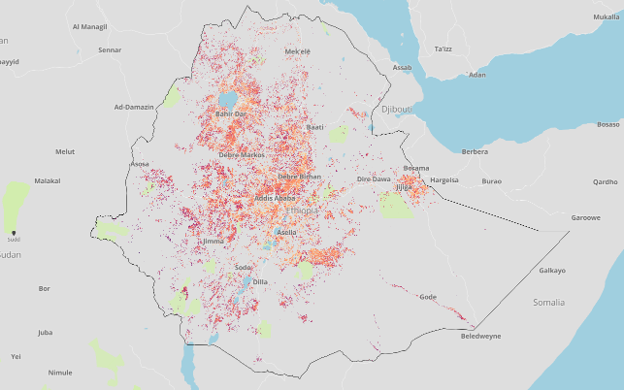
In Ethiopia, the Ministry of Water and Energy has collaborated with the World Bank to utilize the Energy Access Explorer platform to prioritize off-grid electrification through results-based financing initiatives. Recent spatial analyses indicate that approximately 12.6 million people in Ethiopia reside in areas characterized by high agricultural activity and abundant solar resources, yet they lack access to reliable grid electricity. These targeted zones represent prime candidates for solar-powered irrigation, crop processing, and cold-storage facilities.
A parallel analysis conducted in Uganda applies the same geospatial methodology to public health infrastructure. Mapping data reveals that at least 243 health facilities and roughly 4.6 million residents are located in regions with little to no grid connectivity but high solar irradiation levels. By integrating data on local electricity demand, grid proximity, and available infrastructure space, authorities can strategically direct clean energy investments to secure reliable power for rural health services.
As international conflicts and market instabilities continue to trigger wild fluctuations in global diesel prices, rural farmers, processors, and small business owners bear the heaviest burden, alongside governments struggling to finance fuel subsidies. Energy ministers, international donors, and financial institutions face a clear imperative to identify where distributed clean power can viably substitute for diesel and direct capital investments accordingly. According to international tracking reports, billions of dollars in targeted investments will be required by 2030 to deliver off-grid solar solutions to the hundreds of millions of people for whom it represents the most cost-effective electricity option.
Transitioning from recurring energy crises to long-term energy security ultimately depends on deploying clean energy where it can profoundly transform daily livelihoods. For millions of rural workers around the globe, that transformation begins with leaving diesel behind in favor of solar power.