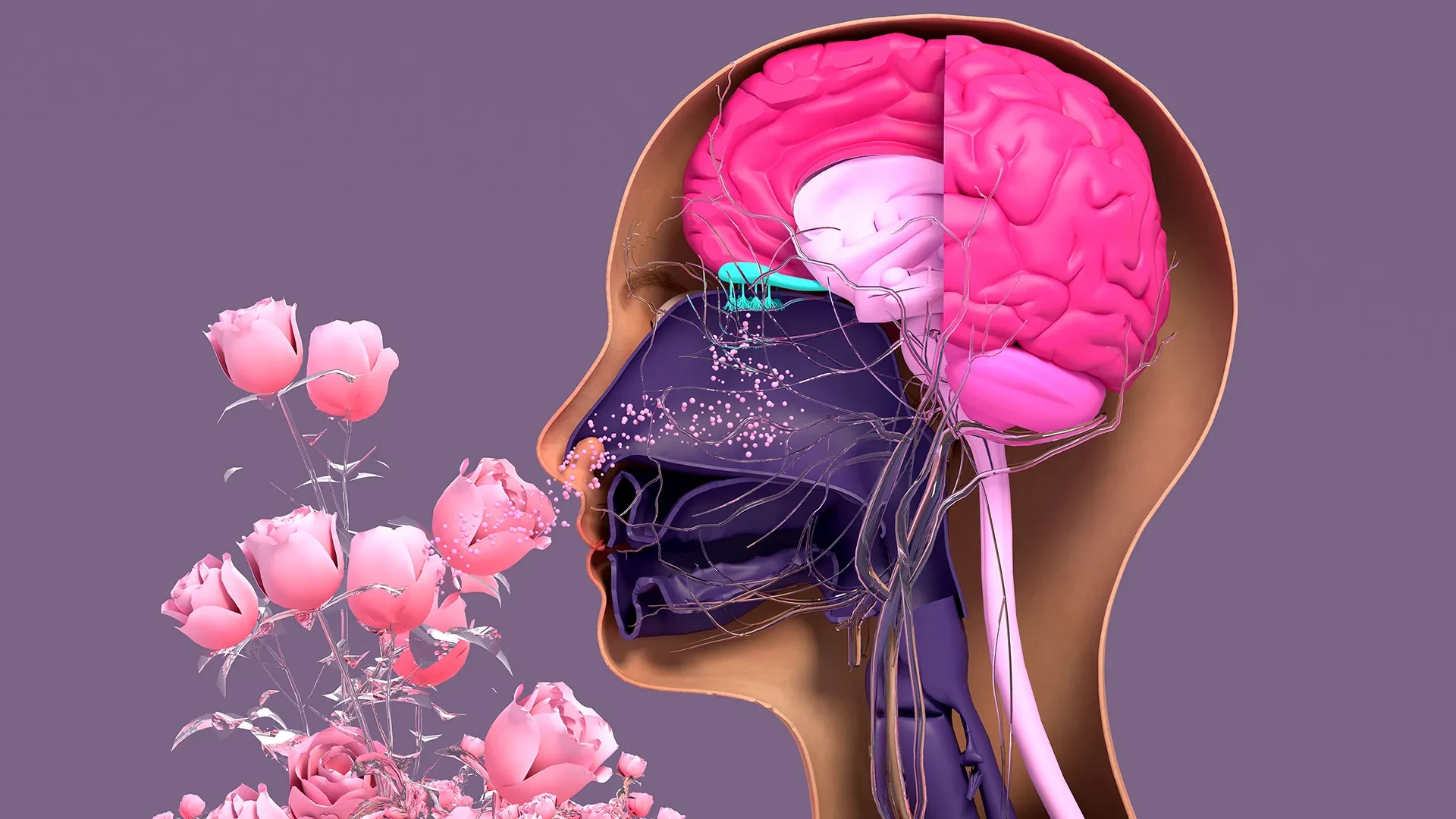
In a significant breakthrough for sensory biology, researchers at Tufts University School of Medicine and the Graduate School of Biomedical Sciences (GSBS) have developed a novel, three-dimensional model to study the regeneration of nerve tissue in the nose. This innovative approach has already yielded a surprising discovery: a specific type of stem cell, long dismissed by the scientific community as dormant, actually plays a fundamental role in maintaining the human sense of smell.
The research, recently published in the journal Cell Reports Methods, provides a sophisticated new tool for scientists to observe how the olfactory system repairs itself. Unlike the neurons in the central nervous system, which are notoriously difficult to regenerate, the sensory neurons within the nasal cavity possess a remarkable capacity to replenish themselves throughout an individual’s entire lifespan. This is a critical biological feature, especially considering that these cells are in constant, direct contact with the external environment—a state that leaves them uniquely vulnerable to damage from inhaled toxins, pathogens, and the natural wear and tear of aging.
The Mechanism of Olfactory Renewal
The loss of smell—clinically known as anosmia—has become a prominent public health concern in recent years, particularly in the wake of the COVID-19 pandemic. Viral infections, environmental pollutants, and the degenerative effects of aging can all impair the function of sensory neurons or inhibit their ability to replicate, leading to a partial or total loss of the olfactory sense.
To investigate these processes, the Tufts-led team engineered a three-dimensional "organoid" model using mouse tissue. These organoids—miniature, simplified versions of organs grown in a lab setting—serve as a bridge between basic cell cultures and complex animal models. By utilizing this 3D structure, the researchers were able to observe the intricate communication between two primary types of stem cells: horizontal basal cells (HBCs) and globose basal cells (GBCs).
"Our research suggests that these two stem cells may be interdependent," explains Brian Lin, a research assistant professor in the Department of Developmental, Molecular and Chemical Biology at Tufts and the senior author of the study. "One type that we thought was largely dormant—HBCs—may actually play a crucial role in supporting the production of new neurons and the repair of damaged tissue."
By focusing on a specific subpopulation of HBCs marked by the production of the protein KRT5, the team identified that these cells are far from inactive. In their experiments, the researchers observed that when these KRT5-producing HBCs were selectively depleted from the organoid cultures, the generation of new olfactory neurons was significantly impaired. This finding effectively challenges the previous scientific consensus that these cells remain quiet until a catastrophic injury occurs; instead, it appears they are essential, ongoing participants in the standard regenerative process of the nasal epithelium.
Investigating the Impact of Aging
Beyond the discovery of HBC functionality, the research team sought to understand why the sense of smell often declines as people get older. By culturing cells from mice of varying ages within their new 3D model, the researchers observed a clear trend: as the biological age of the tissue increased, the ability to generate new neurons plummeted.
"We found a decline in the ability of the older mice cells to generate new neurons," Lin notes. "We think this is due to a decrease in the GBC population as we age, but we need to do more work to test this hypothesis and, if so, develop ways to rejuvenate them."
This insight into age-related decline provides a potential roadmap for future therapeutic interventions. If scientists can pinpoint the exact mechanisms behind the depletion of GBCs or the loss of communication between stem cell populations, they may eventually be able to stimulate these pathways to restore or preserve olfactory function in aging populations or those suffering from degenerative conditions.
A Democratized Approach to Research
A key priority for the research team was the accessibility of their new model. Lead author Juliana Gutschow Gameiro, a former visiting Ph.D. student at GSBS who joined the project from the State University of Londrina in Brazil, focused heavily on ensuring the model was straightforward and cost-effective. The team’s design philosophy was rooted in the need for a protocol that could be replicated in laboratories with limited funding or specialized equipment.
"Because loss of smell is associated with COVID-19, as well as with Parkinson’s disease and other conditions, a much larger number of researchers from a variety of different fields have begun researching olfactory epithelial cells in the last few years," says Lin. "We wanted to develop an easy-to-use model so that non-stem cell biologists and those working in labs with limited resources could use it to better understand how olfactory neurons regenerate and what happens that causes that process to diminish or fail completely."
By lowering the barrier to entry for this type of research, the Tufts team hopes to catalyze a broader, more collaborative effort to solve the complexities of olfactory loss. The 3D organoid acts as an efficient middle ground; it is more representative of biological reality than traditional flat, two-dimensional cell cultures, yet significantly more ethical and less resource-intensive than relying solely on animal testing.
Moving Toward Human Applications
While the current findings in mouse models are promising, the ultimate goal of the research is to translate these insights into a human organoid model. Such a tool would be invaluable for pre-clinical drug screening, allowing researchers to test potential therapies for smell loss in a human-derived system before moving to human trials.
However, moving from mice to humans presents significant technical hurdles. "It’s challenging to get pure olfactory tissue from humans," Lin explains. In a clinical setting, obtaining tissue usually involves an anesthetized procedure where a brush, similar to a swab used for COVID-19 testing, is inserted deep into the nasal cavity. Unlike in the controlled environment of a mouse model, human samples harvested in this manner contain a mixture of both respiratory stem cells and olfactory stem cells, which are notoriously difficult to separate.
The presence of these respiratory cells complicates the growth of pure olfactory organoids, as the respiratory cells can outcompete the target olfactory neurons in a lab setting. The team is now working to develop a technique that is both simple and inexpensive, allowing them to isolate human olfactory stem cells from these mixed samples and coax them into stable growth.
Successfully developing a human olfactory organoid would be a milestone in sensory medicine. Given the prevalence of smell loss across various neurological and post-viral conditions, the ability to screen drugs directly on human olfactory tissue could accelerate the discovery of treatments for patients who have spent years navigating the world without a sense of smell. As the team continues to refine their techniques, the focus remains on bridging the gap between basic stem cell biology and practical, life-enhancing medical applications. The ongoing work at Tufts serves as a critical foundation for understanding the resilience—and the fragility—of one of the human body’s most complex sensory systems.