As European cities face the intensifying reality of a changing climate, rising summer temperatures, and the pressing demand for greener urban landscapes, municipal leaders and urban designers are being forced to rethink the traditional foundations of city planning. The challenge goes beyond simply planting trees or installing cooling stations; it requires a fundamental redesign of existing urban conditions to integrate nature, elevate the quality of public spaces, and support the daily routines of urban residents. At the forefront of this movement is ReGreeneration, a Horizon Europe initiative operating across nine major European cities to explore how neighborhood-scale urban renaturing can transform the built environment.
By combining strategies for complete neighborhoods, communal spaces, and nature-based solutions, the ReGreeneration project in Barcelona is examining how climate adaptation can be woven into the residual, peripheral, and often overlooked spaces of daily life. As part of an ongoing series following the initiative across its participating cities, attention turns to Barcelona, where the project is deeply embedded within the Trinitat Nova neighborhood. Here, planners and designers are exploring how small-scale urban spaces can contribute to broader, more comprehensive models of metropolitan regeneration.
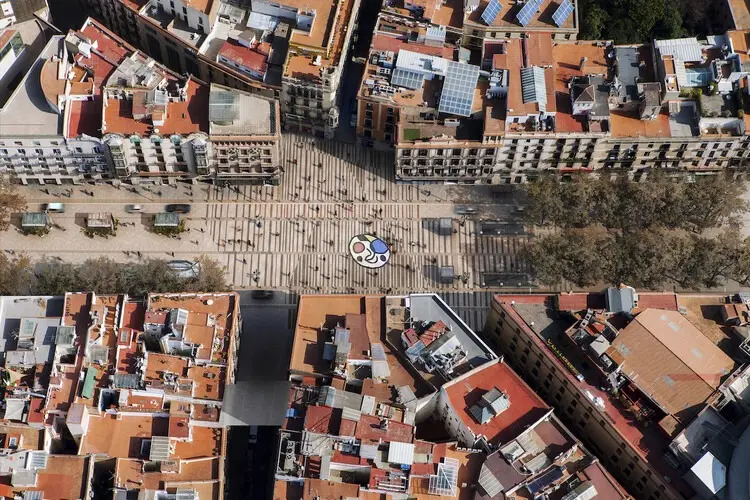
Barcelona offers a unique and highly significant context for this kind of urban ambition. The city’s architectural and urban legacy is internationally renowned for its continuous reclamation of streets and public spaces for pedestrian use. From the sweeping transformations of the public realm that followed Spain’s democratic transition to the globally recognized Superblocks project and recent traffic reduction measures, Barcelona boasts a storied and deeply layered history of tactical urbanism and temporary urban interventions. Across various scales, the city has repeatedly demonstrated that streets and undervalued municipal spaces can be reimagined as vibrant places for walking, active living, community gathering, play, and urban ecology.

Tactical urbanism has become an essential component of this evolutionary process. By implementing low-cost, temporary, or reversible changes to the streetscape, planners can introduce new programs and test alternative configurations at a speed that traditional, bureaucratic urban development simply cannot match. The enthusiastic celebration of tactical urbanism in cities around the world has energized a new generation of designers and urban planners, fostering a culture of experimentation and grassroots civic engagement. However, this global enthusiasm also brings to light a deeper, more difficult question regarding the long-term viability of such methods: How can the flexibility, agility, and responsiveness of temporary urban interventions successfully translate into permanent, long-term urban planning and binding policy?

This inquiry forms the core of the work being carried out in Barcelona’s Trinitat Nova district. Rather than viewing tactical interventions as isolated, fleeting events, the initiative seeks to bridge the gap between temporary grassroots experiments and structural municipal policy. The neighborhood serves as a living laboratory where residual spaces—the leftover patches of asphalt, the empty lots between housing blocks, and the transitional zones connecting different urban fabrics—are analyzed not as dead zones, but as vital opportunities for ecological and social healing.
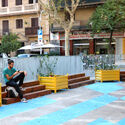
The approach relies heavily on reversible urbanization strategies and localized design tests. Design practices such as Leku Studio have previously tested similar reversible urbanization concepts around Barcelona’s schools, transforming asphalt-heavy school zones into flexible, climate-resilient micro-environments. These projects demonstrate how temporary materials, movable infrastructure, and community-led design can dramatically reduce urban heat island effects while simultaneously providing safe, green zones for children and local residents. By scaling these localized successes, the broader initiative in Trinitat Nova aims to establish a repeatable framework that municipal authorities can integrate into official zoning codes, climate action plans, and neighborhood regeneration policies.

Integrating tactical interventions into formal urban policy is rarely straightforward. It requires navigating regulatory frameworks, securing sustained funding, and maintaining community engagement long after the initial novelty of a temporary installation has faded. Yet, the urgency of climate change leaves little room for hesitation. As European summers grow increasingly severe, the spaces between buildings—the alleys, courtyards, widened sidewalks, and peripheral squares—must evolve from mere transit corridors into functional urban oases capable of supporting biodiversity, managing stormwater, and fostering social cohesion.

Barcelona’s ongoing journey through the ReGreeneration initiative highlights that the future of city-making may well depend on the design of the in-between. By learning from the speed and adaptability of tactical urbanism and anchoring those lessons in robust, forward-thinking urban policy, cities can move beyond reactive crisis management and toward a resilient, nature-positive urban future rooted in the realities of everyday life.