US President Donald Trump has formally denied any administration involvement in the restriction of Starshield, the military-grade satellite network operated by Elon Musk’s SpaceX, which provides crucial connectivity for Ukraine’s defensive operations. The denial follows reports that the network’s speed was throttled, a move that severely hampered Kyiv’s ability to repel Russian aerial attacks and left Ukrainian forces vulnerable during a week of deadly strikes.
The controversy erupted after Ukrainian President Volodymyr Zelensky confirmed that internet speeds for his military units had not been restored, despite high-level pleas to address the issue. The speed restriction, which reportedly capped connectivity at 100 mph (160 km/h), rendered high-speed weaponry and advanced drone systems ineffective, as any equipment moving faster than the threshold lost connection to the network.
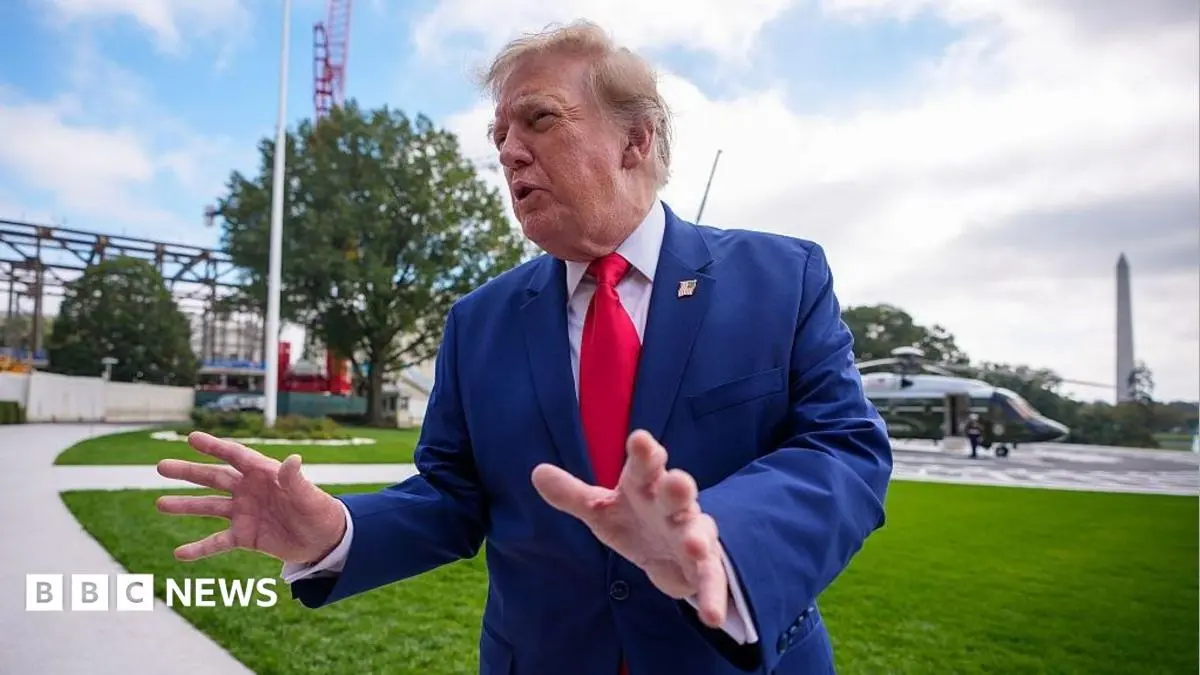
When questioned by reporters outside the White House on Friday regarding his administration’s role in the slowdown, President Trump was emphatic in his denial. "It wasn’t me and I don’t think it was Elon," Trump stated, distancing the executive branch from the technical limitations placed on the military-grade service. When asked specifically about whether the network had been downgraded, the president added that he was "not sure" it "ever came down," despite the operational reality faced by forces on the ground.
A Web of Responsibility and Technical Hurdles
The debate over who controls the "kill switch" for Ukrainian connectivity has sparked a blame game between Washington, the tech sector, and defense contractors. Elon Musk, whose company SpaceX manages both the commercial Starlink network and the specialized, Pentagon-focused Starshield, has suggested that the restrictions may have been implemented at the direction of the US government.
A report by the Reuters news agency on Thursday further complicated the narrative, citing two US officials and a Western source briefed on the matter who claimed the order to throttle the network had originated from within the White House. This stands in stark contrast to the President’s public remarks.
The confusion is compounded by the complex governance of Starshield. While Starlink is a civilian-use high-speed internet network, Starshield is a military-grade sister service designed specifically for the Pentagon’s requirements. Because the service is deeply integrated into US military infrastructure, its management involves a delicate interplay between private enterprise and government oversight. Musk has maintained that the service is largely managed by the US government, implying that the Pentagon, rather than SpaceX, holds the authority to dictate access parameters in active conflict zones.
Geopolitical Friction and the "Energy Ceasefire"
The timing of the connectivity restrictions coincides with a period of intense diplomatic and military friction between Washington and Kyiv. For weeks, tension has been brewing over a controversial diesel deal between Russia and the United States, a move that has deeply angered President Zelensky.
Following the emergence of this deal, Ukraine resumed its strategy of targeting Russian oil refineries—a tactic aimed at crippling the Kremlin’s economic ability to fund its war machine. However, this strategy has put Kyiv directly at odds with the Trump administration. Just three days after the US president announced a ceasefire on energy infrastructure, Kyiv’s resumption of strikes drew sharp criticism from the White House.
The US has previously issued stern warnings to Kyiv, suggesting that the sharing of critical intelligence—a cornerstone of Ukraine’s defensive success—could be withheld if Ukraine continued its strikes on Russian oil infrastructure. In a tense exchange during a summit with EU leaders on Friday, Zelensky defended his position, asking, "If I don’t stand up to this… who else will?"
The relationship between the two leaders appears to be increasingly strained. President Trump has recently characterized Zelensky as "more difficult to deal with than [Russian President Vladimir] Putin," though he later attempted to soften the optics of the situation, telling reporters as he left the White House that he maintains a "good relationship" with his Ukrainian counterpart.
The Impact on the Battlefield
The technical disruption to the Starshield network has had immediate and deadly consequences. On Tuesday night, as the speed limits took effect, Ukraine was subjected to several significant strikes. The loss of connectivity for drones and missile defense systems left the country exposed, and approximately 600,000 people were left without power as critical communications and energy infrastructure used by the Ukrainian military were successfully targeted by Russian forces.
The incident has triggered a sharp backlash from the US legislative branch. A bipartisan group of US senators has signed a formal letter demanding an immediate investigation into the disruptions. The senators noted that the restrictions "reportedly degraded Ukraine’s ability to conduct defensive operations against Russian drone and missile attacks on civilian infrastructure," and they have demanded answers regarding how and why such a critical military asset was throttled during a period of active hostilities.
European Solidarity and the Path Forward
As the conflict stretches into another winter—the fifth since the full-scale invasion in 2022—the international community is grappling with the implications of wavering US support. During the two-day EU summit in Brussels, French President Emmanuel Macron issued a stern commitment to the Ukrainian cause, pledging that European states would not abandon their ally.
Speaking at the conclusion of the summit, Macron underscored the need for Europe to "hold the line" against what he described as "ambiguities" from other international partners—an apparent reference to the shifting signals emanating from Washington. "It is Europe’s job to hold the line," Macron said, emphasizing that the continent is actively working to bolster Ukraine’s satellite and early warning systems to replace the capabilities lost through recent network disruptions.
The scale of the financial challenge is immense. President Zelensky informed the European Council that the war is projected to cost approximately €155 billion ($174 billion) in the coming year. Of that, he requested that at least €70 billion be provided by the European Union specifically for defense and weaponry.
As the war enters this new, colder phase, the stability of Ukraine’s digital and defensive infrastructure remains a top priority for its European allies. While the US government continues to deny involvement in the recent Starshield limitations, the incident has highlighted the vulnerability of Ukraine’s reliance on third-party satellite services. For now, Ukraine’s friends in the EU have promised to review the request for further aid, acknowledging that the fight for Ukraine’s survival is entering a critical juncture where technological, financial, and political support will be the deciding factors.