Long celebrated as America’s historic brewing capital, St. Louis is aggressively working to reinvent itself as a burgeoning regional tech hub. The city is rolling out the red carpet for a sprawling new technology park anchored by a massive data center—a high-stakes project that has already ignited fierce public backlash and triggered a complex web of legal battles.
Home to roughly 280,000 residents, St. Louis is no stranger to digital infrastructure. The city already hosts more than a dozen operational data centers, with three additional facilities currently under construction and up to 10 more in various stages of planning across the metropolitan area.
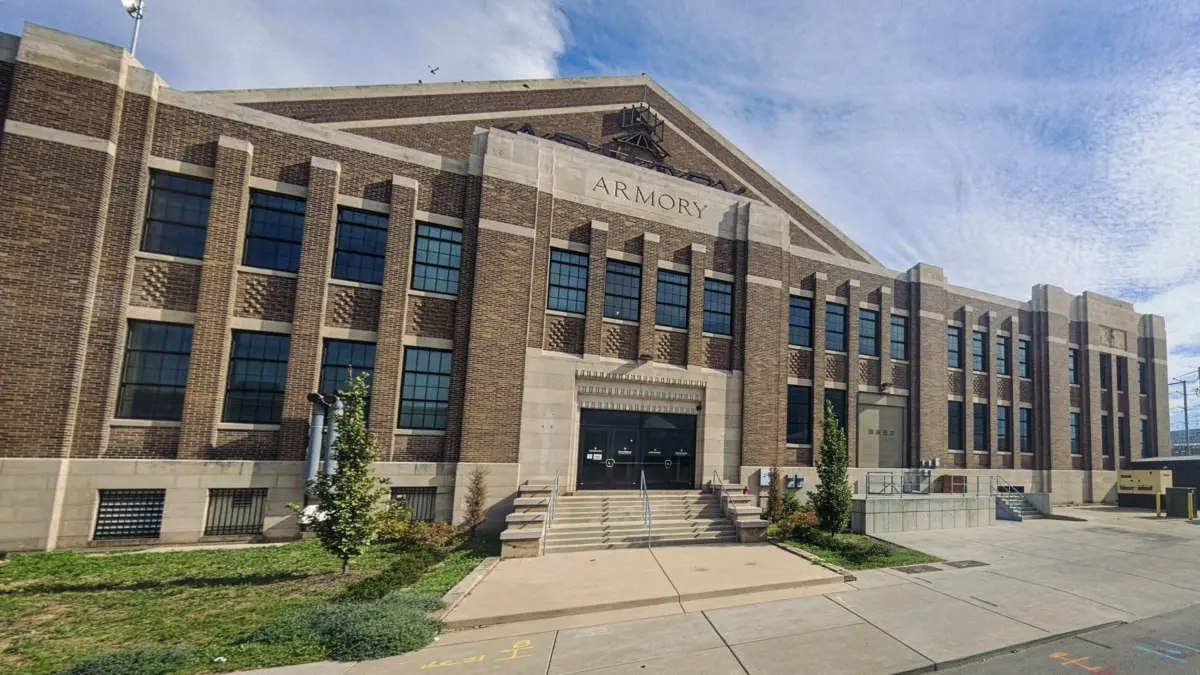
However, the most visible, ambitious, and controversial project in the entire pipeline is a 120-megawatt, 525,000-square-foot hyperscale facility slated for Midtown St. Louis. The chosen site for the massive infrastructure project previously housed a Macy’s and Famous-Barr warehouse located directly adjacent to the historic Armory building.
The data center is co-developed by TeraWatt Infrastructure, a San Francisco-based company primarily known for specializing in commercial electric vehicle-charging networks. This facility is envisioned as the foundational linchpin of the privately funded, $3.1 billion Armory Innovation District.
Positioned alongside Interstate Highway 64, the long-vacant Armory building has previously served multiple incarnations, including a tennis training center, an entertainment complex, and a sports venue. Under the new plans, it is poised for a dramatic conversion into 214,500 square feet of high-tech office and creative workspace.
According to official developer statements, the broader district project is expected to create more than 1,000 temporary union construction jobs alongside 200 permanent on-site positions. Significantly, the developers are prohibited from seeking tax abatements for the Armory center. As a result, the project is projected to generate an estimated $432 million in tax revenue over its first decade of operation, with nearly half of that substantial financial windfall directly supporting St. Louis public schools.
Innovation Vision for Midtown
If development proceeds according to the current schedule, heavy construction will get underway in August 2027 and conclude by late 2029. Proponents of the ambitious undertaking argue that it will provide the local economy with an essential shot in the arm.
"Data centers allow communities to repopulate the middle class," says Ron Kitchens, CEO of Greater St. Louis, the metropolitan area’s leading economic development organization championing the Armory project and other local data initiatives.
According to Kitchens, facilities like the TeraWatt development serve as a major boon to the local housing market because they create well-paying jobs for area residents without consuming valuable land that could otherwise be utilized for residential construction.
"We have housing demand coming on because we have electricians making $80,000," Kitchens argues, emphasizing the economic mobility the project could unlock. "Families that could not talk about homeownership now have access to it."
Both the Armory Innovation District and the adjacent data center have successfully secured key municipal approvals, including a conditional use permit and a comprehensive community benefits agreement. Under the terms of that agreement, developers are legally required to contribute $15.75 million toward critical infrastructure improvements, digital access initiatives, job retraining programs for workers whose employment may be affected by artificial intelligence, and local environmental justice activities.
Community Resistance
Despite the promised economic benefits, opposition to bringing a hulking data center to Midtown St. Louis remains fierce, setting the stage for aggressive legal action from multiple fronts.
In August, organized opponent groups filed a formal lawsuit challenging the project’s use permit. The plaintiffs claimed that the city’s decision to grant the permit was made "contrary to law."
"These hyperscale data centers are not welcome in St. Louis, and the residents are going to continue to fight tooth and nail at every chance we get to stop them," plaintiff Kerry McCullen told St. Louis Public Radio at the time of the filing.
Fellow plaintiff Daniel Pate argued that potential negative health and environmental risks associated with large-scale data centers were not thoroughly studied or adequately taken into account before the project was green-lit by municipal authorities.
"The city is bending and twisting themselves into pretzels to try to get this thing through," Pate said, voicing deep frustration with the local approval process.
Developer Strikes Back
The conflict escalated further just weeks later when TeraWatt, the company spearheading the Midtown data center, filed its own lawsuit against the city of St. Louis.
In the legal complaint, TeraWatt partner David Lambiaso alleged that two specific conditions imposed by the Board of Adjustment as prerequisites for construction are entirely illegal and exceed the established "scope of authority" of the board.
According to the lawsuit, forcing the data center to utilize 2.4 megawatts of renewable energy would be "practically impossible" to execute on the confined 11-acre site.
Lambiaso also took direct issue with a separate provision requiring the city’s Board of Aldermen to formally approve the community benefits agreement, arguing that the requirement adds unjustified hurdles to the development timeline.
Widespread Pushback
The rapid, nationwide expansion of data infrastructure necessary to support the ongoing artificial intelligence buildout has proven highly controversial. It has drawn widespread public opposition over surging residential electricity rates, strain on aging electrical grids, high water consumption required for advanced cooling systems, noise pollution near residential neighborhoods, and a broader, generalized distrust of artificial intelligence technology itself.
At present, the technology remains largely unregulated at the federal level, despite recent high-profile appeals for guardrails, safety controls, and oversight from prominent industry leaders, including Anthropic’s Dario Amodei and OpenAI’s Sam Altman.
Reflecting this widespread unease, a Gallup poll published in May—the organization’s first-ever poll focused on data center construction—found that 71% of Americans oppose the establishment of AI data centers in their local areas.
On the housing front, a recent Realtor.com report revealed that the share of U.S. home sales occurring near large data centers has more than doubled since 2018, coinciding with a more than sevenfold increase in the total number of operational facilities nationwide.
Real estate economists forecast that by the end of next year, more than 2% of all home sales in the United States will take place within 5 miles of a large data center. Offering reassuring news for homeowners, the analysis found that home prices near newly operational data centers generally appreciate in line with comparable neighborhoods that did not welcome a data center.
Local Reform
In direct response to persistent local protests and following months of heated public debates, St. Louis enacted a comprehensive set of rules in September restricting future data center construction and operation within city limits.
Signed into law by Mayor Cara Spencer, the new legislation establishes mandatory buffer zones separating data centers from sensitive community areas like residential neighborhoods and schools. It also imposes strict caps on noise pollution levels and mandates that facilities progressively transition to renewable energy sources over time.
Alderwoman Anne Schweitzer, who co-sponsored the bill touted by Mayor Spencer as "nation-leading," acknowledged that while the new regulations provide important safeguards, they ultimately fall short of addressing every community concern.
"It doesn’t stop data centers from being allowed in the city of St. Louis," Schweitzer noted. "It doesn’t prevent every single harm that could be caused. It doesn’t protect ratepayers from the increases in their utility bills that we should expect."
Kitchens, however, maintains that artificial intelligence and data centers have been inflated in the public imagination into "a bit of a bogeyman."
According to the Greater St. Louis CEO, water depletion is no longer a legitimate issue in modern facilities due to the implementation of closed-loop cooling systems, and sufficient regulations are already in place to protect local utility ratepayers from unfairly bearing the energy costs of massive data operations.
"The people that we care about need jobs," he says. "Data centers are the future."
While Kitchens readily acknowledged that public anxiety regarding the impact of artificial intelligence on employment is not entirely unfounded, he firmly believes the technology will simultaneously unlock entirely new economic opportunities that never existed before. Consequently, he views stalling local development as a losing strategy.
"Should there be regulation of AI? Probably, but not building a data center in Missouri and building in Taipei or Chile doesn’t stop AI. It just stops prosperity," he argues. "We’re going to lose twice."