The recent conclusion of the latest round of UEFA qualification matches has cast a harsh spotlight on the systemic flaws within the European women’s football pathway. Tuesday night’s results, while predictable in their outcome, served as a grim reminder of a qualification structure that appears increasingly detached from the reality of the modern game. With only one team from the designated league phase groups receiving automatic qualification, the continent’s elite sides have been forced into a grueling, often lopsided, playoff system that has stripped the competitive edge from the international calendar.
The sheer disparity in scorelines across the board illustrates the absurdity of the current setup. The Netherlands, champions of Europe in 2017 and a side of undeniable pedigree, found themselves relegated to the playoffs after finishing second in a brutal group behind world number six, France. Their response—an 11-0 aggregate demolition of Hungary—did little to prove their worth as a top-tier nation, instead highlighting the gulf between the top-ranked teams and those in the lower tiers of the league structure.
Similarly, Norway—a nation with a storied history as 1995 World Cup winners and six-time European finalists—suffered the indignity of a playoff after falling behind footballing giants Germany in their group. They dispatched Romania with an 8-0 aggregate score, a result that felt more like a training exercise than a meaningful international fixture. Even more striking were the performances of Sweden and the Republic of Ireland, who thrashed their respective opponents by margins of 15-0 and 12-0.
For the Lionesses, the situation is particularly galling. As back-to-back European champions, England found themselves drawn into a "group of death" alongside the reigning world champions, Spain. Despite a formidable campaign, they were forced into the playoffs, where they predictably tore through weaker opposition from League C.
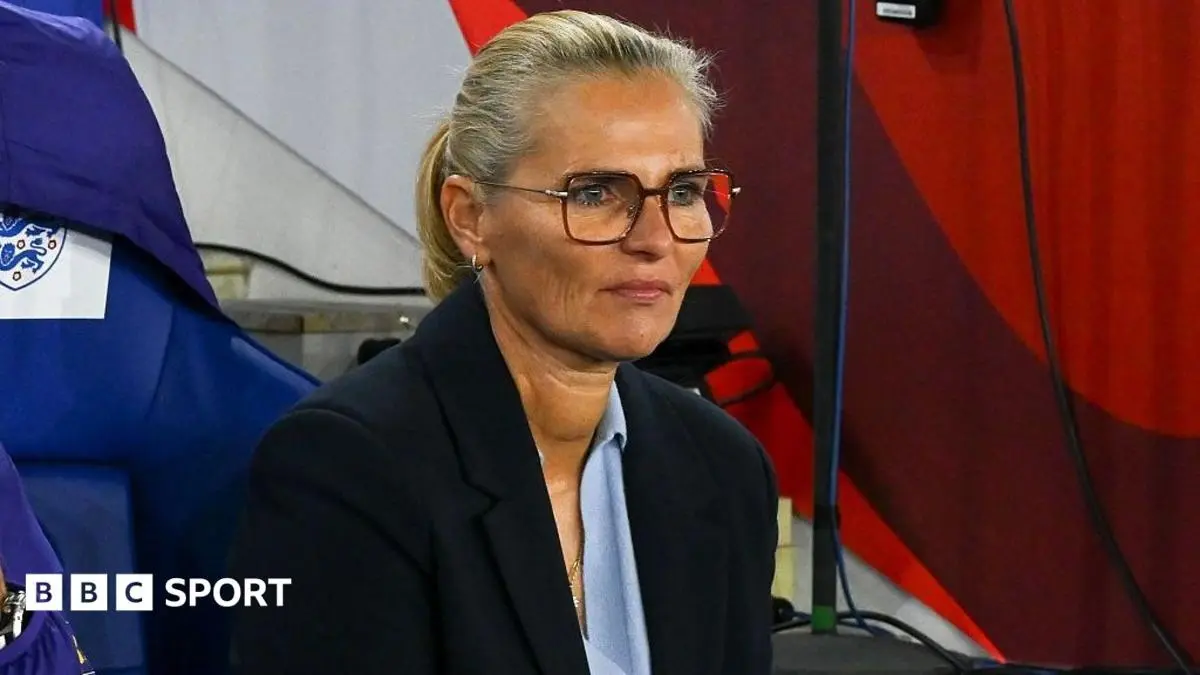
England manager Sarina Wiegman, while remaining diplomatic in her public comments, has been unable to mask the inherent frustration of a process that seems to punish excellence. "Of course we wanted to qualify straight away, that’s not the case," Wiegman noted on Tuesday when asked about the qualification structure. "For us now, the facts are that we are in the play-offs, we have played Greece, now we’re through, and now we’re going to play Ukraine. That’s what my focus is on."
When pressed on whether the current system is fit for purpose, Wiegman deferred to the governing body. "Uefa will review how things are set up and see whether they think it works or it should be better, or different. I don’t think it’s my place now to review that."
The path forward for England remains a tedious slog. The Lionesses must now prepare for another two-legged tie against Ukraine, with the first leg scheduled away from home on December 1, followed by a return fixture at Wembley Stadium on December 5. The nature of this matchup underscores the repetitive absurdity of the system; England has already faced Ukraine twice in the league phase, winning both encounters with a combined aggregate score of 9-1. It is a strange quirk of modern football administration that a team of England’s stature should be required to beat the same opponent on at least three separate occasions to secure a spot in a major tournament.
England’s frustration is rooted in cold, hard data. Over their last eight qualifying matches, they have secured seven victories, netted 21 goals, and conceded only six. Their solitary defeat came away to the world champions, Spain—a side they managed to defeat 1-0 at Wembley. England’s points tally of 15 during the league phase would have easily secured top billing in almost any other group. However, because they were placed in a high-density group of elite nations, they were penalized while teams like Switzerland and Hungary—who competed in groups devoid of a single nation from the world’s top 45—sailed through with fewer hurdles.
The contrast is glaring. England’s group included Iceland, ranked 13th in the world, and the top-ranked Spanish side. To force a team of such quality into a secondary playoff bracket against lower-ranked opponents is not only demoralizing for the players but arguably detrimental to the sport’s development.
Historically, these lopsided encounters have been a fixture of international women’s football. During the qualification for the 2023 Women’s World Cup, England famously dismantled Latvia 20-0 and 10-0 in successive matches. While that tournament saw the competition expand from 24 to 32 teams—a move intended to broaden the game’s appeal—it also laid bare the chasm between the established powers and the rising nations.
However, the 2023 tournament also proved that the gap is narrowing in the right environments. When England faced Haiti in the group stages, they were pushed to the limit, scraping a narrow 1-0 victory. Their quarter-final against Colombia further demonstrated that the global level of competition is rising rapidly. Yet, the European qualification process seems to ignore this evolution. England’s failure to qualify for the 2024 Olympic Games as part of Team GB—finishing behind the Netherlands in their Nations League group—was a stark warning that even minor slips in this high-stakes, high-concentration format are catastrophic. Subsequent draws with Portugal and a defeat by Belgium, followed by the need to survive two penalty shootouts during the Euro 2025 cycle, show that the competition is indeed intensifying. Yet, the qualifying structure remains a blunt instrument.
Following a costly 4-0 defeat by Spain in June, Wiegman articulated the broader issue: "The competition in Europe is really high. What I’m disappointed about is that we win five games, we have 15 points and we’re in a group with the world champions and then you can’t qualify. I’m happy with the performances but not the result of us having to go into the play-offs. That’s just the way it is."
The true cost of this system is the loss of high-level preparation. While England is forced to play "routine" matches against opponents they have already dismantled, their true rivals on the world stage are engaging in high-intensity fixtures. On the same Tuesday that England navigated their playoff requirements, tournament favorites Germany and Japan met in a high-profile friendly. Brazil and Argentina contested a hard-fought 2-2 draw, and the four-time world champion United States played Spain twice in the span of five days. These are the matches that define the trajectory of major nations; meanwhile, Europe’s elite are tied up in a qualification loop that offers little in the way of tactical development or competitive growth.
FIFA has announced plans to expand the 2031 Women’s World Cup from 32 to 48 teams. Whether this expansion will lead to a more inclusive, balanced tournament remains to be seen. However, as long as the European qualification process continues to favor bureaucratic structures over competitive integrity, the continent will continue to see massive, demoralizing scorelines. The status quo is not merely frustrating for the players and managers involved; it is a direct failure to provide the majority of nations with the environment they need to actually improve. Until UEFA reconciles the need for inclusion with the reality of elite-level competition, European women’s football will continue to be defined by these absurd, repetitive, and increasingly irrelevant qualification ties.