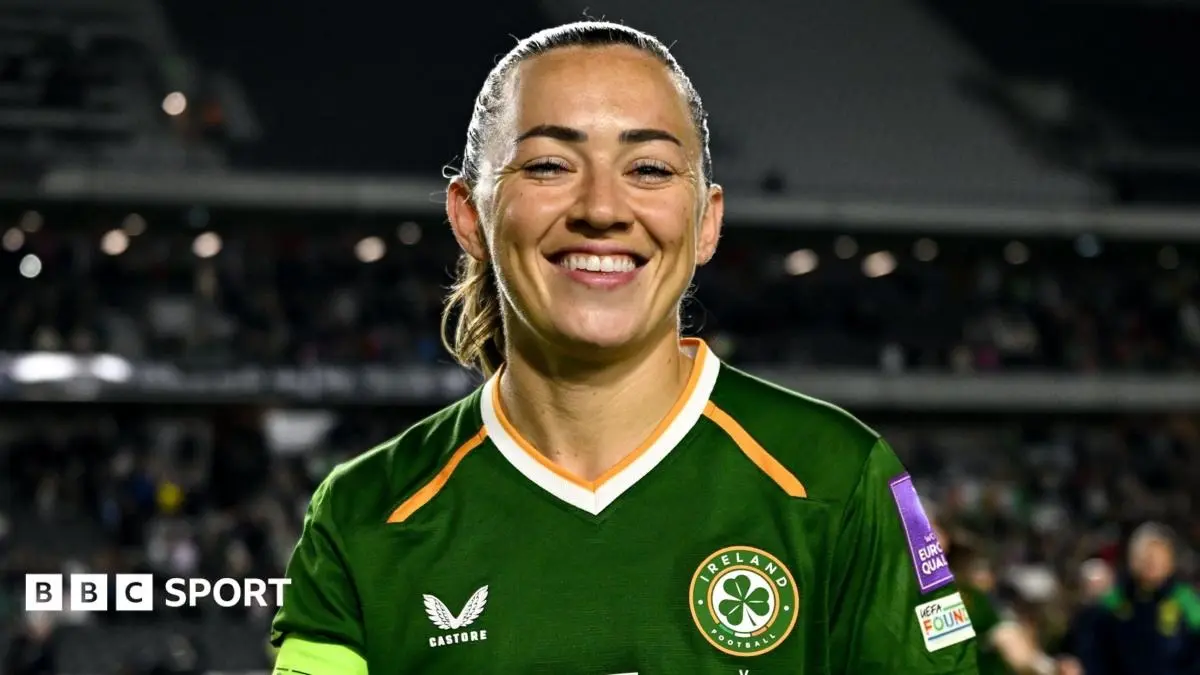
As the Republic of Ireland women’s national team turns its focus toward a high-stakes November play-off showdown against Poland, the atmosphere within the squad is one of cautious optimism and intense preparation. With a place in the next World Cup on the line, the stakes could not be higher for a side that has become accustomed to navigating the pressures of international qualification. The path to the tournament, however, remains fraught with challenges, and Ireland’s players are well aware that past successes against their upcoming opponents offer no guarantees of a comfortable passage.
Poland arrives in this fixture battle-hardened and brimming with confidence following their dramatic triumph over Belgium. That tie was a test of nerve and endurance, culminating in a 3-3 aggregate draw that was ultimately settled by a tense penalty shootout. It was a performance that highlighted Poland’s resilience, but for those who have followed their trajectory, it also underscored the influence of their standout star, Barcelona striker Ewa Pajor. As one of the most clinical forwards in the global game, Pajor represents the primary defensive concern for the Irish coaching staff, acting as the focal point for a Polish side that has demonstrated a capacity to compete at the highest levels of European football.
Yet, Ireland enters the tie with a psychological advantage born from recent history. During the qualifying campaign in April, the Irish side managed to secure victories in both of their encounters against the Poles. While these results provide a template for success, the players are under no illusions regarding the difficulty of repeating the feat. Football at this level is rarely linear, and both camps have undergone tactical evolutions since those spring meetings.
Speaking ahead of the November clash, Ireland captain Katie McCabe emphasized that the upcoming matches would be a completely different proposition from the encounters earlier this year. "For us, we’ve played both teams recently and it’s going to be different come November," she noted. "We know there’s a World Cup place at stake so we need to be ready. It’s an exciting one."
The gravity of the situation is not lost on the squad. For many of the players, the drive to reach consecutive World Cups is the ultimate motivator. Having experienced the euphoria of the 2023 tournament in Australia, the desire to replicate that journey has fostered a sense of collective purpose. The team understands that qualification is not merely a matter of talent but a test of mental fortitude and tactical discipline over two legs.
For McCabe, the current international window arrives during a period of significant personal transition. The summer months brought a major shift in her club career as she concluded her long-standing association with Arsenal to embark on a new chapter with Chelsea. This move has been widely viewed as a pivotal moment for the versatile star, and by her own account, the change of scenery has provided exactly the kind of stimulation she needed to revitalize her game.
"The time had come for me to start a new chapter," McCabe explained, reflecting on her move to the reigning Women’s Super League champions. Describing the transition as a "breath of fresh air," she credited the environment created by Chelsea manager Sonia Bompastor for helping her settle quickly. "Ever since I’ve come in to work with Sonia and the girls it has been brilliant. I’m enjoying my football again and I’m just taking it game-by-game, but for me the most important thing is being in the best position to qualify for the World Cup."
The synergy between club and country is often a critical factor for international players, and McCabe’s revitalized form is a welcome boost for Ireland manager Eileen Gleeson. Integrating into a high-performance environment at Chelsea, where the daily demands and tactical expectations are at the absolute ceiling of the domestic game, provides the captain with a level of preparation that will be invaluable when she steps onto the pitch for Ireland. The hope within the Irish camp is that this newfound sense of enjoyment and professional stability will translate into commanding performances on the international stage.
The journey to the 2023 World Cup in Australia served as a formative experience for the current generation of Irish players. It was a historic achievement, the first time the senior women’s team had reached the biggest tournament in the sport, and it fundamentally altered the expectations surrounding the program. That tournament was characterized by a blend of individual brilliance and a gritty, team-first ethos that allowed Ireland to punch above its weight against established global powers.
McCabe believes that the lessons learned during those highs and lows are still relevant today. The squad’s ability to remain cohesive under pressure is perhaps their greatest asset, and it is a quality that will be tested to its limit in November. "We’ve had some highs and lows over the years," she said. "It’s going to be really important and we’ll stick together going into November. We’ll be doing everything we can to get over the line and get this country to the World Cup again."
The technical preparation for the matches against Poland involves more than just studying film of the April fixtures. It requires the squad to manage the expectation of the home crowd, the logistical challenges of a two-legged format, and the emotional toll of knowing that a single mistake could derail years of work. The coaching staff has been careful to manage the narrative within the dressing room, ensuring that while the memory of the two qualifying wins remains a source of confidence, it does not lead to complacency.
Tactically, the challenge will be to contain Ewa Pajor without sacrificing Ireland’s own attacking threat. In April, the Irish defense showed an ability to track runners and neutralize the spaces that Poland prefers to operate in, but the nature of international football dictates that adjustments are inevitable. Whether Poland adopts a more conservative approach or attempts to exploit the transition moments, Ireland must be prepared for a more robust challenge than they faced six months ago.
As the squad begins its final preparations, the sense of urgency is palpable. The players are not just playing for themselves or for their club reputations; they are playing to maintain the momentum that has seen the women’s game in Ireland reach unprecedented levels of popularity and investment. A second consecutive appearance at a major tournament would be a watershed moment for the FAI and a testament to the consistency of the current group.
For McCabe, leading the team through these play-offs represents the culmination of a career-long ambition to see Ireland firmly established as a tournament regular. Her leadership will be vital, not just in terms of her output on the wing or in defense, but in the calmness she brings to the dressing room. Having navigated the pressures of the WSL and high-stakes international football for years, she is uniquely positioned to guide the younger members of the squad through the turbulence of a qualification tie.
As November approaches, the focus remains narrow and disciplined. The talk of "new chapters" and "fresh air" at the club level is now being channeled into a singular, unwavering mission: to secure the result that will see Ireland take their place on the world stage once again. The path to the World Cup is never easy, and the upcoming battle with Poland promises to be a defining moment for this squad, testing their resolve, their talent, and their capacity to turn past success into future glory. Every training session, every tactical meeting, and every minute spent on the pitch in the coming weeks is dedicated to that ultimate goal, with the entire nation watching to see if Ireland can once again defy the odds and prove their worth among the elite.