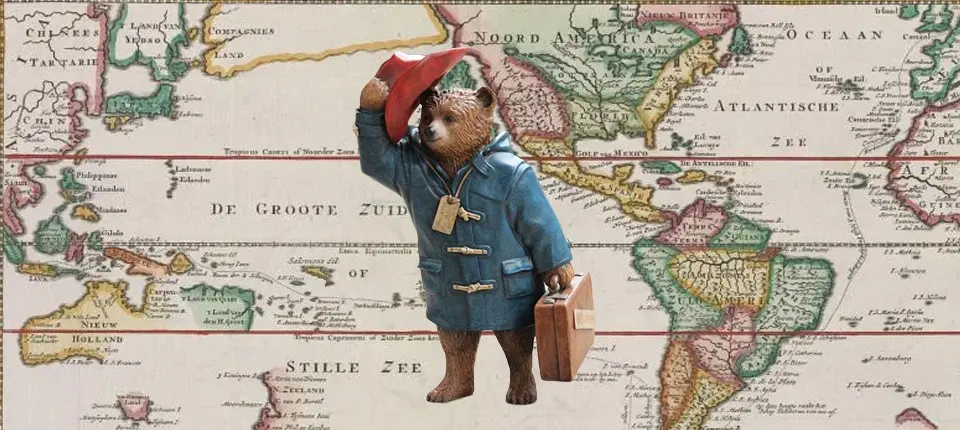
Welcome to another edition of Lit Hub Daily for October 13, 2026, bringing you the finest highlights, conversations, and historical milestones from across the literary internet. Each day, we explore the digital corners of the book world, celebrating the enduring power of storytelling, the authors who shape our cultural landscape, and the anniversaries that remind us of how beloved literary figures came to be. Today brings a particularly charming and globally recognized milestone that resonates deeply with readers of all ages, marking a momentous day in children’s literature and character creation.
Today in literary history, we look back to a defining moment in 1958 when one of the most cherished and recognizable characters in British and international children’s literature made his very first appearance. That character is, of course, Paddington Bear—the polite, duffel-coat-wearing, marmalade-loving immigrant from "Darkest Peru" who arrived at London’s Paddington Station and instantly captured the collective imagination of readers. Created by author Michael Bond and originally illustrated by Peggy Fortnum, the small bear with a penchant for trouble and an unwavering sense of courtesy stepped off the pages of A Bear Called Paddington and into the hearts of families worldwide, setting off a publishing phenomenon that continues to thrive decades later.
The journey of Paddington Bear began on a cold Christmas Eve in 1956, when Michael Bond, then a cameraman for the BBC, saw a lonely small toy bear left on a shelf in a London department store near Paddington Station. Feeling sorry for the stuffed animal, Bond bought it as a present for his wife, Brenda. The toy soon became a fixture in their home, and inspiringly, Bond began to write stories about the bear, drawing partly on his own memories of seeing newsreels of evacuee children during World War II who traveled across Britain with labels around their necks and small suitcases in hand. Those poignant real-world experiences lent an underlying emotional resonance to the character of Paddington, who arrived in London with little more than a battered suitcase, a half-empty jar of marmalade, and a handwritten note attached to his blue coat bearing the simple plea: "Please look after this bear. Thank you."
When A Bear Called Paddington was published on October 13, 1958, by William Collins & Sons, it immediately resonated with the public. The adventures of the Brown family—who kindly take in the unconventional bear and navigate the chaotic, often humorous domestic mishaps that follow—struck a chord with readers looking for warmth, gentle humor, and timeless values of hospitality and kindness. Peggy Fortnum’s iconic black-and-white illustrations added an extra layer of warmth and character, defining the visual identity of Paddington for generations of readers before later editions were issued in color. The bear’s polite manners, strict adherence to British etiquette despite his unfamiliarity with modern appliances, and his endearing misunderstandings of everyday idioms turned ordinary situations into moments of pure comedic delight.
Over the decades, the literary footprint of Paddington expanded far beyond that initial volume. Michael Bond went on to write more than twenty full-length books and numerous picture books chronicling Paddington’s adventures in London, his visits to the seaside, his mishaps at the theatre, and his various attempts at home improvement. The character transitioned successfully across media, starring in a critically acclaimed television stop-motion series in the 1970s and, more recently, winning over a whole new generation of filmgoers in a series of universally praised live-action and computer-animated feature films that preserved the gentle spirit and genuine heart of Bond’s original creation.
As we reflect on Paddington’s debut in 1958, his enduring legacy serves as a reminder of the unique power of children’s literature to foster empathy, cross-cultural understanding, and joy. Whether readers first encountered him through the pages of Michael Bond’s classic novels, shared the stories with their own children, or discovered him through his modern cinematic adaptations, Paddington Station remains forever linked to a small bear from Peru who taught millions of readers that even the most unexpected arrivals can transform a household into a home. The digital literary landscape continues to celebrate these enduring milestones, keeping the spirit of classic storytelling vibrant and accessible for contemporary audiences who log on each day to discover what makes the written word so endlessly fascinating.