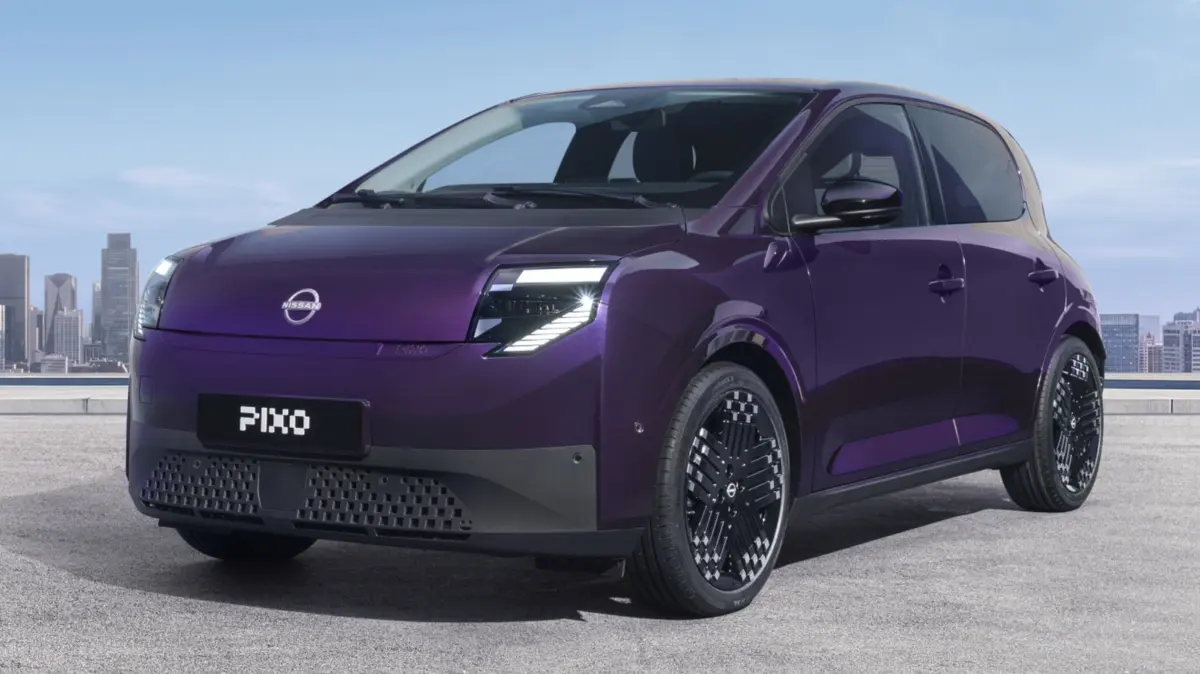
The enduring automotive partnership between Renault and Nissan continues to yield practical and inventive results for the European market, despite a shifting corporate landscape. Following Nissan’s recent revival of the Micra—a compact electric hatchback sharing its foundation with the acclaimed Renault 5—the Japanese automaker has turned its attention to another standout vehicle in Renault’s stable. Introducing the new Nissan Pixo, a city-focused electric vehicle built upon the architecture of the fourth-generation Renault Twingo.
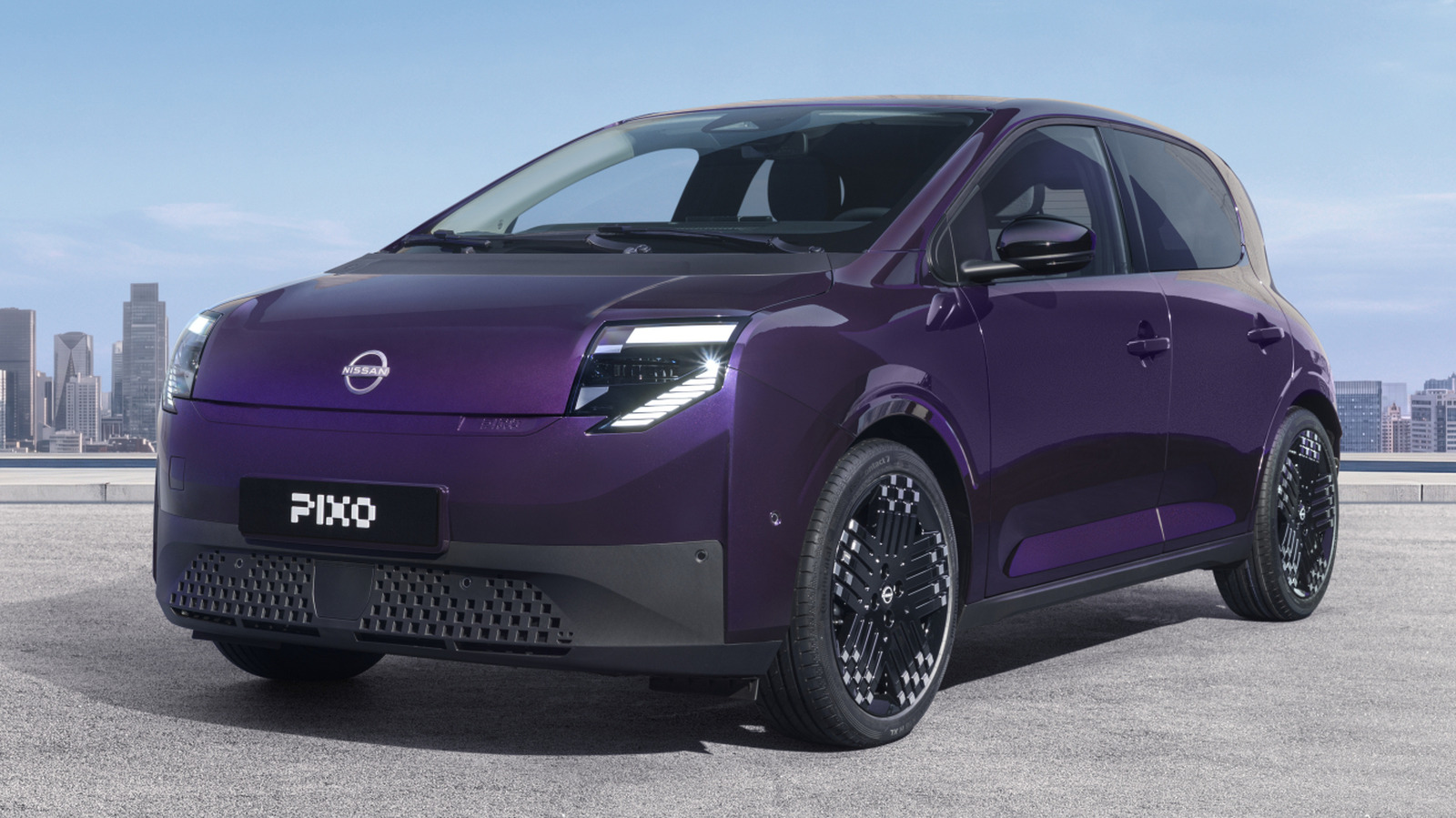
While it may not capture the exact whimsical aesthetic of its French sibling, the Pixo presents a remarkably charming design language that easily outshines its spiritual predecessor. From 2009 to 2013, Nissan marketed a Pixo based on the Suzuki Alto, a utilitarian and largely forgettable appliance. This new iteration, however, represents a dramatic shift in character. Positioned as Nissan’s smallest vehicle offering in Europe—standing roughly a foot shorter than the boldly styled Juke EV—the Pixo was engineered specifically for dense European urban environments. According to Nissan, the Pixo exemplifies a faster, more agile approach to vehicle development enabled by the Renault alliance, proving that badge-engineered models can retain distinct personalities rather than feeling like cynical or uninspired exercises in corporate cost-cutting.
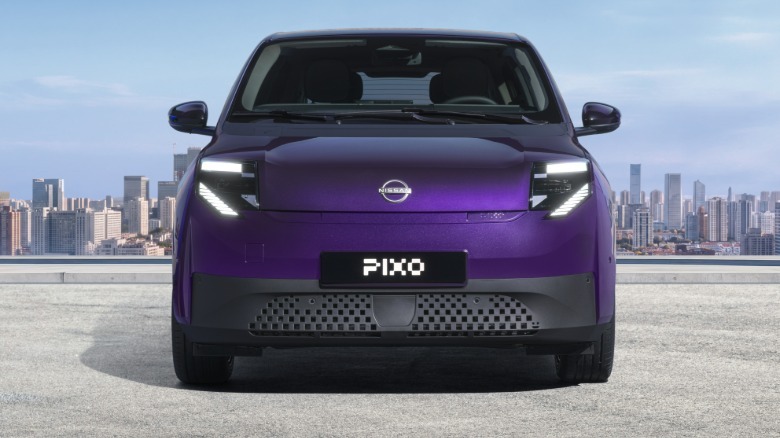
More cars should come in purple
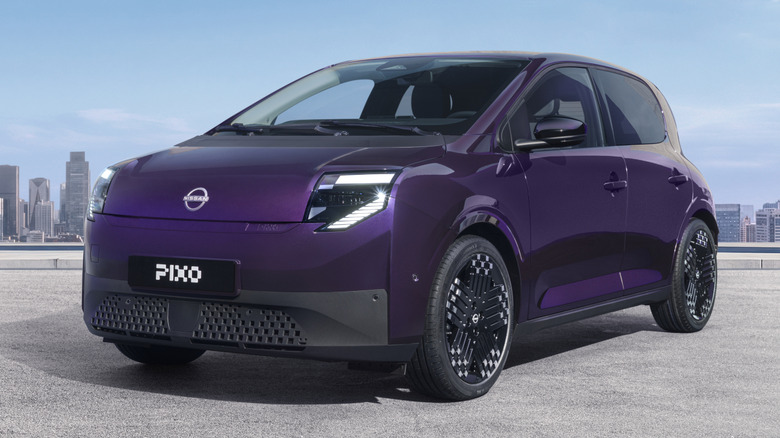
A closer inspection of the exterior reveals that the most prominent design divergences from the Twingo occur at the front fascia. Instead of the rounded, amphibian-like visage of the Renault, the Pixo adopts a flatter, more vertical front end. It features a taller, more rounded hood, squared-off headlamps highlighted by a distinctive pixelated motif, and an expanded application of black plastic across the lower bumper. Integrated into this lower cladding are compact, pixel-shaped air inlets that conceal a subtle, playful smiley face motif.
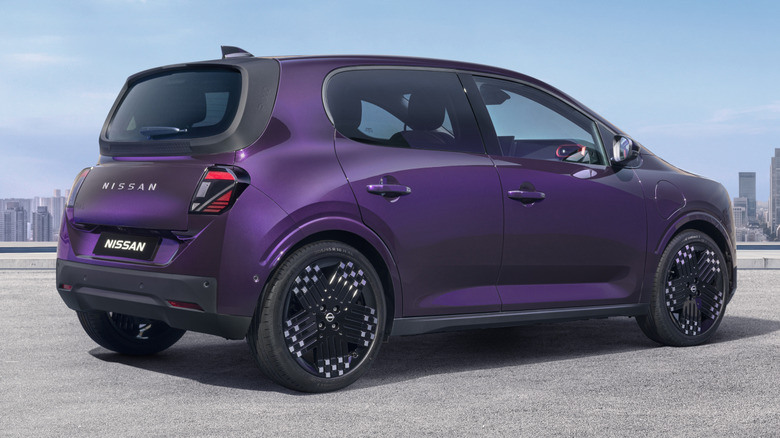
At the rear, the taillight graphics mirror the pixelated theme of the headlights, while the lower portion of the tailgate and the rear bumper incorporate sharper, more angular geometry. The plastic trim surrounding the rear glass proudly stamps the Pixo name into its sides, accompanied by a cluster of diminutive square accents positioned just beneath the rear windshield wiper. Nissan has placed a strong emphasis on inventive wheel designs across its modern portfolio; while the Pixo’s standard wheels are somewhat subdued compared to the eccentric options available on the Twingo, they remain clean and contemporary. True automotive enthusiasts may also spot the subtle Pixo-specific trim piece located immediately ahead of the side mirrors. Furthermore, because Renault does not currently offer the Twingo in a vibrant shade of purple, the Pixo secures an additional point for individuality.
Designed for European cities
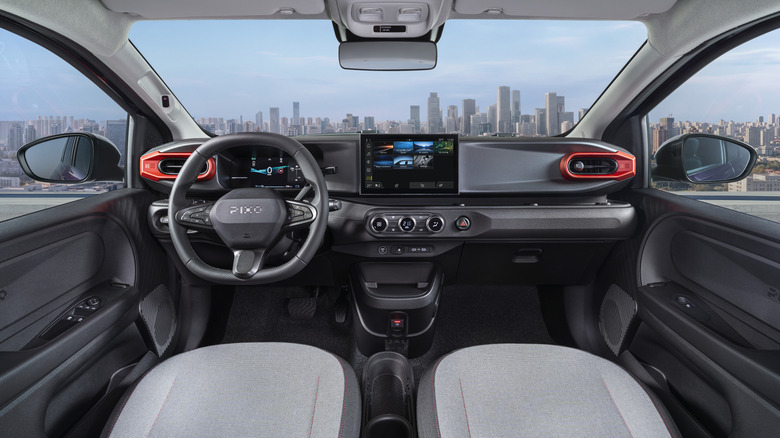
The interior narrative mirrors the exterior approach, blending shared structural architecture with unique brand-specific detailing. Occupants will find distinct door card inserts and a slightly more angular upper dashboard layout within the Pixo. While the cabin incorporates a slightly more restrained color palette than its Renault counterpart, the core layout remains functionally identical.
Despite its diminutive physical footprint—measuring a couple of inches shorter than a modern Mini Cooper—the interior maximizes space through clever packaging. The rear seating arrangement is remarkably versatile, featuring sliding mechanisms that allow passengers to adjust legroom or cargo space as needed, alongside individual folding capabilities. The trunk area is complemented by practical underfloor storage compartments, supplemented by numerous small cubbies scattered throughout the cabin for everyday items.
Beneath the skin, the Pixo mirrors the mechanical underpinnings of the Twingo. It relies on a compact 27.5-kWh lithium iron phosphate (LFP) battery pack, delivering an estimated driving range of 161 miles on the standardized European WLTP testing cycle. While rapid charging is limited to a 50 kW ceiling, the modest capacity of the battery pack ensures that replenishing the charge from 15% to 80% takes less than half an hour. Additionally, the vehicle supports bidirectional charging capabilities, allowing it to supply energy back to a home or the grid if necessary. Power is delivered to the front wheels via a single electric motor producing 80 horsepower. True to its urban mission, Nissan has omitted traditional performance and acceleration metrics, reinforcing the understanding that raw speed is secondary to efficiency and maneuverability in this vehicle segment.
Official pricing details have not yet been finalized and will be disclosed in December, though industry expectations point toward a highly competitive, accessible price point. For context, the foundational Renault Twingo starts at under €20,000 before accounting for any local government EV incentives. Customer deliveries for the new Nissan Pixo are scheduled to commence in early 2027.