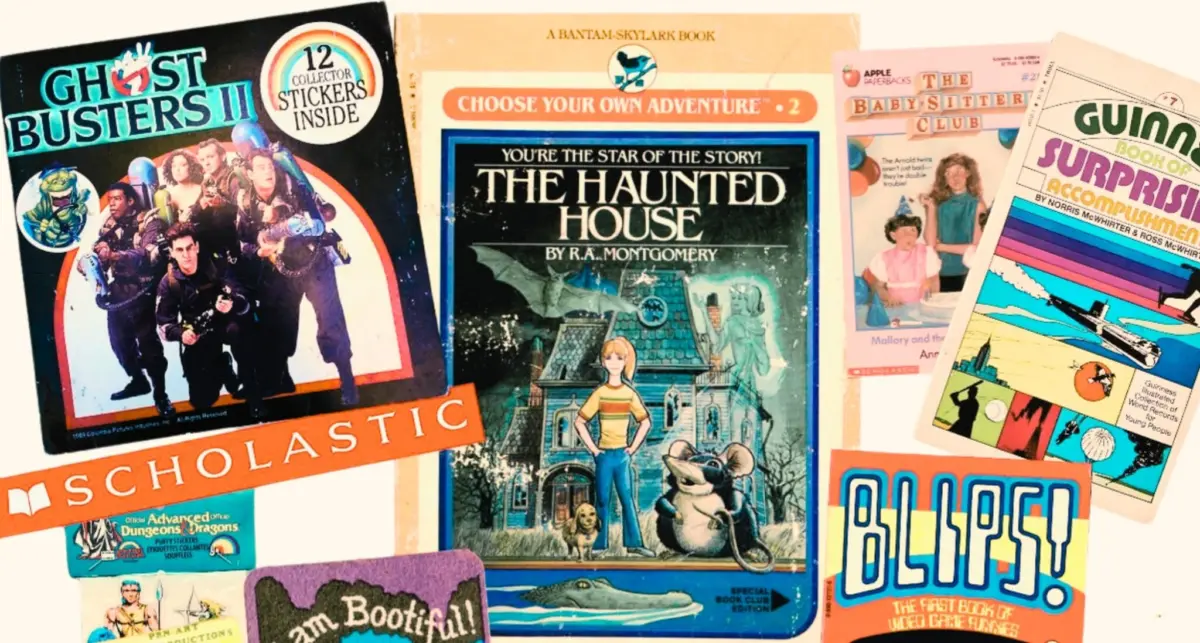
If you made your way through a public school in North America anytime during the past half-century, you likely recall that shiny catalog. That sudden, circus-like presence transforming the school library into a bustling marketplace of literature and novelty items remains a defining memory for generations of students.
The enduring cultural footprint of the institution was brought back into sharp focus by critic Michelle Cyca in an evocative piece for The Walrus. Cyca remembered the fair fondly, with its order forms and Animorphs box sets, as a key Millennial touchstone. However, when her young daughter recently brought a current catalog home from school, sorrow quickly usurped nostalgia.
Cyca was distressed to note that many of today’s fair offerings are mere extensions of toy or television franchises, such as Lego, Pokémon, or Paw Patrol. What is worse, she argued, these offerings seem to be marketing themselves not on the merits of imaginative storytelling, but entirely on their proximity to more stimulating, screen-based entertainments.
This shift raises pressing questions, especially against the backdrop of a widely discussed national reading crisis. What does it mean if the quintessential book fair of yore is effectively dead? Is this transformation yet another win for the forces of cultural decline, or is it merely a classic case of viewing the past through rose-colored glasses?
To understand the present debate, some historical context is necessary. Scholastic launched its first teen-targeted book clubs back in 1948. Their innovative Pocket Book program allowed students to access affordable books by ordering them directly from magazines stationed in the classroom.
The traditional school book fairs eventually kicked off in 1982. Early iterations gave Scholastic’s proprietary titles—such as the beloved Clifford the Big Red Dog series—ample space to achieve massive commercial success. In subsequent eras, the fair proved crucial to the explosive growth of other young adult properties, including The Hunger Games and the spine-chilling Goosebumps series.
Yet, neither spin-off books nor commercial merchandise are entirely new to the fair environment. In fact, franchise-driven offerings are something cultural historians can trace back to at least 2002.
Beyond its primary mission of fanning a lifelong love of reading, the fair has always claimed a distinct fiscal purpose. Across North America, it offers a vital supplemental funding pipeline for under-resourced public schools that often lack robust library budgets. A Scholastic representative recently told Fox 13 that these book fairs have successfully helped raise more than $2 billion for American schools over the last decade alone.
It is difficult to dismiss such substantial financial support, particularly in the current economic climate and amidst ongoing strains on public education. Even if the literary quality within the stacks has arguably been compromised, Cyca argued that the earlier iteration of the fair was most important for its perceived purity.
"The order form elicited a buzz of permissible, wholesome consumerism," she wrote of the famous catalog. "And I loved the freedom of penciling in my choices after careful deliberation: Animorphs, Scott O’Dell novels, R.L. Stine series that would give me nightmares for weeks."
Like a Proustian madeleine, those nostalgic memories of Animorphs resonate with many adults today. But as another piece of intellectual property that eventually spawned its own television drama, it becomes difficult to logically distinguish K.A. Applegate’s creature-shifting series from modern Paw Patrol or Minecraft novels—at least when looking at the objects themselves.
Furthermore, franchise books and peripheral merchandise are not modern anomalies. Franchise offerings were staples of the experience decades ago; a notable example is the year 2002, when the Scholastic Arrow Top 10 bestseller list prominently featured a Pokémon guide.
For many students who attended American public schools, the fair’s consumerism was never entirely wholesome, functioning instead as a stark class stressor. Some children had plenty of disposable cash to throw around on Snoopy backpacks and posters, while others had only standard lunch money, which could realistically translate to little more than a sticker sheet or two.
If a student could not afford to purchase anything at all—or if their parents had not been adequately briefed on the strange social dynamics of the event—the fair could easily become a torturous rite of passage. Failing to bank enough points or funds to buy a coveted item could leave a child feeling acutely isolated, much like Amy March crying in the snow over limes.
Danika Ellis, a Book Riot editor and former bookseller, told the Canadian Broadcasting Corporation that she has long maintained a healthy skepticism of the fair precisely for these socioeconomic reasons.
"We have kids who are walking away with huge stacks of books and posters and toys, and then kids who can’t have anything or have a lot less," Ellis observed. "If the goal is to celebrate books and reading and get kids excited… is a for-profit book fair the best way to do that?"
This observation underlines the fair’s original sin and its enduring paradox: buying books has never been synonymous with actually reading them.
To be fair, Cyca shares this same compunction, noting in her elegy that the program has always escalated both micro and macro socioeconomic inequalities. But if observers universally agree that the book fair has always been an imperfect educational tool, does that not force our current nostalgia into a mostly aesthetic critique?
If so, that is entirely fine. Many adults miss the analog library aesthetic as much as any other self-respecting pop-culture fan. However, purely aesthetic nostalgia can sometimes raise unwelcome ghosts from the past, much like the revival of low-rise jeans.
An honest reflection on individual childhood experiences at the fair reveals that it was rarely just about finding the objectively "best" literature. The un-classy offerings, or the aesthetic objects marketed based on their proximity to more stimulating entertainments, were often just as important to students as canonical texts like Bud, Not Buddy. The greatest thrill was frequently the simple act of acquiring something parents would ordinarily refuse to purchase.
Many children enthusiastically circled Garfield, The Baby-Sitters Club, and Teenage Mutant Ninja Turtles books in their catalogs. They did so even though—or perhaps precisely because—they could also watch live-action versions of those exact stories during peak television hours after school.
It is difficult to argue that the high of coveting a Star Wars spin-off or a pop-group poster book decades ago was inherently purer than the modern equivalent of coveting a Squishmallow, assuming today’s children experience a similar thrill.
While individual experiences vary, the book fair was rarely about refining literary tastes or cultivating a pristine, uncommercial love of reading. The sheer volume of shiny objects for sale ensured that consumer desire took center stage. For better or worse, coveting items was the primary exercise and education provided by the event, because the fair was never truly fair.
At its core, Cyca’s nuanced critique is less about the fair’s modern inventory or operational function than its overarching vibe, and the way it has become entangled in a broader sense of cultural degradation. This brings to mind author Cory Doctorow’s widely adopted term, "enshittification."
Referring to the distinct process by which a user experience degrades sharply as corporate value is continuously extracted from the consumer, enshittification is frequently cited as a symptom of late-stage capitalism. Doctorow originally applied the concept primarily to Silicon Valley business models, where platforms routinely cater to individuals to harvest data before abruptly shifting priorities to benefit corporate advertisers and shareholders.
Enshittification is often invoked to explain why modern digital feeds are saturated with advertisements and low-quality automated content. Yet, the term has proven adaptable to numerous industries well beyond the technology sector.
The relentless corporate drive to prioritize mega-corporations over everyday consumers can also explain why many shared cultural experiences and commercial products—including various Millennial aesthetic touchstones—simply feel worse today, even when consumers cannot immediately articulate why.
As critic Kyle Chayka noted in a review for The New Yorker, this coinage offers a satisfying way to name a modern malady, but a convenient explanation does not automatically provide a solution. Complaining that everything has deteriorated into commercialized sludge frequently goes hand in hand with passive nostalgia.
Lamenting an earlier, ostensibly better object can easily become a distraction and a detriment to genuine action, particularly when the underlying task should be challenging the broader economic system that permitted products like mass-market plush toys to dominate the cultural landscape in the first place.
Doomerism is a risky side effect of viewing the past through rose-colored glasses. As Chayka aptly wrote, perhaps the worst outcome of enshittification is that it trains people to expect things to be bad, and to automatically assume they will only deteriorate further.
When it comes to the physical reality and cultural legacy of the Scholastic Book Fair, the final verdict remains complicated. There is genuine literary value, commercial schlock, and unyielding capitalism all mixed together. Perhaps the fair was always an identical fraught frenzy, and it is simply the readers who are finally growing up.