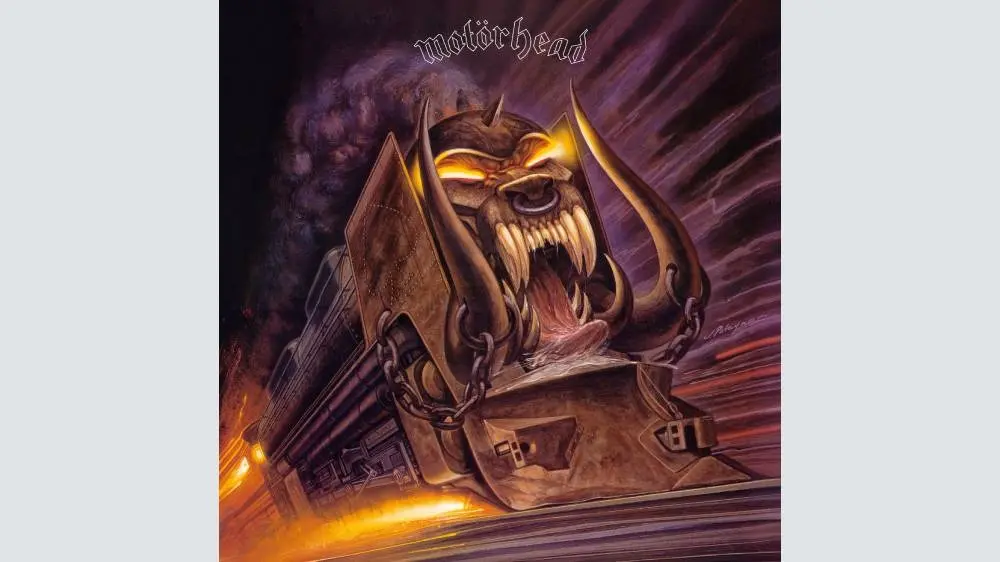
The history of rock and roll is littered with examples of legendary bands finding their creative peak only when pressed against the proverbial wall. Faced with the pressure of a shifting industry, internal turmoil, or the looming threat of irrelevance, the greatest acts often channel that desperation into their most daring work. The Rolling Stones famously navigated their own turbulent waters to produce career-defining records, and the British hard-rock titans Motörhead were no different. Four decades ago, the band found themselves at a crossroads that many observers believed would lead to their permanent dissolution. Instead, they delivered Orgasmatron, an album that remains one of the most intriguing, polarizing, and sonically experimental chapters in the band’s storied history.
Forty years have passed since the era that saw the collapse of Motörhead’s definitive No Sleep ’til Hammersmith lineup. Following the departure of key members and a pair of studio albums that failed to capture the raw, visceral energy of their earlier work, the band was widely regarded by critics and industry pundits as a spent force. However, Lemmy Kilmister was, above all else, a survivor. Unwilling to let the Motörhead name fade into the footnotes of metal history, he orchestrated a bold regrouping. He brought in two searing guitarists and the thunderous, precision-heavy former Saxon drummer Pete Gill. To cap off this reinvention, Lemmy made an artistic decision that caught the entire rock world off guard: he recruited producer Bill Laswell.
At the time, Laswell was a fixture of the experimental New York scene, a visionary known for bridging the gap between jazz, rock, and global textures. He was perhaps best known for his work with Herbie Hancock, specifically the genre-defying 1983 hit "Rockit." To the average Motörhead fan, whose loyalty was built on the foundation of high-speed, no-nonsense rock and roll, the pairing of a gritty British metal outfit with an experimental producer like Laswell seemed, at best, a head-scratcher and, at worst, a recipe for disaster.
However, Laswell’s résumé was more versatile than his critics realized. He had been quietly pushing the boundaries of hard rock, coming to the Orgasmatron sessions fresh off the heels of the groundbreaking 1984 rap-rock fusion track "World Destruction," which featured John Lydon and Afrika Bambaataa. Furthermore, his work on Public Image Ltd.’s Album—which brought together a disparate group of virtuosos including guitar wizard Steve Vai, Cream’s legendary drummer Ginger Baker, and Funkadelic keyboardist Bernie Worrell—demonstrated his unique ability to synthesize clashing musical philosophies.
The resulting record, Orgasmatron, was a radical departure from the band’s established sound. It stands as Motörhead’s most experimental studio effort, an album that sparked intense debate among the band members, the press, and the dedicated fanbase. Even the official marketing materials for this 40th-anniversary reissue acknowledge the friction, noting with characteristic understatement that the production was the subject of "much discussion" at the time. Many listeners felt the final mix was cluttered, arguing that the heavy-handed production obscured the core identity of the band—the "muscle and bone" approach that had made them icons. Yet, for those who embraced the experiment, the record offered a rare glimpse into what happens when a band known for consistency decides to trade safety for sonic exploration.
It is worth remembering that in the mid-1980s, music fandom was a highly tribal affair. The borders between punk and heavy metal were often strictly patrolled, yet Motörhead was one of the few entities that commanded genuine respect in both camps. Much like AC/DC, their early output was rock and roll distilled to its most elemental components: scorched-earth guitar riffs, relentless, piledriving percussion, and Lemmy’s signature gravel-pit growl. He was, in many ways, the "Terminator" version of Chuck Berry, embodying a relentless, rhythmic force that defied simple categorization.
Orgasmatron took that established blueprint and placed it in an adventurous, often hazy sonic environment. While the fundamental songwriting remained undeniably Motörhead, the tracks were layered with dense guitar overdubs, atmospheric percussion, and studio effects that swirled through the mix. Nowhere was this more evident than on the closing title track. The song is a suffocating, churning cauldron of sound. Lemmy’s vocals, treated with effects that render them both inhuman and commanding, evoke a fusion of Darth Vader and the malevolent aesthetic of modern pop-culture horror. The track feels like molten lava, a slow-moving, unstoppable force of nature. It also houses what many consider to be Lemmy’s finest lyrical achievement: "I am the one, Orgasmatron, the outstretched grasping hand/ My image is of agony, my servants rape the land/ Obsequious and arrogant, clandestine and vain/ Two thousand years of misery, of torture in my name."
For the 40th-anniversary reissue, the label has pulled out all the stops to recontextualize the album for a modern audience. The package includes not only a remastered version of Laswell’s original, polarizing mix but also a 2026 remix helmed by the band’s longtime later-period producer, Cameron Webb. Webb’s approach is designed to clear away some of the original’s dense atmospheric haze, offering a clearer, punchier presentation of the guitars and drums. While those expecting a radical transformation of the songs may find the difference subtle, the technical clarity allows the original genius of the songwriting to shine through with newfound sharpness.
Beyond the mix, the reissue serves as an archival treasure chest. It includes rehearsal tapes that provide a raw, lo-fi look at the band’s creative process, sounding as though they were captured on a basic boombox in a dimly lit practice space. Additionally, the set features a BBC session that highlights the band’s live prowess, showcasing several Orgasmatron tracks alongside the definitive classic "Killed by Death." Perhaps most striking for the dedicated follower is the inclusion of Lemmy reciting the lyrics to "Orgasmatron" in an unaccompanied, spoken-word format. Stripped of the guitars and the effects, his delivery takes on the quality of an evil poet, underscoring the dark, misanthropic power of his writing.
Looking back, the controversy surrounding the release of Orgasmatron proved to be a necessary growing pain. It confirmed that Motörhead was not a band content to repeat themselves indefinitely, and it signaled that they were officially back in the game, launching the group into their second golden era. The band eventually returned to their traditional, bare-knuckle production style; classic-era drummer Phil "Philthy Animal" Taylor returned to the fold the following year for the aptly titled Rock N’ Roll album, which served as a return to the sonic roots that defined their legacy. From there, the band continued to roar across the global stage for decades, remaining a singular, uncompromising force until Lemmy’s passing in 2015 at the age of 75.
While the bonus materials included in this anniversary edition are certainly a welcome addition for collectors, they are not the main event. The true value lies in the revitalized, souped-up sound of the original album. By giving the record the sonic space it always deserved, this 40th-anniversary edition ensures that Orgasmatron stands as one of the most significant reissues of the year. Four decades after it first confused and captivated the rock world, the album roars louder than ever, proving that even when Motörhead was at its most experimental, it remained one of the most powerful bands in history.