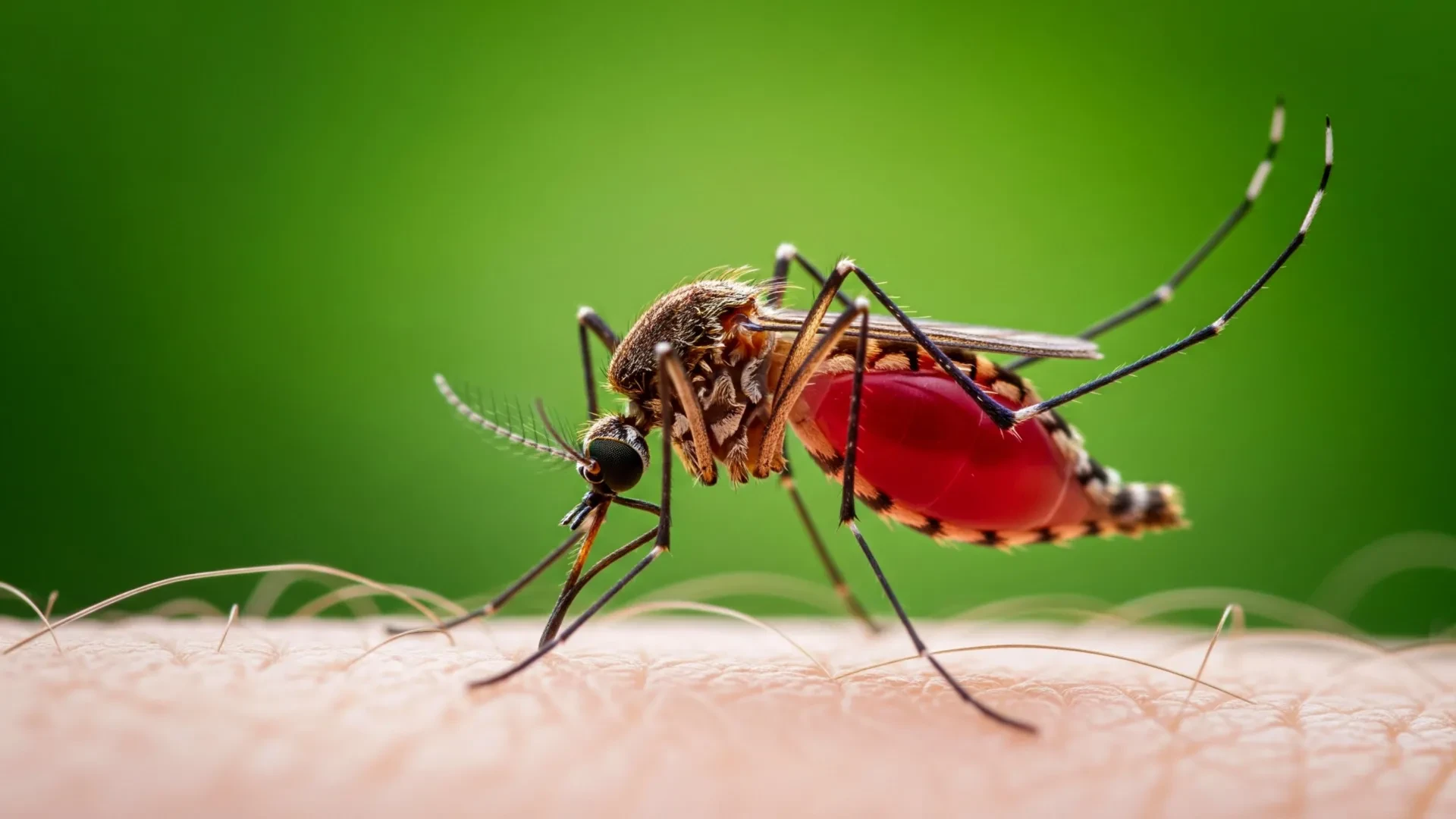
For anyone who has ever stood in a backyard barbecue and found themselves serving as the sole target for a swarm of mosquitoes while others remain blissfully ignored, the experience can feel like a personal curse. It is a common grievance—the suspicion that some people are simply "mosquito magnets." However, groundbreaking new research from Florida International University (FIU) suggests that this phenomenon is far more nuanced than a simple matter of luck or blood type. Instead, being a preferred target depends heavily on which specific species of mosquito is doing the biting.
The study, recently published in the journal iScience, offers a significant leap forward in our understanding of host-seeking behavior. By testing how three of the world’s most dangerous mosquito species respond to 119 different human volunteers, researchers have uncovered a complex, individualized chemical interaction that challenges long-held assumptions about how these insects select their prey. Perhaps most strikingly, the team found that not a single participant in the study attracted all three species. Rather, each species exhibited a distinct preference for different subsets of the human population, driven primarily by the unique cocktail of body chemistry and natural skin odors that every individual emits.
Different Mosquito Species Prefer Different People
The research focused on three species of mosquito that are globally notorious for their role as vectors for devastating illnesses: Aedes aegypti, which is responsible for spreading yellow fever, dengue, and Zika; Aedes albopictus, commonly known as the Asian tiger mosquito; and Culex quinquefasciatus, or the southern house mosquito, a major transmitter of the West Nile virus. Given the immense public health burden these insects pose, the ability to predict or manipulate their host-seeking behavior is a high-priority goal for scientists worldwide.
The investigation was led by Ph.D. student Kaylee Marrero under the guidance of Matthew DeGennaro, a prominent neurogeneticist who directs the Biomolecular Sciences Institute at FIU. This study marked the first time researchers had conducted a direct, side-by-side comparison of how several distinct mosquito species react to the exact same group of human volunteers. By controlling the environment and the participants, the team was able to isolate the variables that drive host selection, revealing unexpected differences in the chemical and microbial signals that each species uses to navigate toward a meal.
"We didn’t expect the species to prefer different people when we started the study," Marrero noted, reflecting on the surprising nature of the findings. "Each species having a distinct microbial signature that they use as a cue was so surprising to me." This suggests that the evolutionary history of these mosquitoes has led them to specialize in detecting specific olfactory cues, effectively allowing them to "niche" themselves among human hosts.
The Hidden Chemistry Behind Mosquito Attraction
To understand why a mosquito might ignore one person in favor of another, one must look at the invisible, volatile landscape of human skin. Human body odor is an incredibly complex chemical profile. Our skin continuously releases a mixture of more than 1,000 volatile organic compounds, a blend that is unique to each individual. This profile is shaped by a variety of factors, including genetics, diet, environmental exposure, and, most importantly, the diverse community of microorganisms—the skin microbiome—that thrives on our bodies.
The FIU research team set out to decode this complexity. Throughout the study, they collected detailed samples of the participants’ body odors and skin microbiomes alongside the behavioral preference tests. By comparing these biological profiles with the specific mosquitoes’ choices, the researchers were able to map out a correlation between skin chemistry and insect attraction.
The results indicated that the mosquitoes did not share a common "gold standard" for what constitutes an attractive human. Instead, each species consistently favored its own subset of volunteers. This discovery suggests that over the course of their evolutionary development, these species have diverged in their methods of detecting and interpreting human scent.
"This connected so well with the differences in skin bacteria and odors," said DeGennaro. "It is clear to me now that our skin microbiomes define our human odor signature. Each species found its own way to decode that signature." This means that the chemical language used by an Aedes aegypti mosquito to identify a host is likely distinct from the language used by a Culex mosquito. By analyzing the relative abundance of specific chemical compounds and microorganisms on the skin, the team began to see how each species is tuned to different, specific signals within the broader human scent profile.
Could This Discovery Lead to Better Mosquito Repellents?
The implications of this research for public health are profound. For decades, the scientific approach to mosquito control has often relied on broad-spectrum repellents designed to mask human scent or deter mosquitoes through general chemical interference. However, if mosquitoes are using highly specific, species-dependent chemical cues to find us, then our current defense strategies may be missing the mark.
By identifying the specific chemical compounds and skin bacteria that act as attractants or deterrents for different mosquito species, the FIU researchers are laying the groundwork for a new generation of targeted prevention strategies. The vision is to move away from one-size-fits-all solutions toward species-specific repellents that offer more precise, effective protection.
"Isolating the components of human odor that attract or repel mosquitoes could lead to novel strategies to combat vector-borne diseases," DeGennaro explained. If a community is primarily battling a specific type of mosquito that transmits a local disease, officials could theoretically implement tailored preventative measures rather than relying on generalized protocols.
This knowledge could revolutionize how public health organizations approach the prevention of diseases like Zika and dengue. Rather than assuming that all mosquitoes are drawn to the same people for the same reasons, future strategies could be designed around the distinct chemical preferences of each species. This could lead to the development of personalized repellents—perhaps customized based on an individual’s unique microbiome—or environmental interventions that are better tuned to the sensory ecology of the local mosquito population.
As the scientific community continues to peel back the layers of how mosquitoes interact with their hosts, the FIU study serves as a critical reminder of the complexity of the natural world. What feels like an annoying personal quirk—being a "mosquito magnet"—is actually a sophisticated biological interaction, one that has been honed over millions of years of evolution. By understanding the intricate chemistry that governs these interactions, scientists are now better positioned than ever to design effective defenses against some of the most persistent and dangerous pests on the planet.
This study not only demystifies the experience of the individual who always seems to get bitten but also provides a roadmap for future innovation in vector control. As researchers move forward, the goal remains the same: to use the power of science to turn the tide in the ongoing struggle against mosquito-borne illness, one chemical signal at a time. The discovery that these insects possess such distinct, specialized preferences for human hosts highlights the need for continued, granular research into the biology of disease vectors. It is a compelling example of how basic research into the behavior of insects can have immediate and significant consequences for human health and global safety.