Researchers at Tufts University School of Medicine and the Graduate School of Biomedical Sciences (GSBS) have unlocked a critical piece of the puzzle regarding how the human nose maintains its sense of smell. By developing an innovative three-dimensional organoid model to study nerve tissue regeneration, the team discovered that a specific type of stem cell, long dismissed by the scientific community as being largely dormant, actually plays a pivotal, active role in preserving the sensory architecture of the nasal cavity.
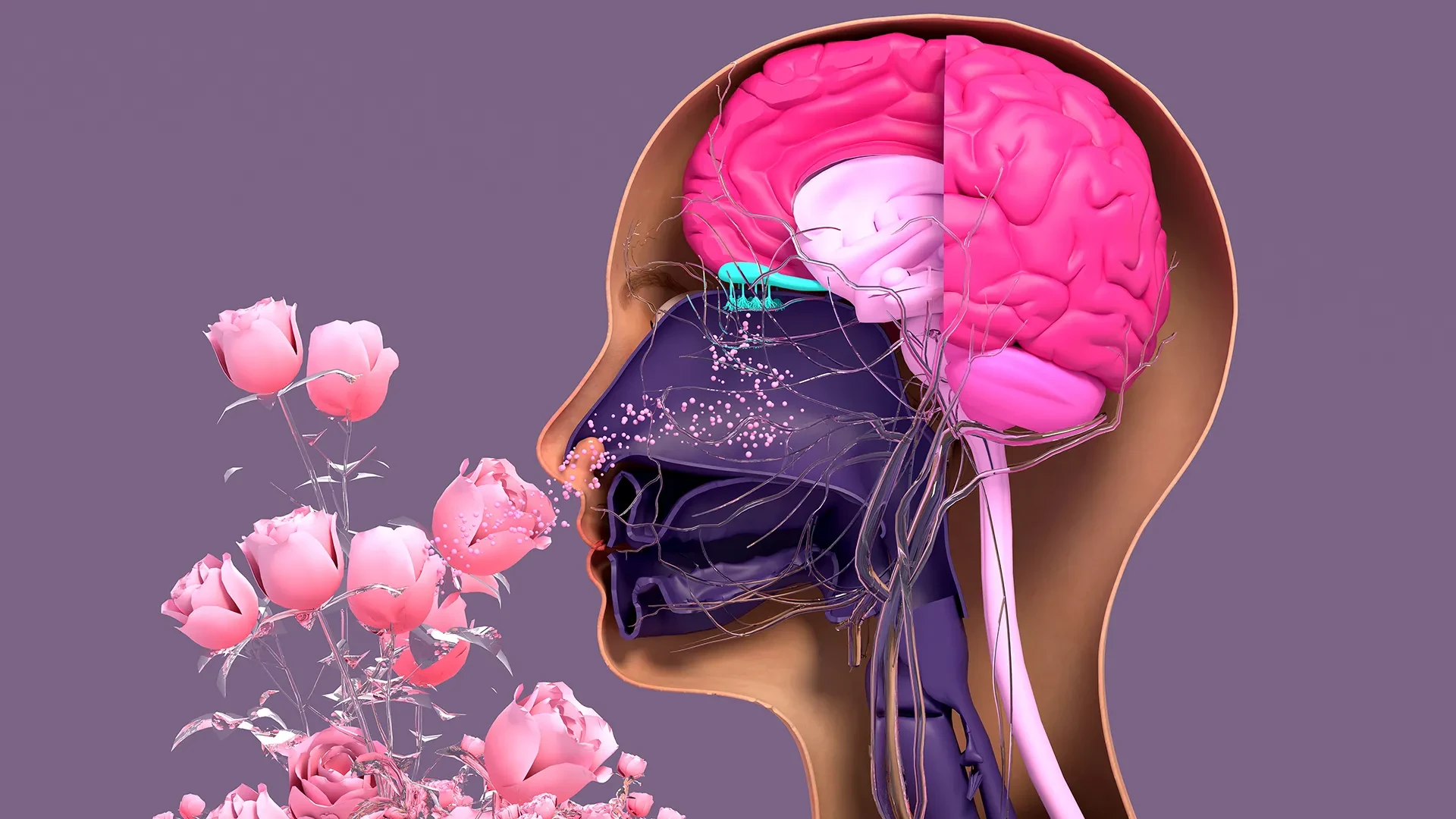
The findings, recently published in the journal Cell Reports Methods, offer a new perspective on the resilience of the olfactory system. Unlike neurons in the central nervous system, which are notoriously difficult to repair or replace once damaged, the sensory neurons responsible for our sense of smell possess a remarkable and rare capacity for continuous regeneration throughout a person’s entire life. This ability allows the nose to remain functional despite its constant exposure to external pathogens, pollutants, and environmental toxins.
However, this biological safeguard is not infallible. Viral infections—most notably SARS-CoV-2, the virus responsible for COVID-19—along with chronic exposure to chemical toxins and the natural processes of biological aging, can severely diminish the function of these neurons. When the replication ability of these cells is compromised, individuals often experience anosmia, or the partial to complete loss of smell, a condition that can have profound impacts on quality of life, appetite, and emotional well-being.
To better understand the mechanisms behind this decline, the Tufts research team, led by senior author Brian Lin, a research assistant professor in the Department of Developmental, Molecular and Chemical Biology, constructed an accessible, three-dimensional olfactory tissue mouse model. This organoid serves as a miniature, controlled laboratory environment that mimics the complex interactions of the nasal lining, allowing scientists to observe exactly how neurons are generated and identifying the precise points at which this regenerative process falters.
Unlocking the Role of Basal Cells
At the heart of the research is the interplay between two distinct populations of stem cells found within the nose: horizontal basal cells (HBCs) and globose basal cells (GBCs). Traditionally, the scientific consensus held that GBCs were the primary drivers of neuronal replacement, acting as the "workhorses" of the olfactory epithelium. Conversely, HBCs were widely regarded as a quiescent or "dormant" reserve, activated only during extreme tissue injury to jumpstart repairs.
The Tufts study challenges this established hierarchy. "Our research suggests that these two stem cells may be interdependent," says Lin. "One type that we thought was largely dormant—HBCs—may actually play a crucial role in supporting the production of new neurons and the repair of damaged tissue."
Using their new organoid model, the team isolated a specific subpopulation of HBCs marked by their production of the protein KRT5. Through a series of experiments, the researchers observed that these KRT5-producing cells were not merely passive bystanders. Instead, they acted as essential support structures for the formation of the organoids themselves. When the team selectively depleted these specific HBCs from the cultures, the generation of new olfactory neurons plummeted, providing clear evidence that these cells are vital, active participants in the regenerative cycle.
The study further investigated the impact of aging on this regenerative capacity. By culturing cells taken from mice of varying ages, the researchers noted a distinct decline in the organoids’ ability to produce new neurons as the biological age of the donor increased. While the exact mechanism remains under investigation, Lin and his team hypothesize that the depletion or functional decline of the GBC population over time is a primary factor. "We think this is due to a decrease in the GBC population as we age," Lin notes, adding that further research is required to confirm this hypothesis and, potentially, to uncover therapeutic strategies to rejuvenate these stem cell populations.
An Accessible Tool for Global Research
A significant portion of the project’s success lies in the design of the model itself. The lead author of the study, Juliana Gutschow Gameiro—a former Ph.D. student visiting GSBS from the State University of Londrina in Brazil—prioritized the creation of a system that was both efficient and inexpensive. The goal was to ensure that researchers across the globe, including those working in laboratories with limited funding or specialized equipment, could participate in the study of olfactory health.
"Because loss of smell is associated with COVID-19, as well as with Parkinson’s disease and other conditions, a much larger number of researchers from a variety of different fields have begun researching olfactory epithelial cells in the last few years," says Lin. By simplifying the creation of these organoids, the team hopes to democratize the study of olfactory tissue, enabling a broader scientific community to investigate the causes of sensory loss.
The rise in interest surrounding olfactory function is not merely academic. The global pandemic brought the issue of post-viral smell loss to the forefront of public health concerns, while the established link between anosmia and neurodegenerative conditions like Parkinson’s disease has turned the spotlight toward the nose as a potential diagnostic window into brain health. By providing an "easy-to-use" model, the Tufts team is lowering the barrier to entry for scientists who wish to explore how these regenerative processes fail and how they might be restored.
The Path Toward Human Organoids
While the current model relies on mouse tissue, the ultimate objective for the research team is to develop a human-derived organoid. Such a model would be an invaluable asset for pharmaceutical research, serving as a platform to screen drugs and treatments specifically designed to help people who have lost their sense of smell.
Organoids have already revolutionized the study of other human organs, including the lungs and kidneys, by providing a more accurate and ethical alternative to animal testing. However, the path to a human olfactory organoid is fraught with technical hurdles. Unlike mouse tissue, which is relatively straightforward to harvest and isolate, obtaining pure olfactory tissue from human subjects is a complex clinical challenge.
Current methods for collecting these cells involve a minimally invasive procedure where a brush—similar to those used for COVID-19 nasal swabs—is inserted deep into the nasal cavity. The complication arises during the isolation phase: in humans, the olfactory stem cells are intermingled with respiratory stem cells. Separating these two types of cells has historically proven difficult, as they often grow in close proximity and share similar environmental requirements in the lab.
The next phase of the research, according to the team, is to refine a technique that is both simple and cost-effective for separating these human olfactory stem cells from their respiratory counterparts. By successfully coaxing these human cells to grow and thrive in a laboratory environment, the researchers hope to bridge the gap between animal models and human therapeutics.
As the team moves forward, their work stands as a testament to the power of fundamental research in addressing modern health crises. What began as an effort to understand the cellular architecture of the nose has evolved into a promising avenue for treating the millions of individuals worldwide who struggle with the loss of one of our most vital, yet often overlooked, senses. By redefining the role of "dormant" stem cells and simplifying the tools of discovery, the researchers at Tufts are laying the groundwork for a future where the sense of smell can be protected, repaired, and restored.