What began as a routine weekend home improvement project in Northern Denmark quickly evolved into a monumental archaeological discovery when a local homeowner struck a massive, 1,000-year-old treasure buried just beneath the surface of their backyard.
Officials from the North Jutland Museums announced the extraordinary find in an official statement, confirming that the collection of buried silver represents the largest known Viking Age silver hoard ever discovered in Denmark. The breathtaking haul shatters previous national records, offering historians and archaeologists an unprecedented look into the wealth, commerce, and cultural shifting of the 10th-century Viking world.
The homeowner, who lives in the northeastern peninsula of Himmerland and has chosen to remain anonymous, was preparing their yard for the installation of a new tiled terrace. The task was supposed to be a straightforward landscaping chore involving the removal of stubborn grass, stones, and gravel. Instead, it turned into the discovery of a lifetime.
"It should have been just a few hours of hard gardening," the homeowner recounted in a statement shared by the museum. Instead, the individual struck "something that made a strange sound," leading to what they described as "the biggest surprise of my life."
At first, the homeowner suspected they were merely unearthing old iron, discarded fence wire, or broken fragments of common pottery. However, as they began cautiously clearing the earth with their bare hands, they quickly realized the true nature of the objects. One by one, metal artifacts emerged from the soil, revealing a cache of ancient jewelry, circulating coins, and solid silver bars.
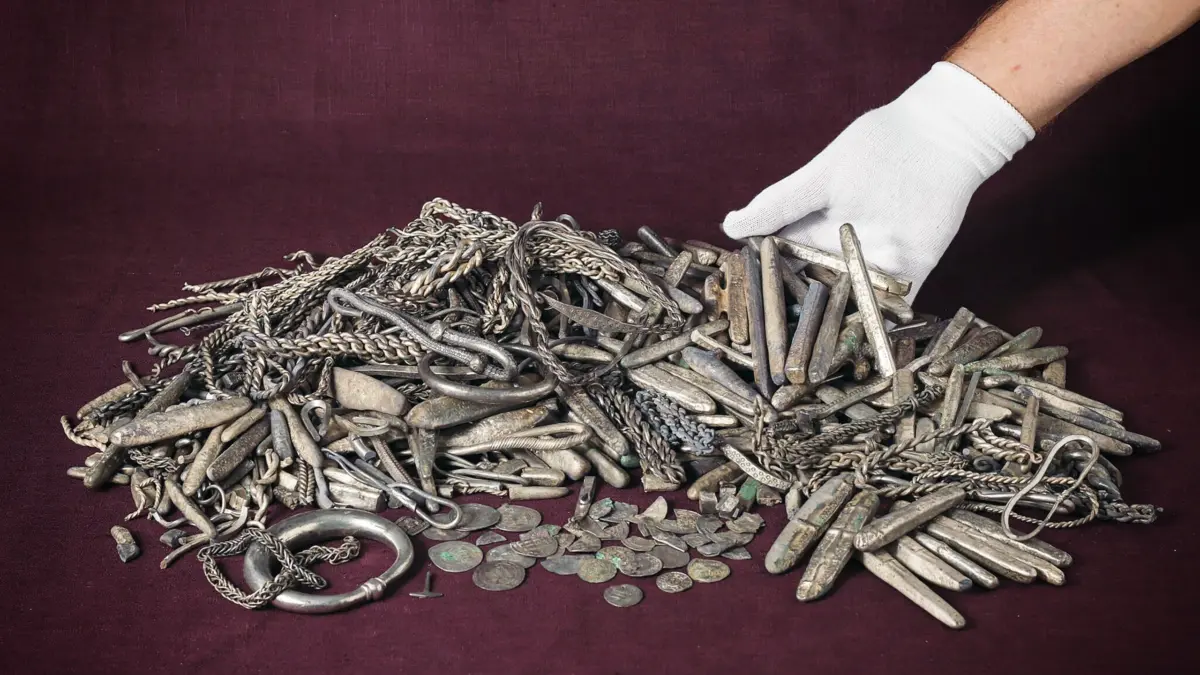
Subsequent investigations by archaeological experts revealed an astonishing trove of roughly 700 individual objects and fragments, weighing a combined total of more than 40 pounds. Approximately 320 of these artifacts were still neatly contained within a traditional clay vessel, while the remainder of the treasure had spilled out and dispersed into the surrounding soil over the centuries.
Detailed analysis of the items has dated the hoard to the 10th century, placing it squarely in the middle of Denmark’s vibrant and turbulent Viking Age. The sheer volume and weight of the silver utterly dwarf Denmark’s previous record holder for a Viking Age hoard—a famous 14-pound discovery unearthed in Terslev decades ago.
Under Danish cultural heritage laws, all historical artifacts found buried in the ground automatically become the property of the state. While the homeowner will not be permitted to keep the physical treasure discovered on their property, they are legally entitled to receive a finder’s reward from the government in recognition of the historical significance of their backyard.
According to Torben Sarauw, head of cultural heritage at the North Jutland Museums, both the physical scale and the unique combination of the items make this particular hoard an exceptionally rare and remarkable discovery.
"It contains an unusually large number of silver ingots," Sarauw explained in an interview. He noted that the collection features a fascinating mix of cultural markers, including a silver ingot bearing runic inscriptions that experts believe may have been carved as a protective spell to safeguard the treasure. Other items in the hoard are stamped with distinct symbols, including small depictions of Thor’s hammers and Christian crosses.
"The combination of pagan and Christian symbols, together with the runic inscription and the sheer quantity of silver, makes the find unique," Sarauw added, emphasizing the cultural transition period reflected in the artifacts.
While the exact identity of the person who originally buried the silver has been lost to the mists of time, museum officials have been able to draw several conclusions based on the composition of the hoard. Sarauw observed that the original owner was undoubtedly an individual of immense wealth and exceptionally high social status.
"The size of the hoard suggests access to extensive networks of trade, exchange, and perhaps political power," Sarauw said. "The discovery also indicates that Himmerland was home to a significant center of wealth during the Viking Age, something we are only beginning to understand."
Historians note that burying valuable hoards was a relatively common practice during the Viking Age, usually undertaken during times of intense political instability, military conflict, or personal danger as a temporary safeguarding measure. It is likely that the owner intended to return and retrieve their fortune once the threat had passed, but may have met an untimely end, leaving the treasure hidden for a millennium.
The significance of the Himmerland discovery is further amplified by other recent finds in the immediate region. Earlier in the year, archaeologists working in the same area uncovered six rare Viking Age gold arm rings. According to museum officials, these consecutive discoveries have fundamentally shifted how researchers view Northern Jutland’s historical importance.
"Together with the nearby gold arm rings and other important finds from the area, it suggests that Himmerland may have played a much more prominent role in the political and economic landscape of Viking Age Denmark than previously believed," Sarauw concluded.