
Flock Safety is widely known across the security and public sector industries for its emphasis on accountability, transparency, and airtight operational security. That corporate philosophy must explain why the automated license plate reader company recently forced a popular independent website mapping the exact locations of its nationwide surveillance hardware to shut down permanently.
According to reports from The Intercept, cybersecurity researcher Joshua Michael, who independently built and maintained the public awareness website FlockSurveillance.org, received a formal trademark infringement complaint acting on behalf of Flock Safety. The strongly worded notice effectively requested that the site be taken down immediately, citing unauthorized use of intellectual property. As of late September, the portal has been rendered entirely unavailable to the public, drawing renewed scrutiny toward the company’s data practices and public relations messaging.
Flock Safety frequently boasts about the massive scale of its infrastructure, claiming to operate approximately 120,000 cameras deployed across 49 states. Meanwhile, crowdsourced open-source tracking initiatives like DeFlock—which relies on data submissions from vigilant community members—estimate the actual footprint to be even larger, sitting closer to 143,000 active devices.
However, Michael’s mapping project derived its information from an altogether different and much more sensitive source: Flock’s own internal systems. During a window of time in late 2025, accessing Flock’s expansive network required little effort due to a security key that was inadvertently exposed publicly on the company’s infrastructure. This oversight granted full, unauthenticated access to the entire FlockOS ecosystem.
The volume of data exposed during this lapse was staggering, encompassing live operational data such as drone telemetry, real-time police vehicle coordinates, and even the precise locations of individual law enforcement officers via their active body-worn cameras. Recognizing the severity of the exposure, Michael preserved a snapshot of all documented Flock device locations as of December 2025 before alerting the company. This raw data ultimately became the structural foundation for his public-facing tracking map.
As a practitioner of ethical, white-hat cybersecurity research, Michael attempted to report the critical security flaw through proper channels multiple times, only to be repeatedly ignored or dismissed by the company. It was not until Michael published a comprehensive and highly detailed blog post outlining his findings that Flock finally patched the massive security hole in its infrastructure. Around the same time, Flock published an official blog post categorically asserting that its networks had never been breached or hacked. The American Civil Liberties Union (ACLU) has subsequently documented a long and troubling history of Flock misleading city councils, police departments, and the broader public regarding its security practices and data integrity.
What does Flock not want us to see?
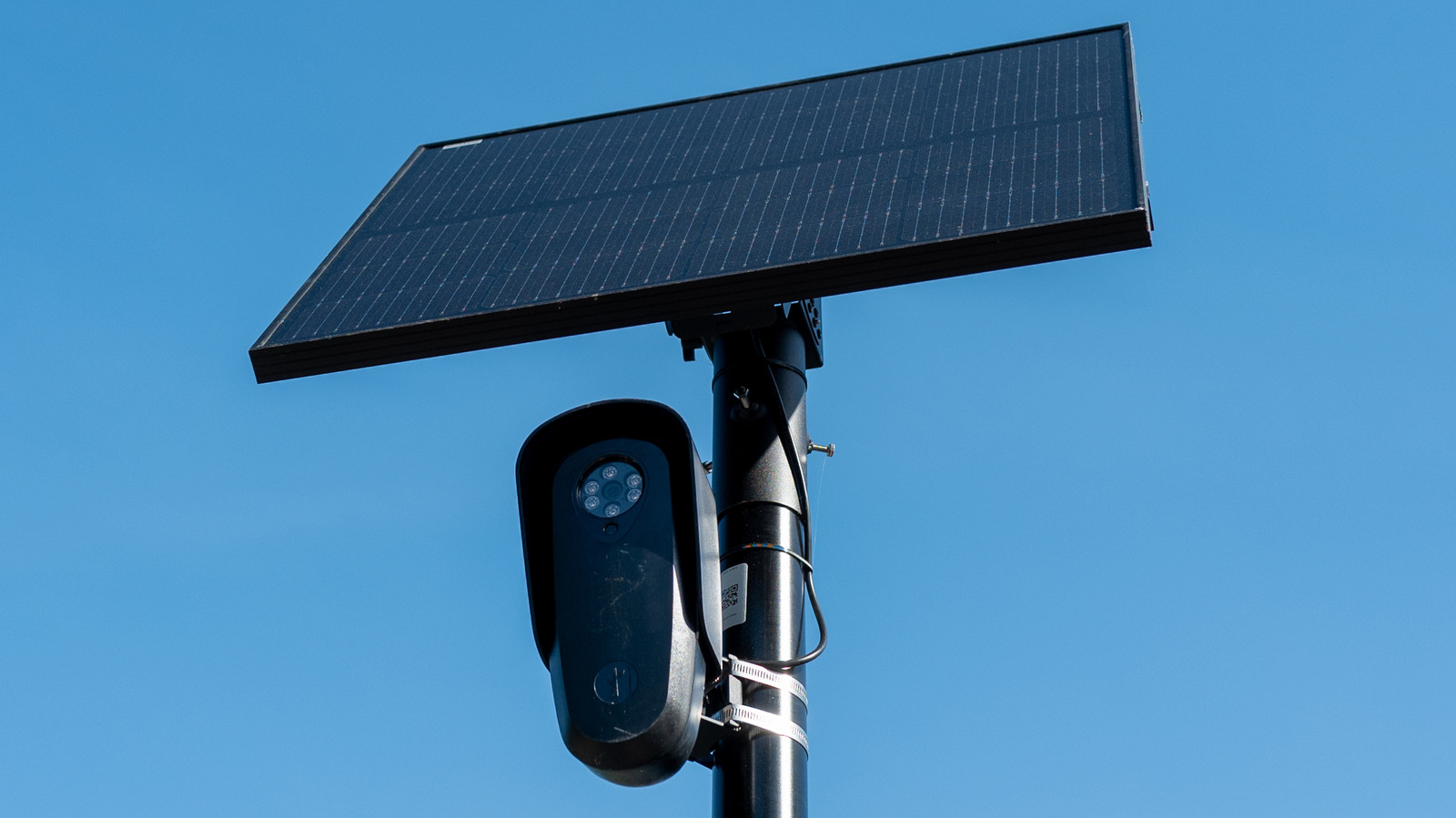
Although Michael’s website has been forced offline, the digital footprint of the internet remains enduring, and the Internet Archive successfully preserved a complete snapshot of the original portal. The archived records detail a massive infrastructure network comprising 175,269 Falcon license plate recognition (LPR) cameras alongside 44,116 Wing pan-tilt-zoom (PTZ) cameras—devices that Flock maintains are utilized strictly for generalized environmental surveillance rather than automated reading of vehicle registration plates. Additionally, the map documented 27,341 Raven acoustic audio surveillance devices designed to detect the sharp, distinct signatures of gunfire, vehicular collisions, and other high-decibel street-level disturbances.
In total, the archived mapping project cataloged an astonishing 335,701 current, planned, and decommissioned Flock device locations nationwide as of December 2025. The site also featured supplemental pages containing extensive tables of the raw location data that Michael had independently secured during his research phase.
The suppression of this transparency initiative stands in stark contrast to the company’s own marketing language. Flock Safety has previously stated in corporate blog posts that transparency is vital because questions concerning public safety technology are fundamentally inquiries regarding visibility, oversight, and public trust. Yet, when that visibility is turned back onto the company’s own proprietary hardware footprint, the corporate response shifts rapidly toward legal intervention and suppression.
According to documentation reviewed by The Intercept, Michael was notified that Doppel—a firm marketing itself as an "AI-native social engineering defense platform"—had filed a formal trademark infringement complaint against his research site while claiming to act on behalf of Flock Safety. Doppel asserted that the independent tracking project utilized the trademarked phrase "FLOCK SAFETY" without explicit corporate authorization, arguing that such usage "may cause customer confusion / harm." The platform subsequently demanded the immediate removal of the domain.
Visitors arriving at the archived version of the website were greeted by a prominent disclaimer positioned before the interactive mapping interface even finished loading. The disclaimer explicitly stated that the portal was an independent research site presenting the cybersecurity work of Joshua Michael, noting that it was entirely unaffiliated with or endorsed by Flock Safety, Flock Group, Inc., or their commercial products. It further clarified that corporate names and marks belonged exclusively to their respective owners and were deployed strictly to identify the subject of academic and technical research under fair use protections for criticism, comment, scholarship, and research.
This foundational legal disclaimer represented the sole location where the phrasing "Flock Safety" appeared anywhere across the domain. Legal experts and privacy advocates are now questioning whether successful enforcement of this trademark claim could pave the way for similar corporate takedown efforts against other prominent open-source mapping initiatives, such as the decentralized DeFlock project.
While Flock Safety aggressively asserts its legal right to continuously track civilian movements across public roadways and neighborhoods, the company evidently remains committed to preventing the public from tracking the exact scale and location of its corporate surveillance apparatus. As public debates surrounding automated municipal tracking intensify, the forced shutdown of independent research platforms highlights the ongoing tension between corporate digital expansion and the public’s demand for radical transparency.